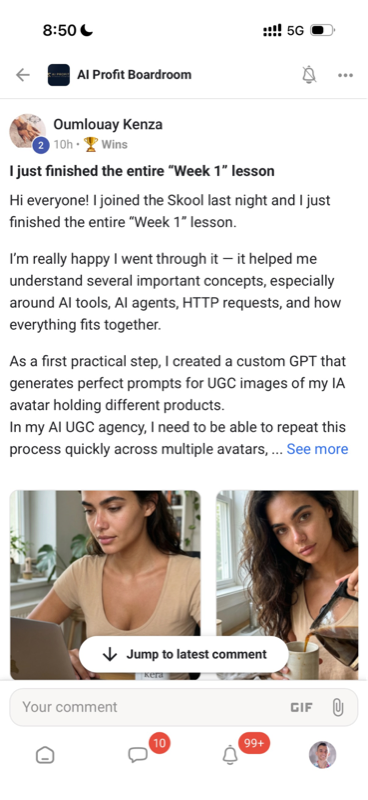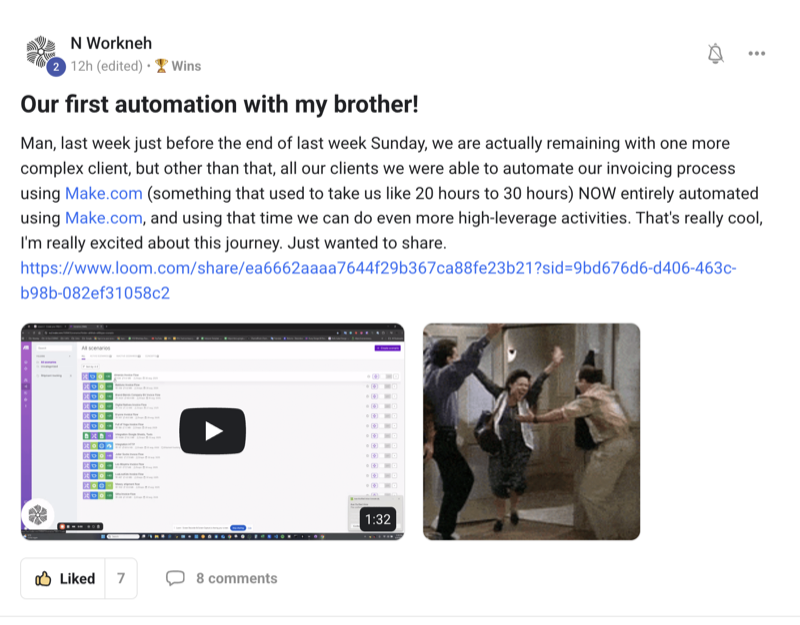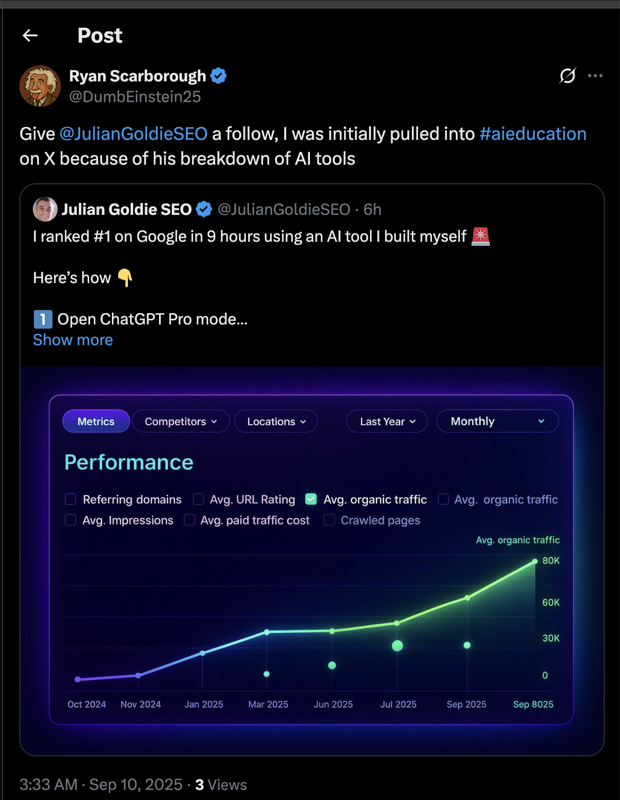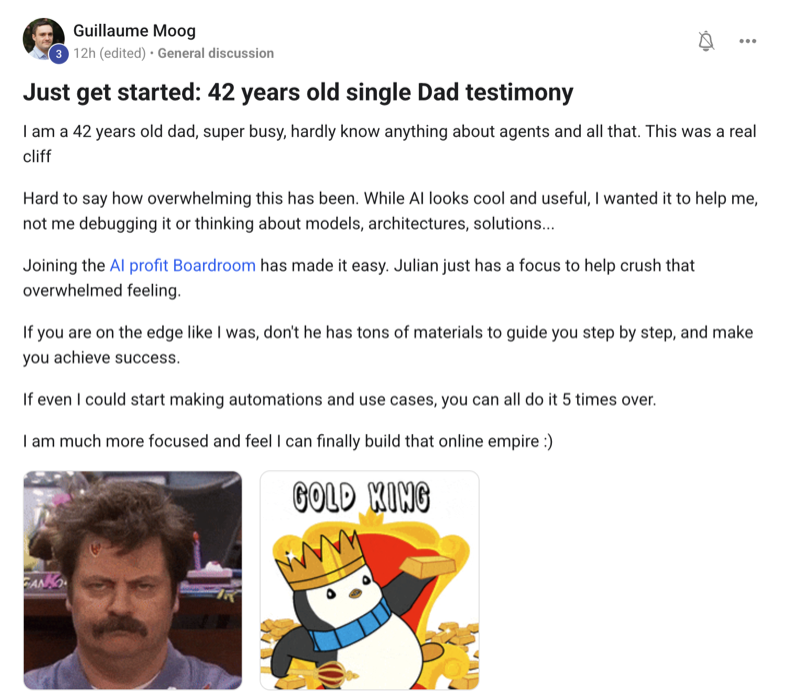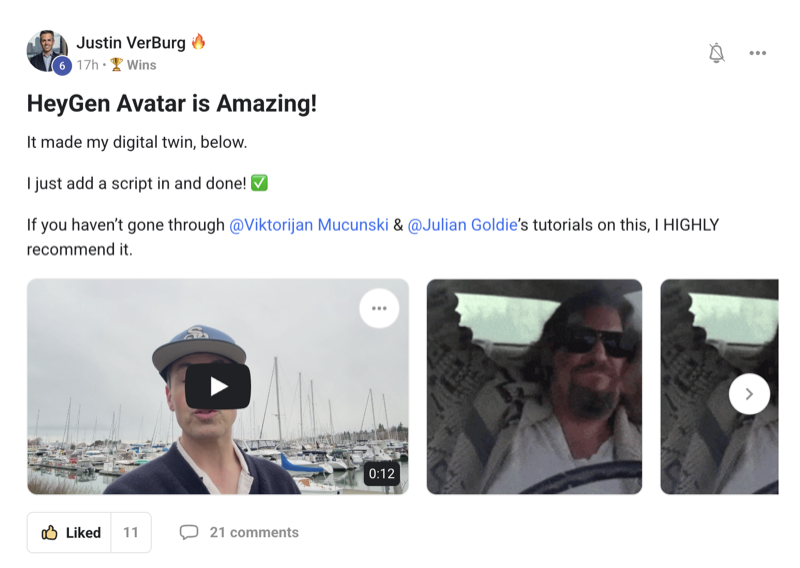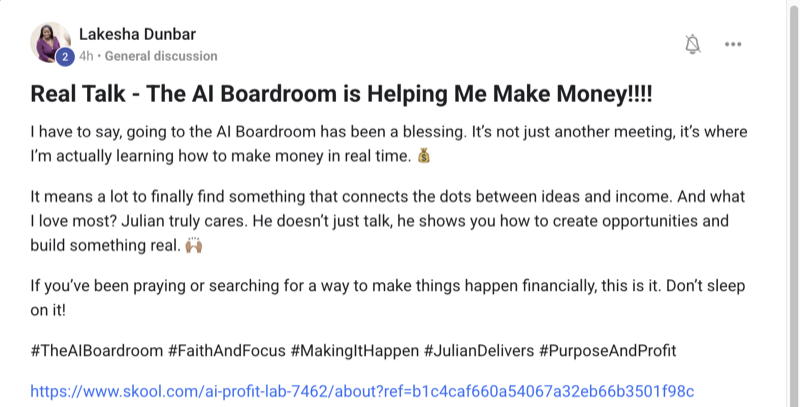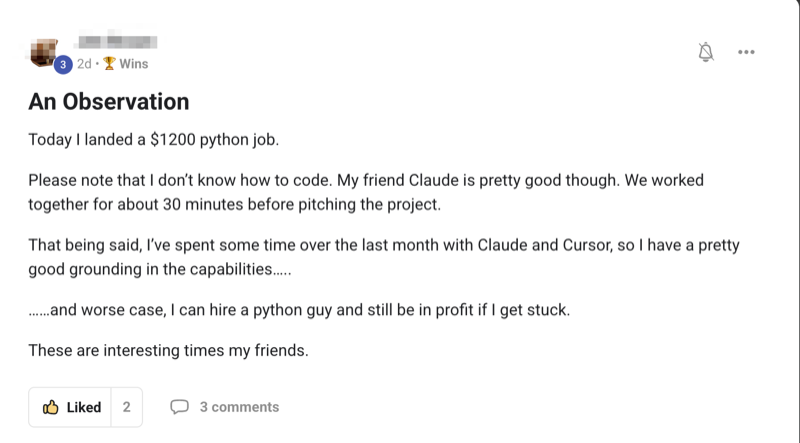
The Julian Goldie avatar stack isn't just a content tool — it's a money-making system, and this post breaks down eight revenue paths anyone can build with it in 2026. AI avatars have crossed the quality threshold where viewers can't reliably tell, which means the operators wrapping them in real services are landing real client money this year.
This is the make-money view of the avatar stack rather than the production view. I'll walk through eight revenue paths with real numbers attached so you can pick one that matches your stage and start landing income this month.
🔥 Want the full Julian Goldie avatar process + monetisation playbook? AI Profit Boardroom has the playbook + weekly live coaching. → Get inside
8 Revenue Paths From The Julian Goldie Avatar Stack
Eight paths ranked by accessibility, starting with the easiest first revenue and building up to the higher-ticket plays.
1 — AI avatar setup as a service
The simplest entry point is selling avatar setups to clients at £500 to £3,000 per setup. This is the easiest first revenue because the deliverable is concrete and the sales conversation is short — clients can see the result on day one.
2 — Content automation services
Bigger ticket: build a daily content engine for SMBs at £2,000 to £5,000 setup plus a monthly retainer. SMBs that want consistent content but can't afford a creator team are the natural buyer.
3 — Course/cohort delivery
Use your avatar to deliver course videos and command premium pricing because of the polish and consistency. The avatar lets you ship in volume without burning out, which is the bottleneck for most course creators.
4 — Agency white-label
Build daily content for an agency's clients under their brand. This is a B2B play with bigger contract sizes and stickier relationships once the agency starts depending on you.
5 — UGC at scale
E-commerce avatars producing product videos at volume is a real category right now, and the demand from ad-spending brands is huge. The margins are lower per video but the volume makes it work.
6 — Multi-language content
Take a single script and ship it across multiple language markets, then sell the capability to international agencies. Few creators have this skill, which keeps pricing strong.
7 — Personal brand acceleration
Use the avatar to grow your own audience faster, then monetise the audience through products, services, and affiliates. This is the highest-ceiling play but the longest-lead time.
8 — Productised cohort training
Teach the avatar stack itself in a productised cohort at £497 to £2,000 a seat. Once you've shipped any of the previous paths successfully, this is the natural way to scale your knowledge.
Watch The Walkthrough
For the broader monetisation framing that pairs with the eight paths above, the video below covers the wider AI Profit Boardroom approach.
Julian Goldie Avatar Real Income Numbers
The actual numbers I'm seeing from people running each of these paths.
Path 1 — Setup specialist
Ten setups per month at £1,500 each works out to £15,000 a month. Achievable solo with disciplined sales work.
Path 2 — Content service
Five clients on £2,500 a month retainers is £12,500 a month of recurring revenue. Stable and predictable once the book is built.
Path 3 — Course delivery
A £30,000 cohort run three times a year nets £90,000 of annual revenue. Add upsells and it stretches further.
Path 4 — White-label agency
White-label work with agencies typically lands at £40,000 to £100,000 a year depending on how many agency relationships you build.
Path 5 — UGC at scale
UGC services come in around £20,000 to £50,000 a year, with the upper end requiring real volume and operational discipline.
Path 6 — Multi-language
Multi-language services land at £10,000 to £30,000 a year as a niche specialist offering. Smaller numbers but high margins.
Path 7 — Personal brand revenue
Personal brand monetisation can range from £5,000 to £50,000 a month depending on audience size and offer mix.
Path 8 — Cohort training
A productised cohort lands at £10,000 to £40,000 per cohort run. Multiple cohorts a year add up fast. These are real numbers from real operators, not theoretical projections.
Best Path For Your Stage
Match the path to where you are right now to maximise your odds.
Stage 1 — beginner
Path 1, the setup specialist play, is the right beginner move because it's the lowest-tech entry and the fastest to first revenue. Don't skip ahead.
Stage 2 — intermediate
Path 2 (content service) or Path 5 (UGC) are the natural intermediate moves. Both require more delivery infrastructure but pay better.
Stage 3 — advanced
Path 3 (course delivery) or Path 8 (cohort training) are the advanced moves where margins get great. They require real expertise plus authority.
Stage 4 — pro
A multi-path stack across several offerings, with retainers as the recurring backbone. This is the mature operator's setup.
Setup Costs Per Path
Costs scale with path complexity, so match your capital deployment to where you are.
Low setup paths in the £100 to £500 range include Path 1 and Path 7. Medium setup at £500 to £2,000 covers Path 2, Path 5, and Path 6. High setup at £2,000 to £5,000 covers Path 3, Path 4, and Path 8. Pick a path your capital can support without straining cash flow.
Margin Analysis
Margins vary significantly by path, so it's worth being deliberate about the mix.
Highest margin
Path 8 (cohort training) runs at 90 percent margin or better at scale. Path 3 (course delivery) sits at 85 percent or better. These are the ones to aim for once you have the credibility.
Mid margin
Path 1, Path 2, and Path 4 sit at 60 to 80 percent margin, which is still excellent for service businesses.
Lower margin
Path 5 (UGC at scale) runs at 40 to 60 percent because of production volume. Stack high-margin paths where possible — they make the business genuinely scalable.
Julian Goldie Avatar Real Member Stories
Three real stories from inside the community.
Member A
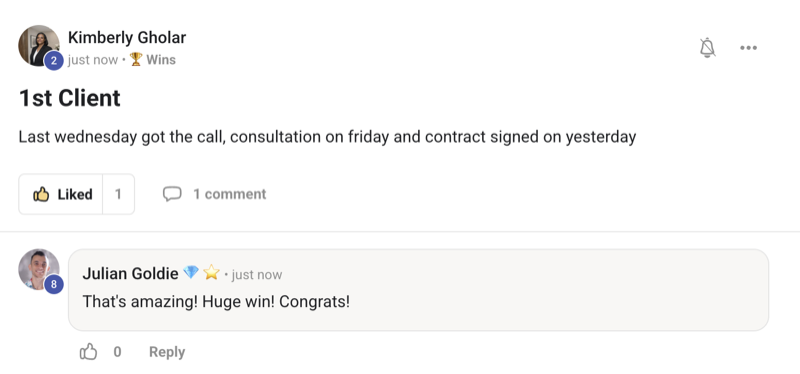
Member A runs Path 1 plus Path 2 as a solo operator and hit £15,000 a month by month six. Setup specialism with a small retainer book on top is a clean stack.
Member B
Member B runs Path 7 — personal brand — and pulls roughly £600 a day from a mix of Boardroom signups and affiliate revenue. Audience monetisation done well.
Member C
Member C runs Path 4 with a white-label agency angle and added £40,000 a year of revenue inside the first eight months. These three are inside the Boardroom community right now.
How To Find Clients
Three channels that consistently produce buyers for avatar services.
1 — Existing network
Tell everyone in your existing network exactly what you now offer. Most operators skip this step and chase cold — your network is the warmest source.
2 — Content marketing
Publish daily about avatars, ideally using your own avatar to do it. The meta-marketing — the avatar selling avatar services — is its own credibility play.
3 — Communities
Be active in AI, agency, and content communities, helping freely and demonstrating capability. Inbound leads start landing within a few months.
Sales Process
A five-step process that converts roughly 30 to 50 percent of warm leads.
1 — Discovery
Ask what their content gap is and let them describe it in their own words. The pitch writes itself once you understand the gap clearly.
2 — Demo
Show your own avatar work as live ammunition rather than slides. Real demos collapse the trust-building phase.
3 — Proposal
Send a short proposal with a clear outcome and price. Brevity signals confidence.
4 — Deliver
Ship the setup or service cleanly. The first delivery is your future case study, so polish matters.
5 — Retainer offer
Always offer a retainer at the end. Many setup clients accept if you offer well, which is where the recurring revenue lives.
Pricing Strategies
Three pricing strategies to combine for the best outcome.
1 — Outcome pricing
Per setup, per video, or per channel. Outcome pricing gives you the best margins and clearest sales conversation.
2 — Project pricing
Custom scope work for bigger or more complex engagements. Use this above £5,000.
3 — Retainer
Monthly recurring revenue for ongoing work. The combination of setup plus retainer is the strongest stack for a stable business.
What To Build First Week
The exact sequence I'd run if starting from zero today.
Days one to three are for building your own avatar — the foundation everything else rides on. Days four to seven are for landing your first paid setup, ideally from a friend or warm network contact at around £500 for first revenue. Week two is your second client and the start of building a documented case study. Month one targets three to five clients and £3,000 to £7,000 of revenue. The path scales cleanly from there.
Margins With Free Tools
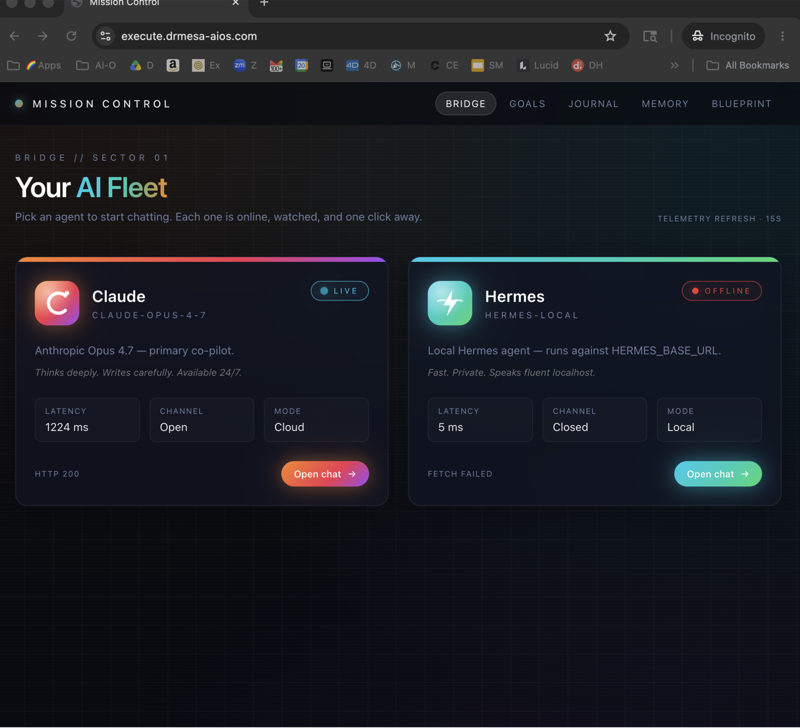
Running automation locally keeps your costs low and your margins high. Hermes for the ops layer is free — see Hermes AI Agent Framework 2026 for the setup. Ollama for local LLM inference is free where it fits. Self-hosting n8n is free for the workflow plumbing. Together these reduce your tool cost dramatically, which is what makes the per-engagement margin look so attractive on an avatar business.
🚀 Want hands-on monetisation help? AI Profit Boardroom has the playbook + community of others doing this. → Join here
Common Money Mistakes
Three mistakes I see operators make repeatedly.
1 — Underpricing
Avatar setup is high-leverage work, but operators often price it like a freelance task. Charge for the outcome — clients are buying weeks of saved production time.
2 — No retainer offer
Setup is one-off. Retainers are recurring. Always offer both at the end of a setup engagement, every single time.
3 — Going broad
Specialise on a niche industry or use case rather than offering "AI avatars for anyone". Specialists win this market by a clear margin.
Specific Industry Picks
Five industries where avatar services land easily right now.
1 — E-commerce
UGC at scale is the killer use case. Brands need volume and avatars deliver it.
2 — SaaS
SaaS companies buy onboarding and product videos at premium pricing because the lifetime value justifies it.
3 — Coaching/courses
Coaching and course creators want to scale delivery without filming themselves daily. Cohort delivery via avatar is a clean play.
4 — Real estate
Real estate buyers want listing videos at volume. Avatars handle the volume in a way human creators can't.
5 — Local services
Local services pay for daily content tied to local SEO. The buyer pool is huge and underserved.
Cost To Run Each Path
The API and tool costs are small relative to revenue.
Path 1 has effectively zero ongoing cost because it's one-off setup work. Path 2 runs £100 to £300 a month per client tool stack. Path 3 runs £200 to £500 a month for cohort delivery infrastructure. Path 4 scales linearly with the number of agency clients you serve. Across all paths, API and tool costs are typically under five percent of revenue.
ROI Math
For a typical creator starting from zero, setup time to first paid work is two to four weeks. Tool costs sit at £50 to £200 a month. Revenue potential ranges from £3,000 to £50,000 a month depending on path mix and stage. Payback lands in month one or two — there are very few business models with this clean a payback profile.
What Doesn't Make Money
Three traps to avoid that look like opportunities but aren't.
1 — Generic AI consulting
Generic AI consulting is too crowded. Specialise on avatars specifically and you stand out.
2 — Pure tutorials
Free tutorials bring leads but not direct revenue. Use them as top-of-funnel only.
3 — Trying to do everything
Picking one path and mastering it always beats spreading across all eight at once. Discipline wins.
Time-To-Money
Realistic timelines for each milestone.
The first £100 lands in week one for anyone who pitches their network. The first £1,000 lands in week two to four. The first £10,000 month happens between months three and six. The first £30,000 month tends to land at the twelve-month mark for the operators who stay disciplined. The curve compounds — slow at first, then accelerates as positioning and proof land.
FAQ — Julian Goldie Avatar Money
Realistic monthly?
£1,000 to £50,000 or more depending on path mix and stage. The wide range reflects how much positioning multiplies outcomes.
How long until first £?
Week one is typical for anyone willing to pitch their existing network.
Best path for beginners?
Path 1 — setup specialist. Lowest tech, fastest revenue.
Highest margin path?
Path 8 — cohort training at 90 percent or better.
Need technical skills?
For advanced paths yes. For Path 1 and Path 7, minimal technical skill is required.
Where to find first clients?
Existing network first, then content, then communities. Order matters.
Worth Boardroom upgrade?
For anyone running this seriously, yes. The structured guidance saves months of trial and error.
Also On Our Network
- 🌐 Read on bestaiagentcommunity.com
- 🌐 Read on aiprofitboardroom.com
- 🌐 Read on juliangoldieaiautomation.com
- 🌐 Read on aisuccesslabjuliangoldie.com
Related Reading
- AI Profit Boardroom Inside — community for monetising AI.
- Hermes Agent Goals — automation backbone.
- Sonnet 4.8 Review — script generation model.
📺 Video notes + links to the tools 👉
🎥 Learn how I make these videos 👉
🆓 Get a FREE AI Course + Community + 1,000 AI Agents 👉
The Julian Goldie avatar stack is the most monetisable content stack of 2026 — pick a path, ship the offering, and watch the revenue compound.