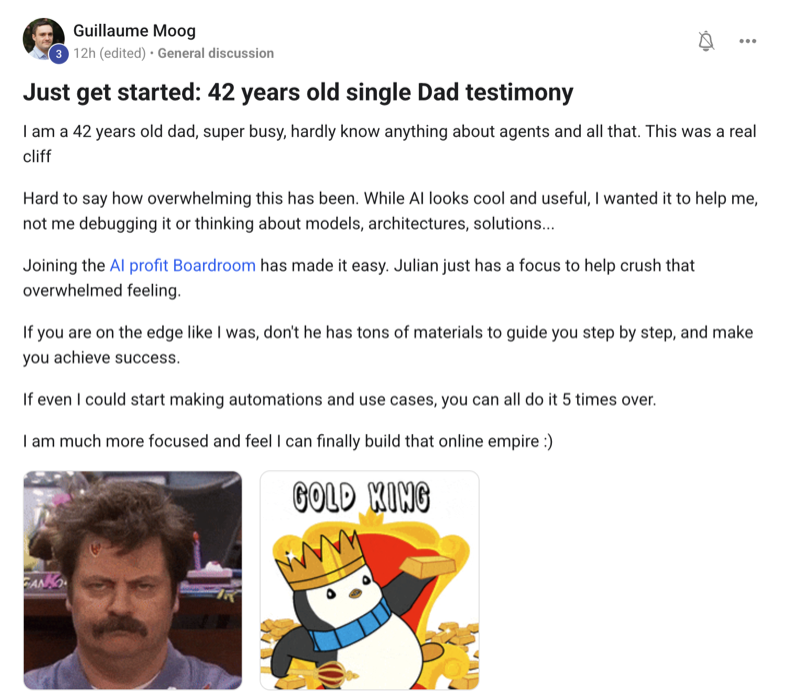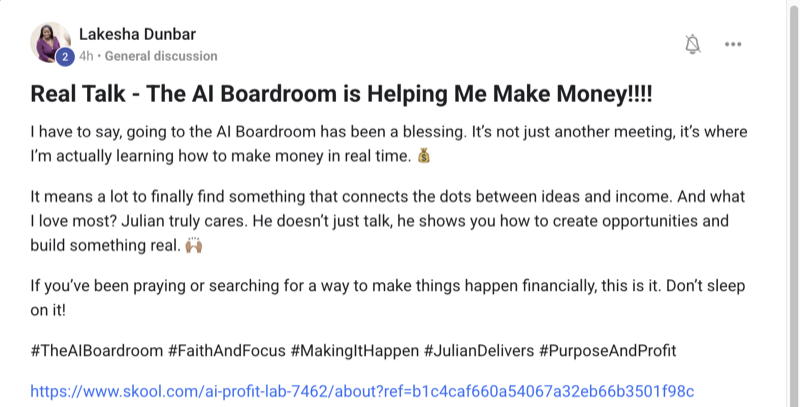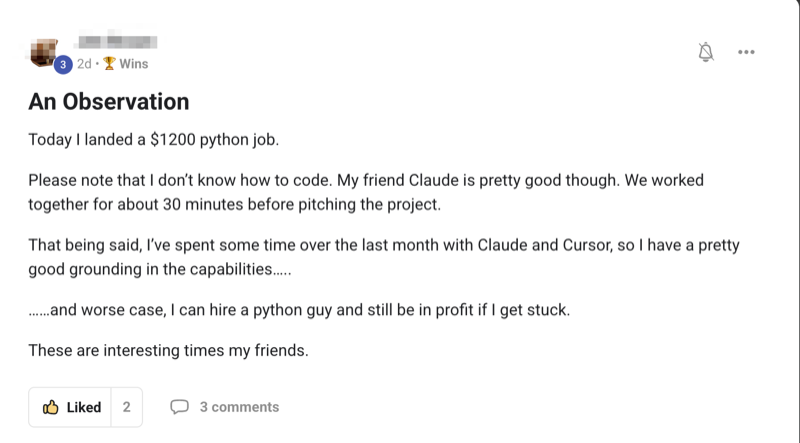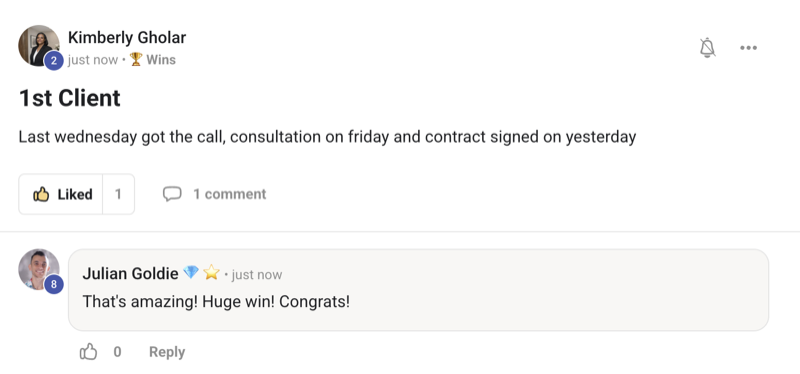
The Hermes agent HUD UI isn't just a productivity tool — it's a fresh revenue surface for anyone selling AI services in 2026, because the visual dashboard makes Hermes finally pitchable to non-technical buyers who would have bounced off a terminal-only setup. After watching members build serious income wrapping the broader Hermes stack into productised services, I'm convinced the new dashboard layer makes those services significantly easier to sell.
This is the make-money view of HUD UI. I'll cover six revenue paths with real numbers, who actually buys these services, and how to position the offering so clients understand the value rather than glaze over at the technical details.
🔥 Want my Hermes monetisation playbook? AI Profit Boardroom has the playbook plus weekly live coaching for monetising Hermes-based services. → Get inside
Why The Hermes Agent HUD UI Changes The Money Equation
Before HUD UI, selling Hermes services to non-technical buyers was hard because the demo experience was terrible. You'd open a terminal, type commands, and clients would politely smile while internally wondering what they were paying for.
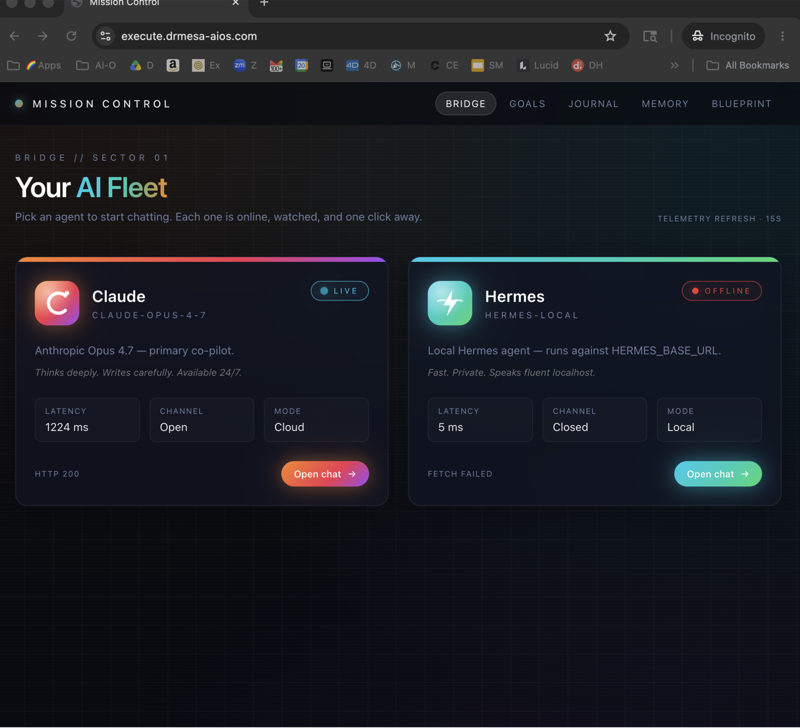
The visual dashboard changes that completely. You can now demo Hermes to a non-technical client by pulling up HUD UI in a browser, showing them the live agents panel, the scheduled tasks, the chat interface, and the diagnostics. They get it immediately because it looks like every other tool they use. The selling friction drops dramatically.
That visibility shift is what turns Hermes from "thing techies use" into "tool we'll buy from you to manage our AI agents."
6 Revenue Paths From The Hermes Agent HUD UI Stack
Six paths ranked by accessibility for anyone starting from scratch.
1 — Hermes setup as a service
Charging £500 to £2,000 per engagement to install Hermes plus HUD UI plus a basic agent stack for a client. Fastest first revenue. Solo operators and small business owners pay for this because they want the leverage without the setup time.
2 — Custom skill development
Building bespoke Hermes skills for specific client needs at £500 to £2,000 per skill. Higher per-engagement value once you've got delivery muscle. Common asks include lead enrichment skills, content drafting skills, and customer FAQ skills.
3 — Daily agent ops as a managed service
Running a full Hermes agent stack for clients on retainer at £1,000 to £3,000 a month per client. The HUD UI dashboard makes this scalable because you can manage multiple clients' stacks from a clean interface rather than tracking everything in spreadsheets.
4 — Multi-agent swarm engagements
Selling multi-agent orchestration setups at £3,000 to £10,000 per project. This is where the higher-margin work lives but it requires more skill — see Hermes Agent Swarm for the patterns. Pair with Hermes Workspace's native Swarms feature for delivery.
5 — Hermes cohort training
Productised cohort training at £497 to £2,000 per seat teaching operators how to build and manage their own Hermes setups. Highest-margin path once your delivery framework is built.
6 — White-label Hermes ops for agencies
Operating as a white-label Hermes ops partner under another agency's brand at £40,000 to £150,000 a year. Mature operator path with predictable recurring revenue.
Real Income Numbers
Real numbers from people running each path.
For Path 1, ten setups per month at £1,000 each is £10,000 a month — achievable solo with disciplined sales work and a clean delivery process. For Path 3, five clients on retainer at £2,000 a month each is £10,000 a month of recurring revenue, which is the tier most operators settle into. For Path 4, three swarm projects per quarter at £6,000 each is £72,000 a year, with most of that as project revenue rather than retainer. For Path 5, a £997 seat across 30 cohort members is £30,000 per cohort run, and multiple cohorts a year compound from there.
These are real outcomes from real operators, not projections.
Watch The Hermes Agent HUD UI Walkthrough
For broader monetisation thinking, this AI Profit Boardroom walkthrough covers the wider AI revenue landscape that frames where Hermes services fit.
Who Actually Buys These Services
Three buyer profiles cover most of the demand.
The first is solo operators and small business owners who want AI leverage but don't have the time or skill to set it up themselves. They typically buy Path 1 (setup) and sometimes Path 3 (managed ops) at budgets between £500 and £3,000 per engagement.
The second is small marketing or consulting agencies that want to add AI services to their offering without building the capability in-house. They typically buy Path 4 (swarm engagements) and Path 6 (white-label) at budgets between £5,000 and £20,000.
The third is other operators who want to learn the stack themselves. They buy Path 5 (cohort training) at £500 to £2,000 per seat. Cohort sizes of 20 to 50 per run are normal once you've built audience.
Why Free Tools = High Margin
The economics here are unusually good because the underlying tools cost nothing.
Hermes is free. HUD UI is free. Hermes Workspace is free. The only cost in your service business is your time and whatever cloud model tokens your clients use, which they typically pay for directly via their own provider accounts. That means revenue minus cost of delivery lands at 80-90% margin in most engagements.
Compare that to most service businesses where delivery costs eat 40-60% of revenue, and the appeal of building a Hermes services business becomes obvious.
Setup For Your Own Service Business
Five-step path from zero to first paid engagement.
The first step is getting your own Hermes plus HUD UI plus core agent stack running cleanly. You can't sell what you can't demo. The second is building two or three case-study skills you can show clients live — a content drafter, a research agent, a customer FAQ responder are good starters. The third is shipping your first paid setup engagement to a friend or warm contact at a discounted rate, which generates your first case study and proof. The fourth is reaching out to your existing network telling them what you do now and offering to demo the stack. The fifth is converting demos to paid engagements at standard rates, with a retainer offer baked into every proposal.
By month one, three to five clients and £3,000 to £15,000 of revenue is realistic depending on path mix.
Sales Process That Converts
Five steps that work for warm leads with conversion rates of 30-50 percent.
Discovery first — understand the client's actual operational pain in their own words. Then a live demo of the Hermes stack via HUD UI, ideally on something close to their use case so they see immediate relevance. A short proposal with clear outcome and price, no hourly nonsense. Clean delivery in week one to lock in retention. And always offer a retainer at the end of the project — most clients say yes if the work was good.
Avoid the trap of selling the technology. Sell the outcome. Clients don't care that it's Hermes — they care that their AI agents finally work and someone competent is managing them.
Pricing Strategies
Three pricing models that combine well across the paths.
Outcome pricing — per setup, per skill, per cohort seat — works best for productised offerings and gives you the highest margins. Project pricing with custom scope works for bigger swarm engagements where the work doesn't fit a standard template. Retainer pricing works for ongoing managed ops and creates the predictable recurring revenue that makes the business genuinely sustainable.
The combination most successful operators land on is a setup project (one-off outcome pricing) followed by a managed ops retainer (monthly recurring). That structure converts well because clients only commit to recurring after you've proven the work in the project phase.
What To Build First Week
The exact sequence I'd run starting from zero with no clients.
Days one to three: get your own full Hermes plus HUD UI stack running cleanly and build two demo agents you'd be comfortable showing live to a client. Days four to seven: reach out to ten people in your warm network with a short message offering to set up Hermes for them at a low rate in exchange for a case study. Week two: deliver the first paid setup, document the process, and request a written testimonial. Month one: three to five clients at standard rates and the start of a real services business.
The compounding kicks in around month three when referrals start landing without active sales effort.
Cost To Run This Business
Genuinely low.
Hermes is free, HUD UI is free, and most of the supporting tools (Workspace, OMI, Obsidian) are free. Your tool stack cost runs at maybe £20 to £100 a month for a few cloud model API calls and some hosting if you self-host anything for clients. Setup time investment is roughly one to two weeks before you're ready to take paid work. Initial money to start is genuinely under £500 in most cases.
For a service business with 80-90% margins and £500-of-startup capital, the unit economics are absurdly favourable.
Common Money Mistakes
Three mistakes I see operators make.
The first is underpricing because the tools are free. Free tools don't mean cheap services. Charge for the expertise, the operational capability, and the time you save the client — not for the cost of the underlying tools.
The second is skipping the retainer offer. Setup engagements are one-off revenue. Retainers are recurring. Always offer both and let the client choose, but don't deliver a setup without proposing the retainer.
The third is going too broad. "AI services" is generic and crowded. Niche down to a specific industry or specific use case. "Hermes-powered customer support automation for SaaS companies" beats "AI services" every time.
Specific Industries Worth Targeting In 2026
Five industries with strong demand for managed Hermes services right now.
E-commerce companies want lead generation, customer support automation, and content production. SaaS companies want onboarding automation, product analysis, and customer success agents. Coaching and course businesses want content production at scale and cohort delivery support. Real estate operations want listing automation, lead enrichment, and CRM follow-up agents. Local services businesses want daily content for SEO and review-response automation.
Pick one industry and become known as the Hermes ops specialist for that vertical. Generalists lose to specialists in this market.
🚀 Want hands-on monetisation help? AI Profit Boardroom has the playbook and a community of operators building Hermes services businesses. → Join here
How HUD UI Helps With Sales Specifically
The visual dashboard fundamentally changes the sales conversation.
When you demo Hermes via terminal, clients see complexity they don't understand. When you demo via HUD UI, they see the agents panel, the scheduled tasks, the chat interface, and they immediately understand what they're buying. "We'll set this up for you and it'll look like this dashboard you can monitor anytime" is a much easier sale than "we'll install some terminal-based agent framework."
The result is shorter sales cycles, higher close rates, and easier client onboarding because they can see what they bought.
Time-To-Money Reality
Realistic milestones for the first year.
First £100 of revenue typically lands within the first week of outreach to your warm network. First £1,000 within two to four weeks once you've delivered one paid setup. First £10,000 month within three to six months once you've stacked five to ten clients. First £30,000 month typically takes 12 to 18 months as you scale into multi-path stacks and cohort programs.
The compounding curve is steepest after month six because referrals start carrying you and you stop needing to prospect actively.
What Doesn't Make Money
Be honest about what doesn't work.
Pure tutorials and content don't pay directly — use them as top-of-funnel for paid services rather than as the business itself. Generic AI consulting is too crowded and undifferentiated to win in 2026. Free trials given to non-warm leads usually don't convert at acceptable rates. And trying to do all six paths simultaneously is the surest way to do none of them well.
FAQ — Make Money With Hermes Agent HUD UI
Realistic monthly revenue?
£1,000 to £30,000+ depending on stage. Most operators land at £5K-£15K monthly within six months of consistent effort.
How long until first £?
Typically week one of warm outreach if you have an existing network.
Best path for beginners?
Path 1 — setup as a service. Lowest friction, fastest first revenue.
Highest margin path?
Path 5 — cohort training. 90%+ margin once the framework is built.
Need technical skills?
For Paths 1, 3, and 4 you need solid Hermes fluency. For Paths 2, 5, and 6 you need deeper expertise. Path 1 is the most accessible entry point.
Where to find first clients?
Existing warm network plus content marketing plus active participation in AI and small business communities.
Worth Boardroom upgrade for the playbook?
For serious operators building this as a real business, yes — the playbook and weekly coaching pay back in weeks.
Latest Updates
- Hermes Agent Goals (NEW Persistent Update FREE) — autonomous loops worth selling as part of the agent ops package.
- Sonnet 4.8 Review — best model to default to when configuring client Hermes stacks.
- 🌐 Read on bestaiagentcommunity.com — sister-site take on the same topic.
Also On Our Network
- 🌐 Read on bestaiagentcommunity.com
- 🌐 Read on aiprofitboardroom.com
- 🌐 Read on juliangoldieaiautomation.com
- 🌐 Read on aisuccesslabjuliangoldie.com
Related Reading
- AI Profit Boardroom Inside — community of operators monetising AI services.
- Hermes Agent Swarm — multi-agent patterns for Path 4 swarm engagements.
- Hermes Agent Goals — autonomous loops that elevate managed ops services.
📺 Video notes + links to the tools 👉
🎥 Learn how I make these videos 👉
🆓 Get a FREE AI Course + Community + 1,000 AI Agents 👉
The Hermes agent HUD UI is the visual layer that turns hard-to-sell terminal setups into easy-to-pitch service offerings — pick a path, niche down, ship the offering, and watch the recurring revenue compound.