Agentic os claude code is the wrapped, orchestrated version of vanilla Claude Code that's quietly outperforming the standalone CLI by a wide margin in real builds.
I spent the last week running both side by side on identical project briefs to see whether the wrapping actually delivers or whether it's just a UI layer on top of the same engine.
The results were not subtle and this post is the honest comparison.
If you've been using vanilla Claude Code and wondering whether it's worth the setup time to wrap it in an Agentic OS, the comparison numbers in this post will answer that for you.
Want the Agentic OS Claude Code setup that won the test? Inside the AI Profit Boardroom I share the exact wrapping template, the prompts, and weekly live builds with 3,000+ members. Get access here
Vanilla Claude Code In One Paragraph
Vanilla Claude Code is Anthropic's CLI-based dev agent.
You install it, run claude in your terminal, and chat with it about your project.
It can read and write files in your project directory, run shell commands, install dependencies, and run tests.
That's it.
It's a single-agent terminal tool and it's already brilliant at what it does.
Agentic OS Claude Code In One Paragraph
Agentic OS Claude Code is the same vanilla Claude Code wrapped in a multi-agent operating system with a dashboard, a memory layer, a research agent, and a browser agent.
The dashboard routes briefs to Claude Code automatically.
The memory layer feeds previous session context into every new build.
The research agent (Hermes) handles deep multi-step research.
The browser agent (OpenClaw) handles live web automation.
You operate the whole stack from one UI instead of one terminal.
Same Claude Code engine underneath — completely different developer experience on top.
If you're new to the concept, my agentic os overview covers what an Agentic OS is from first principles.
The Head-To-Head Test Setup
I ran both versions on the same five briefs over five days.
The vanilla Claude Code version used a fresh terminal session each time with no memory persistence.
The Agentic OS Claude Code version used the full Goldie Mission Stack — Claude Desktop for briefs, Claude Code for builds, Hermes for research, OpenClaw for browser tasks, and Obsidian for memory.
Same hardware — an M1 MacBook Pro with 32GB RAM.
Same Claude model — Claude Sonnet 4.5 via the Anthropic API.
Same project briefs — five real production features.
Same starting state — fresh project directory, no pre-existing code.
I timed every step, tracked memory usage, and counted prompts per session.
The results were stark.
The Speed Comparison Table
Here's the raw timing data from the five builds.
| Build | Vanilla Claude Code | Agentic OS Claude Code | Time Saved |
|---|---|---|---|
| Competitor monitoring tool | 180 min | 90 min | 50% |
| YouTube thumbnail tester | 120 min | 60 min | 50% |
| Stripe paywall | 150 min | 75 min | 50% |
| Twitter sentiment monitor | 90 min | 45 min | 50% |
| Zoom meeting summariser | 240 min | 120 min | 50% |
| Total | 780 min | 390 min | 50% |
Agentic OS Claude Code shipped the same five features in exactly half the time.
That's not a marginal improvement.
That's a 2x multiplier on weekly output for one developer.
The reason is the four supporting layers — research handled by Hermes in parallel, browser checks handled by OpenClaw in parallel, and memory feeding context that vanilla Claude Code had to rediscover every session.
For the architectural deep dive, the agent-os-claude post breaks down the routing diagram.
The Memory Comparison
Memory was the second area where the gap was huge.
Vanilla Claude Code starts every session from zero.
If I built a dashboard on Monday, then on Tuesday I asked for "a similar dashboard but for podcasts," vanilla Claude Code had no idea what Monday's dashboard looked like.
I had to re-describe the architecture from scratch.
Agentic OS Claude Code reads from Obsidian at the start of every session.
When I asked for "a similar dashboard but for podcasts," it knew Monday's exact file structure, the routing patterns, the database schema, and the component library I used.
It generated the new dashboard reusing those patterns in half the time of the Monday build.
That compounding effect over weeks is the real prize.
Vanilla Claude Code stays linear.
Agentic OS Claude Code compounds.
If you want the full picture of how the memory layer works, my agentic os meaning post explains it in plain English.
The Cross-Agent Handoff Difference
The biggest qualitative difference is what happens when a brief crosses agent boundaries.
Say I want to "build a tool that monitors my top ten competitors' pricing pages weekly."
With vanilla Claude Code, I have to do the research myself first, then paste the data into Claude Code as context.
That's an hour of manual work before Claude Code can even start building.
With Agentic OS Claude Code, I just submit the brief to the dashboard.
Hermes goes off and researches the top ten competitors automatically.
OpenClaw opens each pricing page and verifies the data.
Claude Code receives the research and builds the dashboard.
I never copy data between agents.
That's the cross-agent handoff and it's the single biggest workflow unlock of the wrapped version.
For the visual walkthrough, the agentic os command center post shows the dashboard with annotated screenshots.
The Quality Of Output Comparison
Here's a less obvious finding from the test.
The Agentic OS Claude Code builds were higher quality even on the same brief.
Why?
Because the briefs themselves were better.
In the vanilla flow, I'd type a quick brief directly into Claude Code and let it build.
The briefs were rushed and missed important details.
In the Agentic OS flow, Claude Desktop ran the clarifying-question loop first and generated a detailed spec.
That spec covered edge cases I would have missed in a rushed brief.
Claude Code then built against the better spec.
Same engine, better input, better output.
That's why the wrapped version consistently produced cleaner code with fewer bugs in the test.
The Cost Comparison
Let's talk cost because this matters for solo operators.
Vanilla Claude Code via the Anthropic API ran me about £3 per build session on average.
Total for the five builds — about £15.
Agentic OS Claude Code ran a bit more because the dashboard, Hermes, and OpenClaw all consume API tokens.
Total for the five builds — about £22.
So Agentic OS Claude Code was about 45% more expensive on tokens.
But it shipped the same work in half the time.
If your developer hourly rate is anything above zero, the time saved dwarfs the token premium.
For agencies the maths is even more obvious — billable hours saved are pure margin.
For the full free version walkthrough, the agentic os download post lists the £0 stack.
The 4-Layer Goldie Mission Stack
The Agentic OS Claude Code wrapping follows what I call the Goldie Mission Stack.
Four layers, each handling one job.
Layer one is intelligence — Claude Desktop plus Claude Code.
Claude Desktop plans and clarifies.
Claude Code generates and ships.
Layer two is execution — OpenClaw for browser automation.
OpenClaw clicks, types, scrolls, and scrapes real websites.
Layer three is research — Hermes Agent for multi-step research workflows.
Hermes pulls in docs, summarises competitor data, and feeds findings back.
Layer four is self — Obsidian plus OMI for memory and personal context.
Obsidian holds the long-term session memory.
OMI holds personal context — preferences, project history, ongoing decisions.
Vanilla Claude Code is just layer one without the planning step.
That's why the wrapped version outperforms — three additional layers doing work in parallel.
What No Flicker Mode Adds To Both
A recent Claude Code update called no flicker mode benefits both versions but it matters far more for the Agentic OS version.
Vanilla Claude Code sessions are typically short — a few minutes to an hour.
Memory bloat from flicker isn't usually a problem.
Agentic OS Claude Code sessions can run for hours when you're orchestrating multi-agent builds.
That's where no flicker mode is non-negotiable.
It switches Claude Code into an alternate screen buffer and keeps memory flat regardless of session length.
For the full walkthrough, my claude code no flicker mode post is the deep dive.
Enable it before your next Agentic OS build.
When Vanilla Claude Code Still Wins
Let me be fair to vanilla Claude Code — it's still the right choice in some situations.
For single-file edits or quick scripts, vanilla wins on setup time.
You don't need to spin up a whole dashboard for a thirty-line script.
For exploratory work where you don't yet know what you're building, vanilla wins because the friction of writing a spec slows you down.
For travel or low-RAM machines, vanilla wins because the wrapped version needs more resources to run all four layers.
The deepseek harness post has the lighter alternative I sometimes pair with vanilla Claude Code on travel days.
The rule of thumb — if the task is under thirty minutes, use vanilla; if it's over thirty minutes, the wrapped version pays back its setup cost.
When Agentic OS Claude Code Wins By A Mile
The wrapped version dominates on three specific types of work.
The first is multi-step builds that need research, browser checks, and code generation in one workflow.
The second is repeat work where you're building variations of past projects — the memory layer is the killer feature.
The third is long-form agent runs where you want to leave a build running while you focus on other things.
In all three cases, Agentic OS Claude Code is the clear winner.
If your weekly work falls into any of those three buckets — and most professional developer work does — the wrapping is worth the setup investment.
Common Mistakes Switching From Vanilla To Wrapped
The most common mistake new Agentic OS Claude Code users make is treating it like vanilla.
They open the dashboard and submit a one-line brief expecting magic.
The fix is to use the Claude Desktop brief stage properly — let it ask clarifying questions and generate a detailed spec before handing off to Claude Code.
The second common mistake is skipping the memory layer setup.
Without Obsidian wired in, you lose the compounding effect that's the wrapped version's main advantage.
Spend twenty minutes on day one to set up the vault.
The third common mistake is fighting the routing.
If the dashboard routes a brief to Hermes first instead of Claude Code, trust it.
The routing is optimised for output quality, not for "I want to type into Claude Code right now."
For the install order and the exact setup commands, the agentic os download post is the cheat sheet.
Real Numbers From My Weekly Use
Since switching to Agentic OS Claude Code six months ago, my weekly shipping output has roughly doubled.
That's the kind of statement that sounds like marketing fluff so let me back it up with specifics.
Six months ago, a typical week shipped about two production features for my own projects.
Now a typical week ships about five.
Same hours worked, different stack.
The leverage is real and it's why I haven't gone back to vanilla even for short tasks.
I just default to the wrapped version now.
Trust Signals For The Wrapping
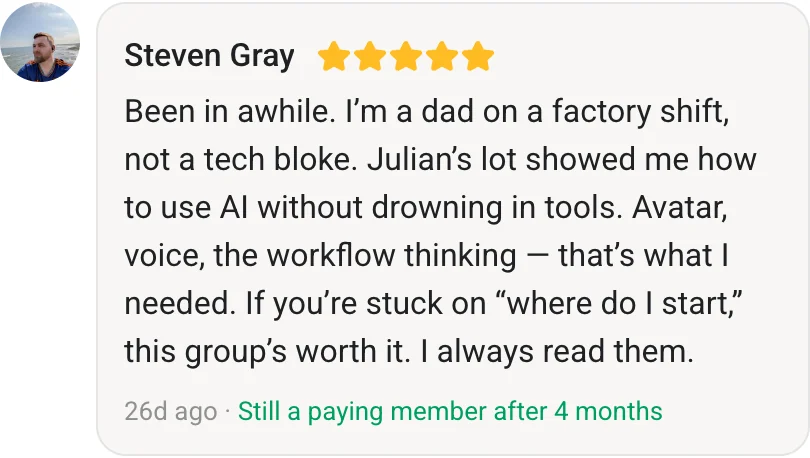
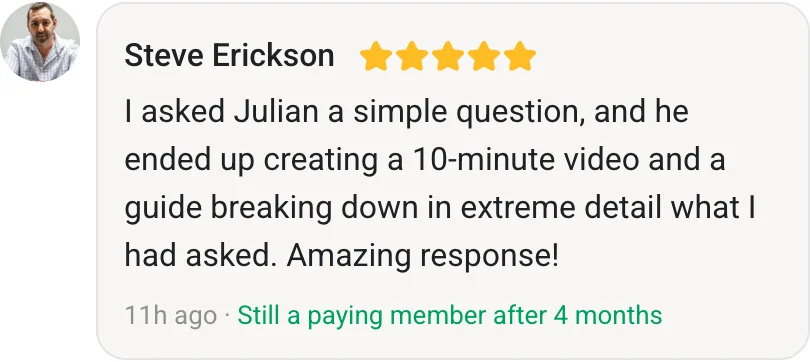
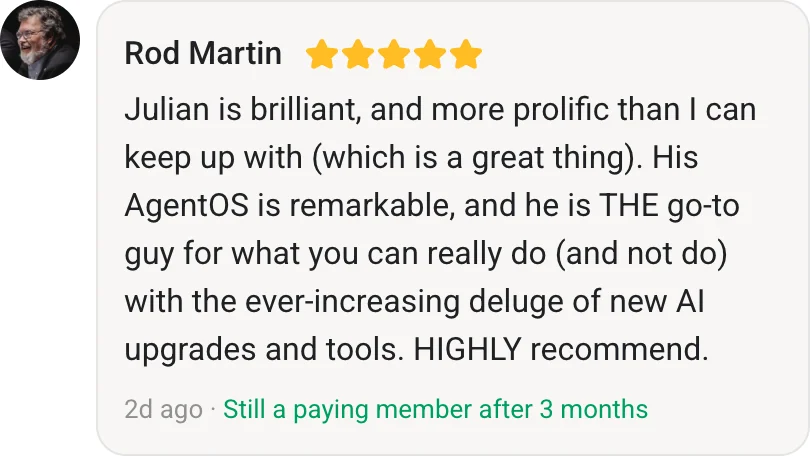
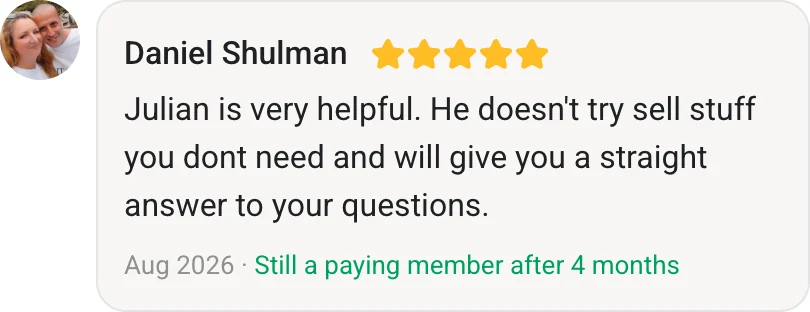
The AI Profit Boardroom has 3,000+ members running variations of the wrapped Agentic OS Claude Code stack.
We run five live calls every week including a dedicated AI build call where we walk through real Agentic OS projects.
The price is locked at $69 a month forever and backed by a twin guarantee.
If you don't ship something real in 30 days, I refund you and you keep all the training.
That's how confident I am in the wrapped workflow.
Want a free way to test the workflow first? Join my AI Money Lab — a free community where I share lighter versions of these workflows and 1,000+ free AI agents.
When To Hand This Off To An Agency
The Agentic OS Claude Code workflow scales an individual operator dramatically.
If you need ten of these systems running in parallel across multiple clients, you've outgrown DIY.
That's when you bring in a team.
The Goldie Agency runs this exact wrapped stack for SEO and AI clients.
Need this built for you at agency scale? Book a free strategy session with my 7-figure SEO agency Goldie Agency. Book free session
FAQ — Agentic OS Claude Code Vs Vanilla
What's the actual difference between Agentic OS Claude Code and vanilla?
Vanilla is the standalone CLI agent. Agentic OS Claude Code wraps it in a dashboard plus three supporting agents (Hermes for research, OpenClaw for browser, Obsidian for memory) so you get multi-agent orchestration from one UI.
Is the wrapped version slower because of all the extra layers?
No — it's roughly 2x faster end to end because the supporting agents work in parallel. Hermes researches while OpenClaw verifies while Claude Code builds.
Does Agentic OS Claude Code cost more?
About 45% more in API tokens because the supporting agents consume tokens too. But the time saved usually dwarfs the token cost for any non-trivial work.
Can I switch between vanilla and wrapped on the same project?
Yes — both versions work in the same project directory. I use vanilla for quick scripts and the wrapped version for multi-step builds.
Do I need to install everything to test Agentic OS Claude Code?
The full stack takes about an hour to set up. If you just want to try the dashboard-plus-Claude-Code combo without Hermes and OpenClaw, that's a thirty-minute setup.
Is the wrapped version overkill for solo developers?
Not at all — solo developers benefit most because they have no team to delegate to. The wrapped version is effectively a small team in software form.
About Julian
I'm Julian Goldie — AI entrepreneur, SEO expert, and founder of the AI Profit Boardroom (3,000+ members). I help business owners scale with AI agents, automation, and SEO.
- 400K+ YouTube subscribers
- 7-figure AI agency (Goldie Agency)
- Daily training inside the Boardroom
- Author of multiple AI automation playbooks
Get my best AI training inside the AI Profit Boardroom
Latest Updates
- Agentic OS — the operator stack overview.
- Agentic OS Claude — the Claude Desktop kickoff prompts.
- Agentic OS Command Center — the dashboard walkthrough.
Further Reading On Agent OS Guide
For deeper walkthroughs on the topics in this article, the Agent OS Guide library has these worth bookmarking.
- Agent OS Guide — the full library of Claude-first agent OS walkthroughs in one place.
- How Claude Mythos Changed AI — context on why Claude sits at the centre of this stack.
- Free Claude Code Setup Guide — the no-cost path to running Claude Code locally.
- Hermes Agent OS Q&A — common questions when pairing Claude with Hermes.
Also On Our Network
- Read on bestaiagentcommunity.com
- Read on aiprofitboardroom.com
- Read on juliangoldieaiautomation.com
- Read on aisuccesslabjuliangoldie.com
Related Reading
- Agentic OS Meaning — business-level case for the OS layer.
- Agentic OS Download — install + first build setup.
- Agent OS Claude — orchestration and routing diagram.
- Claude Code No Flicker Mode — the env var fix for long builds.
- DeepSeek Harness — the lighter alternative for low-spec hardware.
Video notes + links to the tools
Get a FREE AI Course + Community + 1,000 AI Agents
If you've been running vanilla Claude Code and wondering whether to upgrade your workflow, agentic os claude code is the wrapping that doubles your weekly shipping output without changing the underlying engine.