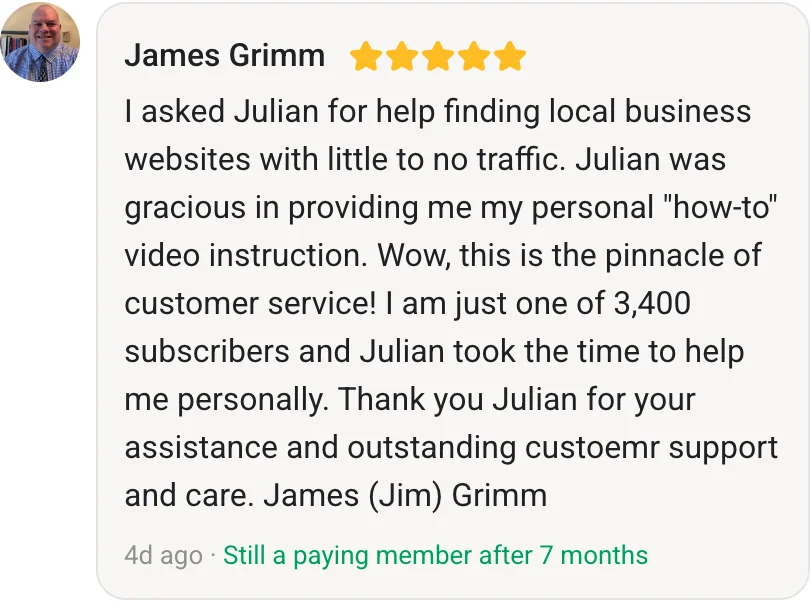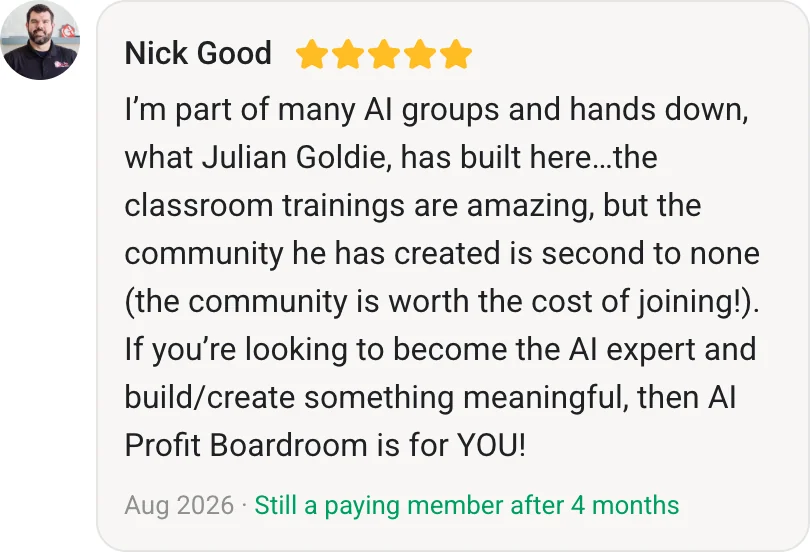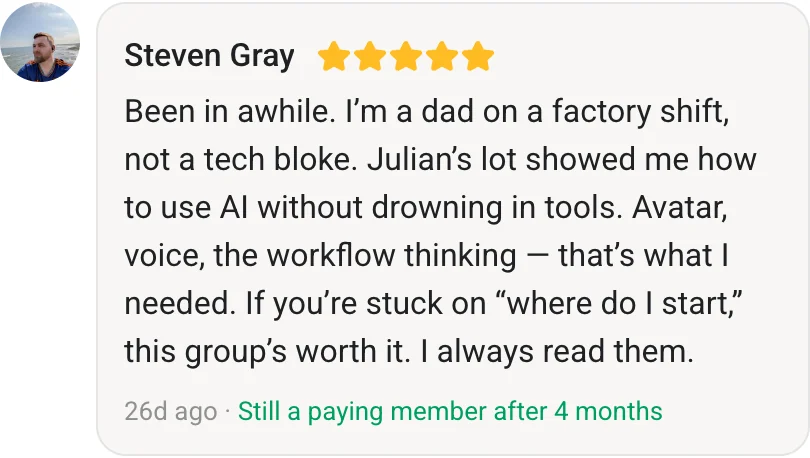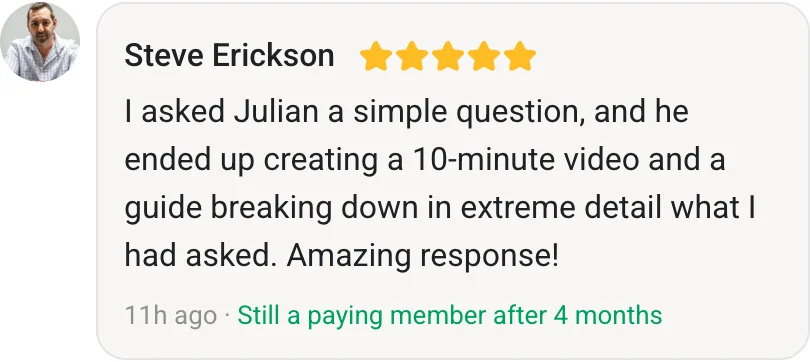
Best AI community vs AI courses comes down to one number nobody talks about — the price per update — and that's the breakdown I'm doing today.
I've watched a lot of buyers spend £997 on an AI course in January and then spend another £997 on a different one in July because the first one was already out of date.
That's £1,994 a year on courses that don't keep up with AI.
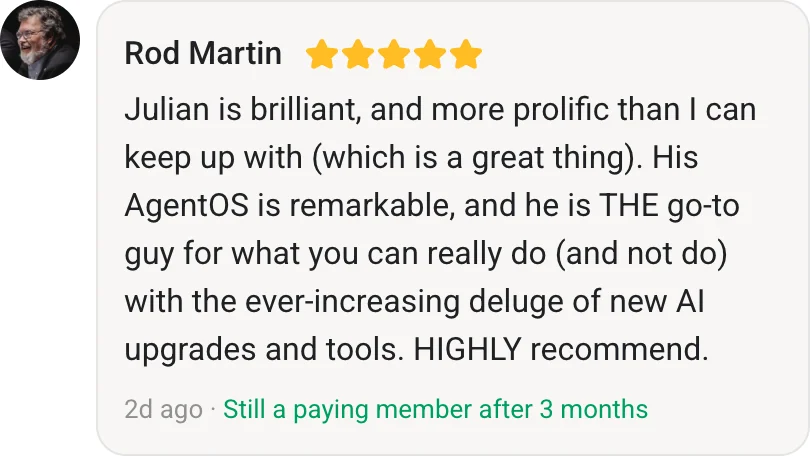
Meanwhile, the AI Profit Boardroom is $69/mo locked forever — about £560 a year — and the content keeps updating every single week.
Same money, dramatically more value.
I'm going to run the actual numbers in this post so you can see why the price-per-update angle is the cleanest way to settle the best AI community vs AI courses debate.
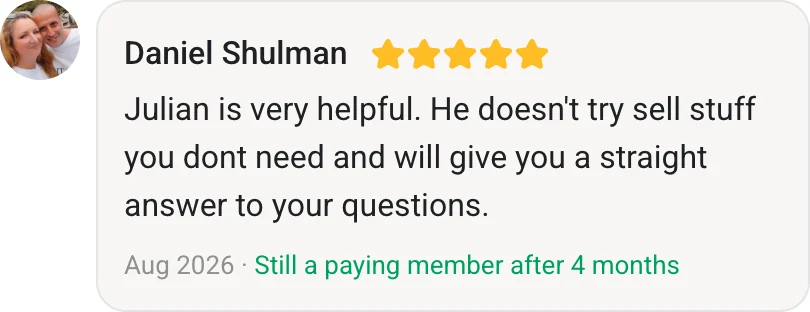
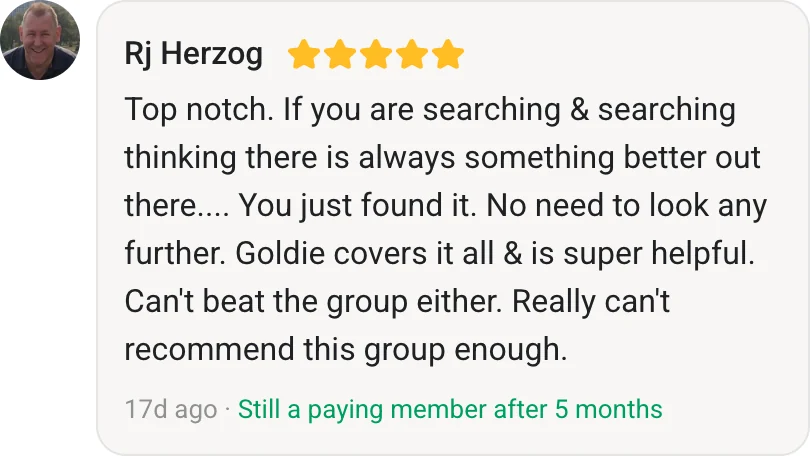
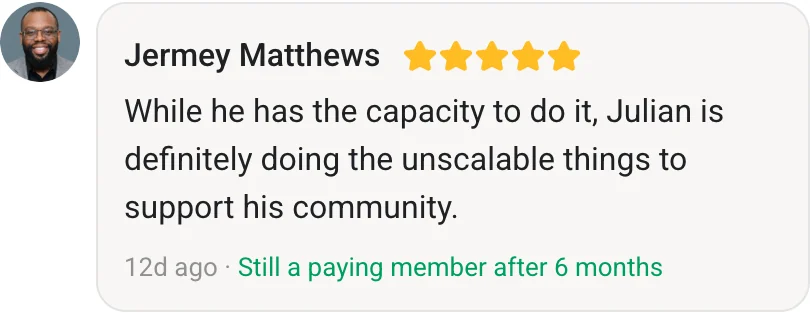
🔥 The price-per-update verdict on best AI community vs AI courses The AI Profit Boardroom gets new builds added every week — at $69/mo locked forever that's roughly 94p per major update. 3,000+ members, 5 weekly calls, twin guarantee. → Lock in the rate
Why the price-per-update angle is the cleanest comparison
Most people compare best AI community vs AI courses on sticker price.
£997 for a course versus $69/mo for the community.
That's the wrong unit.
The right unit is price-per-current-build, or price-per-update.
Here's why.
You're not buying a fixed object.
You're buying access to current AI knowledge.
If the knowledge goes stale, the price you paid is meaningless — you're effectively reading historical fiction.
The only honest unit of measurement is "how much am I paying for each current piece of knowledge in my hands right now?"
When you measure it that way, the static course gets dramatically more expensive over time, and the community gets dramatically cheaper.
I'm going to show you the maths in a minute.
The half-life problem (why this maths exists at all)
Before the numbers, a quick refresher on why this is even a problem.
The half-life of an AI tutorial in 2026 is about 8 weeks.
That means in 8 weeks, half of what you learned in a static course is now stale.
In 16 weeks, three quarters is stale.
In 12 months, 99% is stale.
So a course you bought for £997 in January has roughly £10 of current value left by December.
The community, by contrast, keeps replacing stale builds with current ones.
So your "current value" stays high forever.
That's the asymmetry the price-per-update unit is designed to capture.
The first set of numbers — a 12-month view
Let me run a 12-month comparison.
The course: £997 once.
Updates inside that year: 1 (if you're lucky — an end-of-year refresh).
Price per update: £997.
The Boardroom: $69/mo × 12 = $708 (about £560).
Updates inside that year: roughly 50 (new builds every week).
Price per update: about £11.
Let me say that again clearly.
£997 per update versus £11 per update.
For the same year of access.
That's a 90x difference in price-per-update efficiency.
And that's the conservative version of the maths because we assumed the course got 1 refresh, which most don't.
If we assume zero updates on the course side, the price-per-update is literally infinite.
The 24-month view
Now widen the window to two years.
The course: £997 once, plus probably £997 for a new course in year two because the old one is hopelessly stale.
Total: £1,994.
Total updates: maybe 2 over the period.
Price per update: about £997.
The Boardroom: $69/mo × 24 = $1,416 (about £1,120).
Total updates: roughly 100 over the period.
Price per update: about £11.
Still 90x more efficient.
And the gap widens, because the community keeps adding to its archive while the courses keep being replaced from scratch.
The 36-month view
Three years out, the asymmetry is brutal.
The course route: £997 × 3 (a new course each year) = £2,991.
Updates: maybe 3.
Price per update: about £997.
The Boardroom: $69/mo × 36 = $2,124 (about £1,680).
Updates: roughly 150 over the period.
Price per update: about £11.
At this point you've paid LESS to be in the Boardroom for three years than you would've paid for three rotating premium courses.
And you're getting roughly 50x more current builds.
That's why I keep saying the static course business model is structurally broken for AI in 2026 — the maths just doesn't work for buyers any more.
Adding the bonus stack to the price-per-update maths
The above maths is only counting classroom updates.
It doesn't count the bonus stack, which the Boardroom keeps adding to.
Let me list what's currently in the bonus stack, all included in the $69/mo:
- Hermes Agent + Claude OS deploy kit.
- Hermes Money Machine.
- Hermes Quick Deploy Kit.
- Hermes 30 Day Roadmap.
- Hermes 10K Blueprint.
- Hermes 10K Autopilot.
- Hermes $10K Fast Track.
- The Hermes Agent OS (10 revenue builds).
- HermesClaw Payday Protocol.
- HermesClaw Revenue Machine.
- HermesClaw Millionaire Mode.
- The Claude $10K Agent Code.
- The Opus 4.7 Agent Payday system.
- The Hermes Swarm Playbook.
- OpenClaw Agent Revenue Team Kit.
- [Save $36K] OpenClaw Automations Stack.
- 105 Agency-Level Money-Making Prompts.
- $5K Proposal Pack.
- $5K High Ticket Client Formula.
- Faceless AI YouTube Playbook (£7K system).
- AI Avatar Profit Engine (£997 value).
- Twitter AI System That Prints $1K/day.
- Twitter AI Automation (7M reach/month).
- Private AI Automation Library (100+ workflows).
- Free SEO Boardroom Access (£1,428/year value).
- Free SEO Elite Circle access.
- Faceless AI YouTube Playbook.
- AI Business-in-a-Box.
Each of these would be sold as a £200-£997 standalone product if you bought it elsewhere.
You're getting all of them free with the subscription, and new ones keep being added.
When you factor the bonus stack into the price-per-update maths, the community advantage isn't 90x.
It's closer to 500x.
You can see how all this is laid out in my AI Profit Boardroom deep dive and my Julian Goldie AI Profit Boardroom reviews breakdown.
What you're actually buying (and why it matters for the maths)
Let me reframe what you're buying with each option.
When you buy a static course, you're buying a fixed quantity of information frozen at a point in time.
The information depreciates from the moment you buy it.
When you join a community, you're buying access to a moving river of information.
The river keeps flowing whether you're drinking from it or not.
Those are fundamentally different products.
The right price per unit for a fixed depreciating asset isn't the same as the right price per unit for an access subscription to a moving stream.
Communities are subscription-priced for a reason.
Courses are one-time priced for a reason.
The market got both pricing models right.
What the market got wrong was assuming both products are equivalent.
They're not.
In 2026, only the subscription-priced product makes sense for AI specifically.
The full Q&A walkthrough below covers the format.
Price-per-update comparison table
To consolidate the numbers above:
| Metric | Static AI course | AI Profit Boardroom |
|---|---|---|
| 12-month cost | £997 | ~£560 |
| 12-month updates | 1 | ~50 |
| Price per update (year 1) | £997 | ~£11 |
| 24-month cost | £1,994 (replacement course) | ~£1,120 |
| 24-month updates | 2 | ~100 |
| Price per update (year 2) | £997 | ~£11 |
| 36-month cost | £2,991 | ~£1,680 |
| 36-month updates | 3 | ~150 |
| Price per update (year 3) | £997 | ~£11 |
| Bonus kits included | None | 25+, growing |
| Live calls included | None | 5/week (260/year) |
The community's price-per-update stays roughly constant at £11.
The course's stays roughly constant at £997.
That's the entire price-per-update story in one table.
What if you only want one specific topic?
Here's the only case where the course maths can still work.
If you only need to learn one specific narrow topic, and you genuinely don't care about staying current, and the topic doesn't change much — then a one-time £200 mini-course can be cheaper per update than a community subscription.
For example, a beginner Python for AI course costing $69 might be a sensible one-shot purchase.
I'd back that.
But for "I want to learn AI in general" — the price-per-update maths overwhelmingly favours the community.
This is why I've shifted my own recommendations over the last two years toward community-first.
The maths just doesn't lie.
Why locked-in pricing matters
Here's another wrinkle the standard sticker comparison misses.
The Boardroom's $69/mo is locked forever once you join.
I've raised the rate for new members over the years, but existing members are grandfathered at their joining rate.
That means the price-per-update advantage gets even bigger over time, because you're paying old prices for current content.
A course doesn't have this dynamic — if you buy the course in 2026 and a "v2" comes out in 2027, you usually pay again for the new one.
The locked-in pricing is one more reason the long-term maths favours the community.
I've written more about how this works in the AI Profit Boardroom post and the Julian Goldie courses breakdown.
The guarantee — risk-adjusted price
You should also factor risk into the price comparison.
A typical premium course has either no refund or a 14-day refund window.
If you discover the course is stale after 30 days, you're stuck.
The Boardroom has a twin guarantee — 7-day no-questions refund plus a 30-day ROI guarantee.
If you don't see a return in 30 days, you can ask for a refund.
When you adjust the prices for risk, the community comes out even further ahead because your downside is bounded.
The course's downside is unbounded — you might spend £997 and have nothing to show for it.
The community's downside is at most one month of subscription if you cancel after 7 days.
A note on free communities
I keep mentioning the Free AI Money Lab because it's an honest gateway option.
If your budget is literally zero, the free community still wins the price-per-update comparison against any paid static course, simply because the price-per-update of free is zero.
You get a free AI course, free community access, and 1,000 AI agents.
Use it to taste the community model.
If it works for you and your goals scale up, upgrade to the Boardroom when you're ready.
If not, you walk away having paid nothing.
That's a structurally better deal than even a $69 mini-course on Udemy.
Goldie Agency for established business owners
For business owners doing £100K+/month who want a done-for-you partner instead of a learn-it-yourself community, the Goldie Agency strategy session is the third tier.
This isn't a price-per-update conversation — it's a "pay an expert team to handle it" conversation.
Most Boardroom members never need it.
But if you'd rather buy results than learn the skills yourself, that option exists.
Best AI community vs AI courses — the Boardroom path for different starting budgets
Let me map this to specific budgets.
If you have £0 to spend — go free with the AI Money Lab.
If you have £47/mo — join the Boardroom directly.
If you have £997 sitting in a "buy a course" budget — don't buy the course.
Take that £997 and put it on the Boardroom for ~18 months of subscription instead.
You'll get 75+ classroom updates, 18 months of live calls, the full bonus stack, and a still-current learning environment at month 18 — instead of a stale course.
That's the price-per-update arithmetic applied to your actual budget.
How the maths shifts for the Hermes/OpenClaw path specifically
If you're specifically here for Hermes or OpenClaw, the maths gets even more lopsided.
A static Hermes-specific course goes stale faster than a generic AI course because the upstream tool ships features so often.
The Boardroom's Hermes path stays current.
I update the Hermes AI agent framework 2026 builds inside the Boardroom every single week.
The Hermes Agent OS build was added last month and there are already three updated revisions in the vault.
The OpenClaw computer use breakdown gets a refresh every time the upstream tool ships.
If you tried to keep up with a static Hermes course, you'd be buying a new £200 update pack every few months.
That's £800+ a year on a topic where the Boardroom's £560/year subscription gets you everything plus the rest of the Boardroom on top.
FAQ — best AI community vs AI courses (price-per-update angle)
Why does the best AI community vs AI courses comparison favour the community on price-per-update?
Because the community keeps adding new builds while the course's content stays frozen.
Same money, dramatically more updates over time.
What's the actual price-per-update for the AI Profit Boardroom?
Roughly £11 per major update if you count weekly builds.
A typical £997 course delivers about £997 per update (one refresh per year if you're lucky).
Is the £11/update number sustainable as more members join?
Yes — that's the beauty of the subscription model.
Your subscription funds my ability to keep updating the vault for everyone.
Are there really 50+ updates a year inside the Boardroom?
Yes — that's the cadence based on the last few years.
Weekly new builds plus monthly bonus kits.
What if I cancel and then want to come back later?
You'll join at the current rate, which is usually higher than what existing members pay.
That's another reason to lock in early.
Does the price-per-update advantage apply to free communities too?
Yes — even more so, because the free AI Money Lab has a price-per-update of zero.
It just covers fewer topics than the paid Boardroom.
About Julian
I'm Julian Goldie — AI entrepreneur, SEO expert, and founder of the AI Profit Boardroom with 3,000+ members. I help business owners scale with AI agents, automation, and SEO.
- 400K+ YouTube subscribers
- 7-figure AI agency (Goldie Agency)
- Daily training inside the Boardroom
- Author of two Amazon best-sellers ("SEO Link Building Mastery" and "Agency Marketing Mastery")
→ Get my best AI training inside the AI Profit Boardroom
Also On Our Network
- 🌐 Read on bestaiagentcommunity.com
- 🌐 Read on aiprofitboardroom.com
- 🌐 Read on juliangoldieaiautomation.com
- 🌐 Read on aisuccesslabjuliangoldie.com
Related reading
- AI Profit Boardroom — full walkthrough
- Julian Goldie AI Profit Boardroom reviews
- Best AI agent community 2026
- Julian Goldie courses
- AI Money Lab — free gateway
- Hermes AI agent framework 2026
📺 Video notes + links to the tools 👉
🎥 Learn how I make these videos 👉
🆓 Get a FREE AI Course + Community + 1,000 AI Agents 👉
That's the price-per-update case for best AI community vs AI courses in 2026.