AI agent workflow automation changed how I run my business, and it can change yours too. I used to do everything by hand, and now I have a fleet of agents that handle the boring stuff for me. You don't need to be technical to start. You just need one simple agent to see what's possible.
Most people think AI agents are complicated or only for big teams. I felt the same way when I started. But once I built my first agent, I realised how easy it is to scale. This guide shows you exactly how I went from one agent to a full fleet. You'll learn the steps I took, the mistakes I made, and what actually works.
Why AI Agent Workflow Automation Matters
Time is the one thing you can never get back. Every hour you spend on repetitive tasks is an hour you're not growing your business. AI agent workflow automation fixes that problem by letting software do the work for you. An agent can research, write, format, and publish content without you touching a keyboard. It can answer emails, pull data, and update your dashboards while you sleep. The best part is that once you set it up, it just runs.
I used to spend hours on tasks that now take minutes. My agents handle research, drafting, and even publishing. That freed me up to focus on strategy and growth. If you're still doing everything manually, you're leaving time and money on the table.
The Shift From Doing to Delegating
The biggest shift for me was learning to delegate to machines. I didn't trust AI at first because I thought it would mess things up. But I started small, tested the results, and built trust over time. Now I can't imagine running my business without agents.
Delegating doesn't mean losing control. It means you set the rules, and the agent follows them. You review the output, make tweaks, and let it run again. Over time, the agents get better because you refine the process.
How I Built My First AI Agent
I started with one agent that did one job. It wrote blog post outlines from a keyword. That's it. I gave it a prompt, and it gave me a structure I could flesh out. It saved me maybe 20 minutes per post. That doesn't sound like much, but it added up fast. After a week, I'd saved hours and the outlines were getting better because I kept improving the prompt.
The key is to start with something small and measurable. Don't try to automate your whole business on day one. Pick one task you hate doing, and build an agent for that. Once it works, you'll see the potential.
Picking the Right First Task
Your first agent should handle a task that's repeatable and boring. Good candidates include writing meta descriptions, summarising research, or formatting data. These are tasks where the rules are clear and the output is easy to check. If the agent messes up, you catch it before anything goes live.
I picked blog outlines because I write a lot of content. You might pick something else based on your business. The point is to choose something you do often enough to matter.
Scaling Up: From One Agent to a Small Team
Once my first agent worked, I wanted more. I added a second agent that took the outline and wrote a first draft. Then I added a third that checked the draft for SEO basics. Suddenly I had a small team of agents working together. One does the outline, one writes the draft, and one checks the work. Each agent has one job, and the output flows to the next one.
This is where AI agent workflow automation starts to get powerful. You're not just saving time on one task anymore. You're building a system that handles an entire process from start to finish.
Connecting Agents Into a Workflow
The trick is thinking in steps. What happens after the first agent finishes its job? That output becomes the input for the next agent. You chain them together so the work flows automatically.
I used simple tools to connect my agents at first. No fancy setup, no complex code, just prompts and basic automation. The agents passed their output to the next step, and the process ran on its own. If you can write a prompt, you can build a workflow.
Building a Fleet: Multi-Agent AI Automation
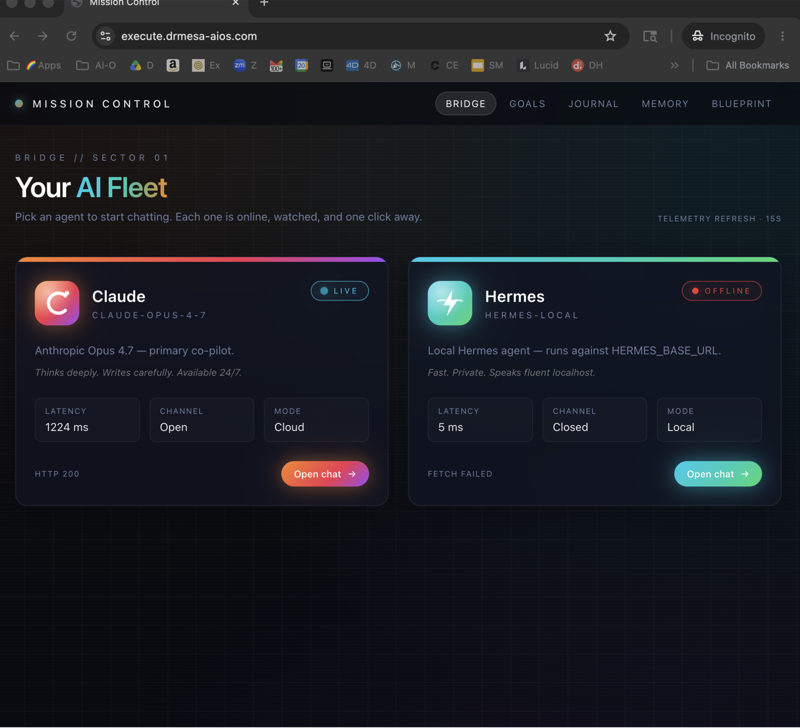
A fleet is different from a small team. A fleet means you have agents handling multiple workflows at the same time. One agent does content, one does research, one does social posts, and one handles analytics. They all run in parallel, and you manage them like a team of employees.
I now have agents that handle research, content creation, SEO checks, and publishing. They work on different tasks at the same time, which means more gets done in less time. My fleet runs while I focus on the big picture.
How AI Agent Workflow Automation Scales
Scaling works because each agent is independent. You can add new agents without breaking existing ones. If one agent needs an update, the others keep running. This makes the system flexible and easy to grow.
I add agents when I find new bottlenecks. If a task is eating my time, I build an agent for it. Over months, the fleet grew naturally based on what I actually needed. I didn't plan the whole thing upfront, I just kept adding pieces.
The Tools I Use for AI Agent Workflow Automation
You don't need expensive tools to start. I use a mix of free and paid platforms that work together. The core is a good AI model, a way to connect tasks, and a place to store outputs. Here's what I rely on:
- I use a capable AI model that can follow instructions and write well.
- I connect agents using simple automation tools that pass data between steps.
- I store outputs in a shared workspace where I can review and approve them.
- I check results regularly to make sure quality stays high.
The tools matter less than the process. A good workflow with basic tools beats a bad workflow with fancy tools every time.
🔥 Want the exact setup? Inside AI Money Lab I walk through this step by step — free, with 1,000+ AI agents and a community building real automations. → Get free access here
Common Mistakes I Made (So You Don't Have To)
I made plenty of mistakes building my agent fleet. Each one taught me something useful. Here are the biggest ones so you can skip them:
- I tried to automate too much at once and the quality dropped fast.
- I didn't review outputs early on, which meant errors slipped through.
- I overcomplicated prompts when simple ones worked better.
- I forgot to test changes, so new agents broke old workflows.
- I let agents run without checking in, and small drifts became big problems.
The fix for all of these is the same. Start small, check often, and keep things simple. Your agents should do one job well, not five jobs poorly.
Why Quality Control Matters More Than Quantity
More agents doesn't mean better results if the quality is poor. I learned this the hard way when I scaled too fast and had to fix a mess of bad outputs. Now I review every agent's work regularly. I tweak prompts, test outputs, and only scale when I'm confident the quality holds up.
Quality control is what separates a fleet that works from a fleet that wastes your time. Build the habit of checking outputs from day one, and you'll avoid the headaches I went through.
Measuring Results: What AI Agent Workflow Automation Actually Delivers
I track a few simple metrics to know my fleet is working. Time saved is the obvious one, but I also look at output quality and consistency. If my agents are producing work I'd be happy to publish, the system is working.
Here's what I measure:
- I track hours saved per week so I know the real impact.
- I check output quality by reviewing samples from each agent.
- I monitor error rates to catch problems before they grow.
- I look at how much I can scale without quality dropping.
The numbers tell you when to scale and when to slow down. Don't guess when you can measure.
When to Scale Your AI Agent Fleet
You don't scale just because you can. You scale when your current agents are running smoothly and you have new tasks to offload. I add agents when I see a repeatable task eating my time and I have a clear set of rules for it.
If your current agents need constant fixing, fix them before adding more. A wobbly foundation gets worse when you build on top of it. Get one workflow running reliably, then add the next one.
🔥 Ready to go deeper? My AI Profit Boardroom gives you step-by-step tutorials and weekly coaching on building real AI automations. It's $69/mo and was named the #1 AI community by FatRank. → Join the Boardroom here
Frequently Asked Questions
What is AI agent workflow automation?
AI agent workflow automation is the process of using AI agents to handle repeatable tasks in a connected sequence. You set the rules, and the agents do the work from start to finish without manual steps.
How many AI agents do I need to start?
You only need one agent to start. Pick a single task that's repeatable and boring, and build an agent for that. Once it works, you can add more agents and connect them into a workflow.
Can AI agent workflow automation work for small businesses?
Yes, it works especially well for small businesses because it saves time without needing a big team. One or two agents can handle tasks that would normally require a full-time employee.
How do I keep quality high when using multiple AI agents?
You keep quality high by reviewing outputs regularly and testing changes before you scale. Start with one agent, check its work, refine the prompt, and only add more agents when the quality is consistent.
What's the difference between a single agent and an agent fleet?
A single agent handles one task, while a fleet handles multiple workflows running in parallel. A fleet lets you automate different parts of your business at the same time, which dramatically increases what you can get done.
Is AI agent workflow automation expensive to set up?
It doesn't have to be expensive at all. I started with free tools and a simple prompt. You can begin with one agent and scale up as you see results, so the cost grows with your success.
Start Your AI Agent Workflow Automation Today
You don't need a big team or a big budget to start AI agent workflow automation. You need one task, one agent, and the willingness to test it. I went from doing everything by hand to running a fleet that works while I sleep. You can do the same thing if you start small and build up. The first agent is the hardest, and every one after that gets easier. Pick your task, write your prompt, and get your first agent running today. That's how AI agent workflow automation begins.
🔥 Want the exact setup? Inside AI Money Lab I walk through this step by step — free, with 1,000+ AI agents and a community building real automations. → Get free access here