If you run a team that uses more than one AI agent, you have probably already hit the same wall I hit: AI agent task queues are the only thing keeping multiple agents from stepping on each other's toes.
It sounds technical, but the idea is simple.
You have a list of jobs, and you need to decide which agent does what, and in what order.
That is a task queue.
I want to walk you through how this works in plain English, so your team can start using it without learning to code.
What Are AI Agent Task Queues and Why Do They Matter?
A task queue is just a to-do list for your AI agents.
Instead of one agent trying to do everything at once, each job sits in a line and waits its turn.
The agent that is best suited for the job picks it up, gets it done, and moves on to the next one.
I think of it like a restaurant kitchen during a dinner rush.
Orders come in, they get lined up, and each chef grabs the next ticket that matches their station.
Nobody is standing around, and nobody is fighting over the same plate.
When you have multiple agents running at the same time, a queue keeps everything organised.
It stops two agents from doing the same job twice.
It makes sure high-priority work jumps ahead of low-priority work.
And it gives you a clear view of what is done, what is in progress, and what is still waiting.
How AI Agent Task Queues Help Non-Technical Teams Work Faster
You do not need a developer to benefit from this.
Most modern automation tools let you build a queue using drag-and-drop interfaces.
I have found that once a team understands the concept, they can set one up in an afternoon.
The beauty is in the prioritisation.
You can tell your system that customer support tickets come before internal reports.
You can say that urgent tasks get picked up first, and routine tasks fill the gaps.
This means your agents are always working on the thing that matters most right now.
You Stop Losing Track of Work
Without a queue, tasks get forgotten.
One agent finishes a job, and nobody remembers to assign the next one.
With a queue, the next job is already sitting there waiting.
The agent just grabs it and keeps going.
You Avoid Duplicate Effort
I have seen teams where two agents both write a blog outline because nobody checked what the other was doing.
A task queue fixes that.
Once a job is claimed, it is off the board.
No other agent can touch it.
You Get a Clear Paper Trail
Every task has a status.
It is either queued, in progress, or done.
That means you can look at your dashboard at any time and see exactly where things stand.
No more chasing people for updates.
Simple Ways to Prioritise Work Across Multiple Agents
This is the part that sounds complicated but is actually the most useful.
Prioritisation is just a set of rules.
You decide what matters most, and your queue follows those rules.
Use Priority Levels
Most tools let you tag each task with a priority.
High-priority tasks jump to the front of the line.
Medium tasks go next.
Low-priority tasks fill in the quiet moments.
I like to keep it to three levels because anything more gets messy.
Route Tasks to the Right Agent
Not every agent should do every job.
You can set rules that say certain tasks always go to a specific agent.
If one agent is great at writing and another is better at data analysis, you split the work accordingly.
The queue handles the routing for you.
Set Deadlines Inside the Queue
Some tasks need to happen by a certain time.
You can attach a deadline to each task in the queue.
The system then bumps anything approaching its deadline to the top.
This keeps you from missing important cut-offs.
The Tools I Recommend for Building AI Agent Task Queues
You do not need to build anything from scratch.
There are tools designed to make this easy for non-technical users.
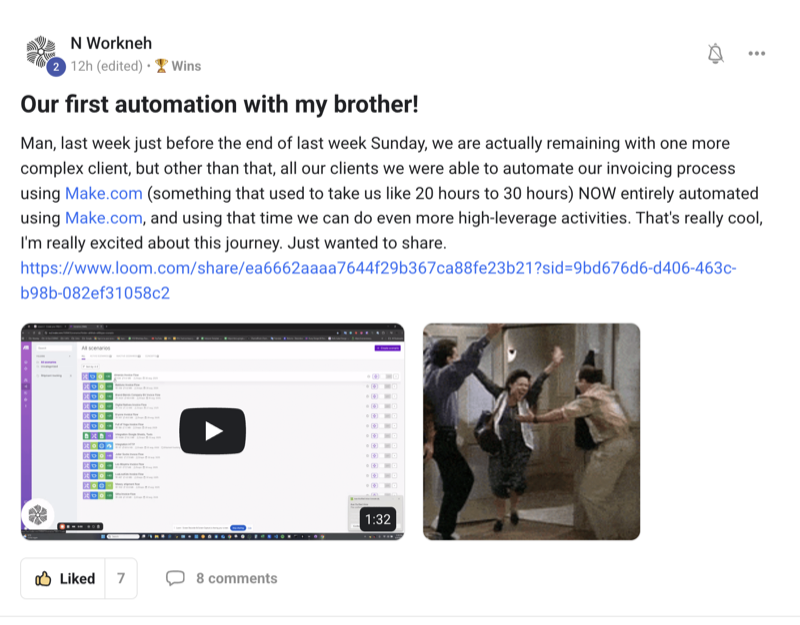
Make.com Lets You Build Queues Visually
Make.com is a drag-and-drop automation platform.
You can create a scenario where tasks land in a queue, get picked up by agents, and move through your workflow.
It shows you a visual map of every step, which I find helps teams understand the flow instantly.
You can set priority filters and routing rules without writing a line of code.
Zapier Handles Simple Queues Well
Zapier is another solid option if your needs are straightforward.
It connects your apps and moves tasks between them based on triggers you set.
It is not as flexible as Make.com for complex routing, but it is incredibly easy to get started with.
I recommend it for teams that are just dipping their toes in.
Notion Boards Work as a Lightweight Queue
If you want something even simpler, a Notion board can act as a task queue.
You create a column for queued tasks, one for in progress, and one for done.
Your agents (or the humans supervising them) move tasks across the board.
It is low-tech, but it works surprisingly well for small teams.
🔥 Want the exact setup? Inside AI Money Lab I walk through this step by step — free, with 1,000+ AI agents and a community building real automations. → Get free access here
Common Mistakes Teams Make With AI Agent Task Queues
I have made most of these mistakes myself, so you do not have to.
You Put Too Many Tasks in the Queue at Once
A queue is not a dumping ground.
If you dump every random idea in there, the important work gets buried.
I keep my queues lean by only adding tasks that are ready to go.
You Do Not Set Clear Ownership
Every task needs to have a clear owner.
That could be an agent or a person, but somebody has to be responsible.
Without ownership, tasks sit in the queue until everyone forgets they exist.
You Forget to Review the Queue Regularly
A queue is a living thing.
You need to check it daily.
If a task has been sitting there for a week, something is wrong.
Either it is not actually important, or it is blocked and needs attention.
How I Track Results From My AI Agent Task Queues
Setting up the queue is only half the battle.
You also need to know whether it is actually making your team faster.
I look at three things.
Throughput
This is how many tasks your agents complete in a day.
If that number is going up, your queue is working.
If it is flat or dropping, something in your workflow needs fixing.
Wait Time
This is how long a task sits in the queue before an agent picks it up.
Long wait times mean your agents are overloaded or your routing rules are wrong.
I aim to keep wait times under an hour for high-priority tasks.
Error Rate
Sometimes agents pick up tasks they cannot complete.
That usually means your routing rules need tightening.
If an agent keeps grabbing the wrong type of job, you need to adjust how tasks are tagged.
A Simple Workflow You Can Copy Today
Here is the exact setup I use for my own content team.
I have one queue for content ideas, one for drafting, and one for editing.
The idea queue is full of raw topics tagged by priority.
An agent picks the highest-priority idea and drafts an outline.
That outline moves to the drafting queue, where another agent writes the full piece.
The finished draft goes to the editing queue, where a third agent checks it for quality.
Each queue has its own priority rules and routing.
Nothing gets lost, nothing gets duplicated, and I always know where each piece of content sits.
This same pattern works for any type of work.
You just swap the labels.
If you want to see exactly how I built this, I show the full walkthrough inside AI Profit Boardroom for $69 a month, with weekly coaching and step-by-step tutorials.
Frequently Asked Questions
What are AI agent task queues in simple terms?
AI agent task queues are structured to-do lists that tell multiple AI agents which jobs to pick up and in what order. They keep work organised so no two agents do the same task and nothing gets missed.
Do I need coding skills to use AI agent task queues?
You do not need coding skills to use AI agent task queues because tools like Make.com and Zapier let you build them visually. You drag and drop your steps, set your priority rules, and the platform handles the rest.
How do I prioritise tasks across multiple agents?
You prioritise tasks across multiple agents by assigning priority levels to each task and setting routing rules that send the right job to the right agent. High-priority tasks jump to the front of the queue, and lower-priority tasks fill the gaps.
What happens if two agents try to do the same task?
When you use AI agent task queues properly, the system locks a task once an agent claims it. This stops duplicate work because no other agent can pick up a task that is already in progress.
Can I use AI agent task queues for non-content work?
You can use AI agent task queues for any type of work that involves multiple steps or multiple agents. I have used them for content, customer support, data processing, and research, and the same queue structure works for all of them.
How many agents should I run in a single queue?
I recommend starting with two or three agents per queue so you can see how the flow works before you scale up. Once your team is comfortable, you can add more agents and split work across separate queues for different task types.
If you want your team to move faster without the chaos, AI agent task queues are the simplest way to prioritise work across multiple agents and keep everything running smoothly.