Most side hustles die the same way: they quietly become a second job. You finish work, open the laptop, and the project that was meant to buy your freedom demands four more hours of admin. That's the problem OpenClaw side hustles solve — income models where a free, open-source agent does the repetitive work on your machine while you supply the judgement and the client relationship. I've been testing six of them, ranked best first below.
📺 Watch: OpenClaw FULL COURSE 5 HOURS (Build & Automate Anything)
🔥 Get the Agent OS as a free bonus: AI Profit Boardroom members get the full Agent OS zip, prompt libraries, daily tutorials and weekly live coaching calls. → Get inside
Quick context: I run a seven-figure SEO agency and a 400,000-subscriber YouTube channel, and I've already covered how to make money with OpenClaw and the best ways to make money with OpenClaw. This page owns the narrower angle: models you can genuinely run around a day job.
Why OpenClaw fits side hustle work
Three reasons. One, it's free and open source, so there's no subscription eating your margin before you've landed a client. Two, it runs locally: a client's logins, spreadsheets and customer lists stay on your machine, a strong sales line with nervous small-business owners. Three, OpenClaw's computer use drives real interfaces — the actual CRM, the actual dashboard, the actual CMS. Small businesses don't run on APIs; they run on ancient portals and spreadsheets, and an agent that can click through those is the whole game.
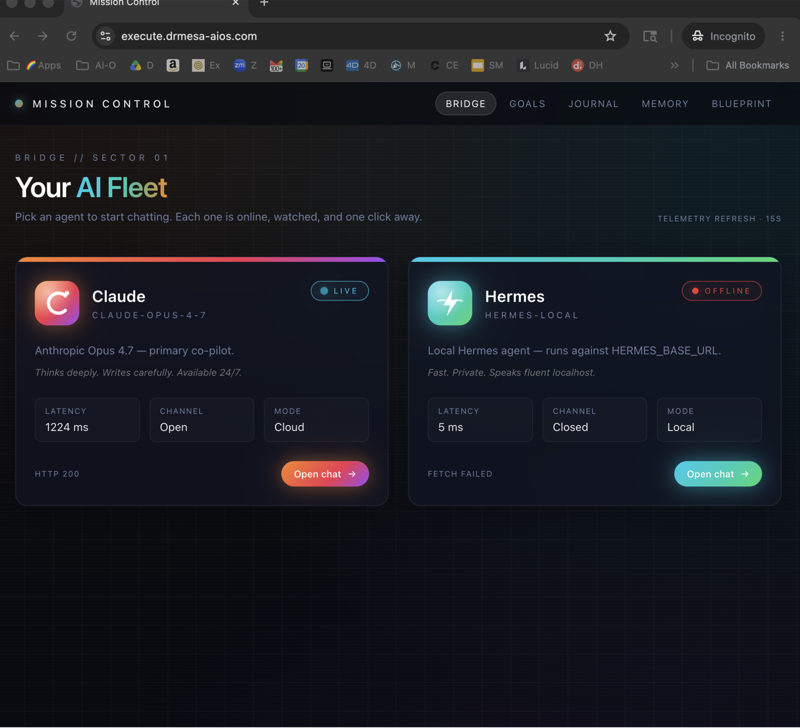
Add persistent memory, so it remembers a client's voice instead of starting cold, and a mission control view showing what ran while you were at work, and you've got a proper delivery engine. In my own stack, OpenClaw plugs into my Agent OS next to Hermes and Claude with shared memory, and I test which agent runs which job best on Goldie Bench — none of it needed on day one. One laptop, one agent and one offer make OpenClaw side hustles workable around a full-time job.
The best OpenClaw side hustles, ranked
1 — AI SEO content services for small businesses
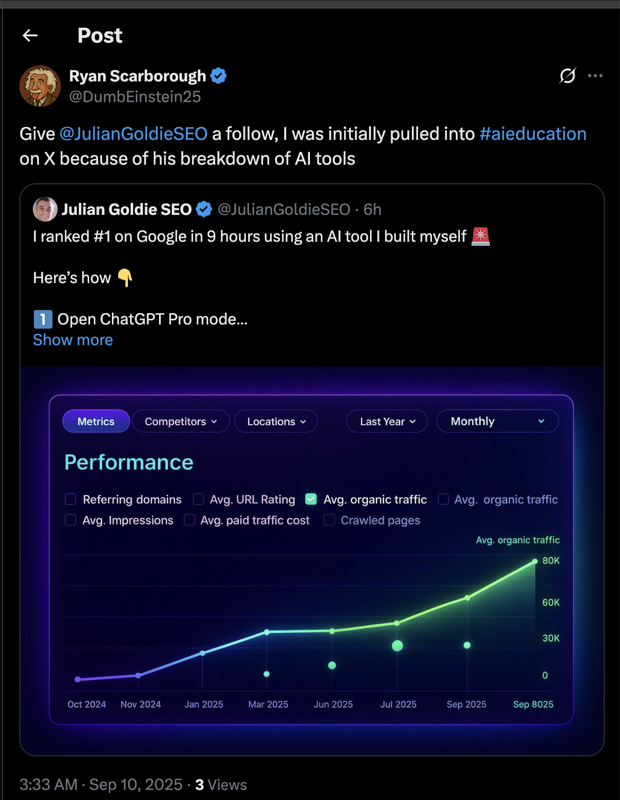
Top of the list because it comes with a working engine, not a theory. You run my traffic system for local and niche clients: pull their Google Search Console data, find keywords getting impressions but no clicks, then publish case-study-driven pages that win those clicks — sold as a monthly service. I've documented the stack in my OpenClaw SEO tool breakdown, and it's agent-agnostic: the same engine took my sites from zero to 325 clicks a day, another to 125, another to 34, all free traffic on low-authority domains. The engine did that; OpenClaw is simply a free pair of hands that can run it.
OpenClaw pulls the gaps, drafts from the client's real case studies, formats and publishes into their CMS. You do quality control and own the relationship. First client: a local business you already know — plumber, dentist, letting agent — shown their own Search Console gaps on a ten-minute screen share. You're not selling promises; you're showing them queries Google already wants to rank them for.
2 — Automation builds for local businesses
Every small business has a task someone dreads: retyping orders into the accounts system, building the same Monday spreadsheet, chasing invoices. You sell fixed-price builds that automate one painful workflow each. This is where computer use earns its keep — OpenClaw drives the software the business already uses, so you're never blocked by missing integrations, and a saved workflow runs the same way every time.
First client: ask an owner which weekly task they hate most, automate it cheap or free, and let the result sell the next build. Expect a few evenings of discovery and building per project — lumpy fees rather than recurring revenue, which is why many bolt a monthly service on later.
If you'd rather copy working money workflows than reinvent them, the AI Profit Boardroom ships my agent money workflows ready to run, plus four weekly coaching calls to pressure-test your niche and offer. → Copy the workflows
3 — Niche sites you own
Same engine as number one, pointed at sites you own. OpenClaw runs the loop — keyword gaps, case-study content, indexing, outreach drafts — and you monetise the traffic with affiliate offers or your own products. It's the slow-but-owned path, and I'll be straight about the timeline: SEO takes three to six months, longer on new domains. One of my own sites sat flat from April to November before it popped. That's Google's sandbox, and no agent removes it — what the agent removes is the labour of waiting: it keeps publishing through the flat months, exactly where humans quit.
The trade: client work pays sooner; a niche site is an asset nobody can fire you from. On speed it ranks third — on long-term upside it might be first.
4 — Content repurposing service
Creators and founders sit on hours of podcasts, videos and webinars that never become anything else. You turn their long-form into posts, newsletters and scripts — in their voice, not generic mush. This is OpenClaw's memory doing the heavy lifting: feed it a client's back catalogue and style notes once, and it drafts like them week after week. You edit for voice and schedule; the agent handles the volume.
First client: a creator you already follow whose clips are clearly an afterthought — repurpose one episode free and send it over. Fast to start — no sandbox to wait out — but it lives and dies on weekly rhythm.
5 — Client reporting automation
The least glamorous model here and one of the stickiest. Agencies and freelancers lose whole days at month-end logging into dashboards, copying numbers and writing commentary. OpenClaw runs the lot: computer use logs into the SEO, ads and social dashboards, pulls the figures, assembles the report and drafts the commentary, with mission control showing every completed run. You review, polish and send.
Sell to people who already have clients — freelancers and small agencies. Nobody who hands reporting off ever asks for it back. Boring, valuable and sticky is a lovely combination.
6 — Selling agent setups
The newest model, growing fastest as agents go mainstream. Instead of running the agent for clients forever, you package a tuned OpenClaw workflow for one niche — instructions, memory files, saved workflows — and charge to install and configure it. Think "listing admin setup for letting agents", not "I do AI stuff". They own the agent afterwards; you sell the tuning and the teaching.
The honest prerequisite: be genuinely good at one workflow first — this is the natural second act after any hustle above. Document your setup publicly; the people asking how you built it are your buyers.
📺 Watch: New OpenClaw Upgrades are INSANE!
The pick-one rule
Here's how people fail at OpenClaw side hustles: they offer all six models to everyone and win nobody. The fix is deliberately boring — one hustle, one niche, one offer. Not "AI services for businesses" but "SEO content for dental practices" or "reporting for freelance PPC managers". A tight niche makes the agent's memory compound — every client sharpens the same workflow — and makes your pitch specific enough to believe. Need cash soon? One, two, four or five. Playing the long game? Three. Already brilliant at one workflow? Six.
📺 Watch: OpenClaw OS: Build & Automate ANYTHING!
How to think about pricing
I won't hand you invented numbers — anyone promising you'll earn a specific amount is selling something. The principle is value-based: price the outcome and the hours saved, never your time, because the agent collapses delivery time and that gap is your margin. Fixed prices for builds and setups; monthly retainers for content, SEO and reporting. And when the side hustle starts crowding out the day job, these same models scale — I've mapped that route in how to make money with an AI agency.
The honest bit
Three truths before you start. Agents need quality control — OpenClaw drafts fast, but unchecked output loses clients faster than no agent at all, and the checking is what you're paid for. SEO takes months — any ranking-based model needs the three-to-six-month conversation up front, and clients who accept it stay. And service work needs client skills — clear scope, regular updates, managed expectations — which no agent can do for you. None of that is a reason not to start — it's why those who start properly stand out.
The six models side by side
| Side hustle | OpenClaw's job | Your job | Speed to first pound |
|---|---|---|---|
| AI SEO content services | Keyword gaps, drafting, formatting, publishing | Quality control and the client relationship | Quick once a client signs; rankings build over months |
| Automation builds | Drives the client's real software via computer use | Discovery, build, handover | Quick — project fees paid on delivery |
| Niche sites you own | Runs the whole engine on your sites | Niche choice, offers, patience | Slow — months of sandbox before traffic |
| Content repurposing | Drafts in the client's voice from memory | Voice editing and scheduling | Quick — days from pitch to first invoice |
| Reporting automation | Pulls dashboards, assembles and drafts reports | Review, polish, send | Quick — agencies feel this pain every month |
| Selling agent setups | Is the product — a tuned, packaged workflow | Tuning, installing, teaching | Slower — needs a track record first |
OpenClaw side hustles FAQ
Can you really make money with OpenClaw?
The models are real — businesses already pay for content, automation, reporting and setups, and the agent collapses the delivery cost. What nobody honest will promise is a specific figure: your niche, offer and consistency decide that. Treat this page as paths, not payslips.
Which side hustle should I start first?
For the most proven engine, number one — the system behind it already grew my sites and is documented end to end. For the fastest first invoice with no ranking timeline, automation builds or reporting automation.
Do I need to be able to code?
No. OpenClaw is a desktop app you instruct in plain English, and computer use means it operates normal software the way you would. If you can describe a workflow clearly, you can build one. I walk through the full setup in my OpenClaw course.
Is OpenClaw actually free?
Yes — free and open source, running locally so client data stays on your machine. Your real costs are your time and whatever you spend on the model powering it. A very forgiving cost base for a side hustle.
How long until I see results?
Service models — automation, repurposing, reporting — can go from pitch to paid work in weeks — you're solving a pain the client already feels. Anything SEO-based needs three to six months before traffic compounds. Pick the timeline you can live with.
My verdict
The best OpenClaw side hustles all share one shape: the agent does the repetitive production — drafting, pulling data, clicking through dashboards — and you do the two things it can't, judgement and relationships. Start with the SEO content service if you want the engine I've already proven, automation builds for the fastest first invoice, or a niche site if you're patient enough to own the asset. One hustle, one niche, one offer — then let the agent's memory compound while everyone else works by hand.
If you want the shortcut instead of the trial and error, check out the AI Profit Boardroom — inside you get my ready-made money workflows, the full Agent OS setup as a zip, a 30-day roadmap, four weekly coaching calls and 3,700+ business owners building alongside you. → Start your first hustle