The OpenClaw roadmap isn't just a list of features — it's a stream of monetisation opportunities most operators are sleeping on, and this post breaks down how to turn each upcoming release into thousands of pounds of real revenue. Every shipped feature opens a new service line you can sell, and being early on the curve is genuinely the difference between charging £500 and charging £5,000 for the same work.
This is the money-focused view rather than the changelog view. I'll cover how each release maps to revenue, what real pricing looks like in the market right now, and the productisation playbook I'd run if I were starting from zero today.
🔥 Want my OpenClaw monetisation playbook? AI Profit Boardroom has the playbook + weekly coaching for selling OpenClaw services. → Get inside
Why The OpenClaw Roadmap = Money
There are three reasons the roadmap itself is the leading indicator of where the revenue will land over the next twelve months.
1 — Velocity = scarcity
OpenClaw moves fast and very few people manage to stay current with the pace. Whoever does stay current ends up commanding premium pricing because they're solving problems clients can't solve themselves, and there isn't a tier-two competitor to compress your rate.
2 — Each release = new offering
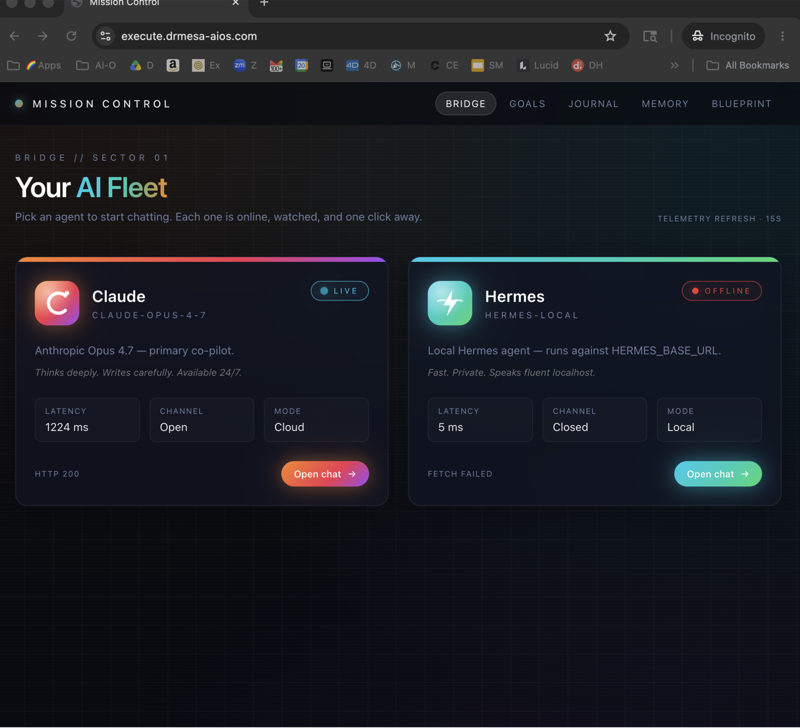
Every shipped feature unlocks a new service line you can package and sell. Memory v2 becomes a memory setup engagement, Mission Control becomes an ops audit engagement, and Swarms becomes a swarm architecture engagement — and each of those represents a separate £2,000 to £10,000 deal you can sell to the same buyer.
3 — Free tool, paid services
OpenClaw itself is free, but setup, customisation, and training are paid services with no licence costs eating your margins. That's a pure-margin business in the cleanest possible form, which is rare in the AI tooling space.
Watch The Roadmap
For the computer-use side of the stack that's already shipped, the walkthrough below is the one I'd watch alongside the roadmap.
6 Roadmap Features → 6 Revenue Streams
Each feature on the roadmap maps to a productised service line, and the pricing below is what I'm seeing land in the market right now.
1 — Computer Use V2 → automation engagement
When this ships, the natural offering is a £2,000 to £5,000 setup engagement that takes a client's manual workflows and automates them with a properly configured agent. Buyers are easy to find because every business has at least one painful manual workflow.
2 — Memory Persistence → memory architecture
Memory persistence unlocks a £1,500 to £3,000 setup engagement focused on long-term agent memory architecture. Every client who's tried agents and been disappointed by their goldfish memory becomes a buyer the day this ships.
3 — Mission Control → ops audit
Mission Control gives you an ops audit angle — review the client's existing agent setup, identify gaps, and propose improvements at £1,000 to £2,500 per audit. This is also a great upsell trigger for everything else.
4 — Multi-Agent Swarms → swarm design
Swarm design is the premium tier at £3,000 to £7,000 per engagement, and it's the offering that unlocks much bigger contracts because the architecture work is genuinely complex. Few people will be qualified to deliver it well.
5 — Telegram Deep → mobile bot setup
Mobile bot setups land in the £1,000 to £2,500 range and they're a fantastic entry-level offering for clients who want to feel the value before committing to a bigger project. Easy to deliver, easy to demo.
6 — AionUI → multimodal setup
Multimodal setups sell at £1,500 to £3,500 and they're particularly attractive to e-commerce and content clients who care about images and video. Six features, six revenue streams, all chargeable from the same skillset.
Pricing By Tier
A clean three-tier pricing model works for almost every offering on the list above.
Setup tier
The setup tier is a one-off engagement at £1,000 to £3,000 that gets the client running with a working system. This is the entry-level move that lands the relationship.
Custom tier
The custom tier is bespoke work at £3,000 to £7,000 tailored to the client's specific workflow. This is where the real margin lives, and it's where most of your repeat buyers will land.
Retainer tier
The retainer tier is ongoing maintenance plus new feature additions at £500 to £1,500 a month. Every client should be offered a retainer at the end of a setup engagement — it's the recurring revenue that turns this into a real business.
Each client can move through the tiers as their needs grow, which is how you build lifetime value into the model rather than just chasing one-off deals.
Real Money Made From OpenClaw
Real numbers from people running this play in the market right now.
Setup-only specialist
Ten setups per quarter at £2,000 each works out to £20,000 per quarter, or £80,000 a year of revenue from setup engagements alone. This is achievable for someone working part-time on the business, which is what makes it appealing as a side income.
Setup + retainer specialist
The same ten setups plus ten retainer clients at £750 a month gives you £30,000 per quarter on setups plus £7,500 a month in retainers. Annualised, that's around £200,000 a year if you maintain the retainer book — which is a meaningful business by any standard.
Boutique consultancy
A boutique consultancy running bigger engagements lands in a different bracket entirely. Five clients per quarter at £15,000 each is £75,000 per quarter, or £300,000 a year of revenue once you're at full capacity.
These aren't theoretical numbers. They're what people in my network are actually billing.
Who Buys
Three buyer profiles cover most of the demand.
1 — Solo entrepreneurs
Solo entrepreneurs want the setup done for them so they can use the tool without doing the homework. Their budget sits at £1,000 to £2,000 per engagement, and they're the easiest first customers because the sales cycle is short.
2 — SMB owners
Small and medium business owners want full automation systems built out for their team. Budget runs from £3,000 to £7,000 and they're a great fit for the custom tier because their workflows are specific enough to need real customisation.
3 — Agencies
Agencies want to be trained on OpenClaw so they can resell it to their own clients. Budget is £5,000 to £15,000 and the relationships tend to be the longest-lasting because you become their internal expert. All three buyer types are actively buying right now, which is rare for this stage of an emerging tool.
Productising Pre-Roadmap Vs Post-Roadmap
The difference between today's offerings and the post-roadmap offerings matters a lot for how you should plan your service stack.
Pre-roadmap (today)
Today you can sell Computer Use V1 setup, foundation skills builds, and single-agent automation work. These are the entry-level services and they're what I'd build first to start landing revenue.
Post-roadmap (Q3-Q4 2026)
Once memory, swarms, and Mission Control land, you can move into full-stack engagements at higher pricing tiers. The buyers will be willing to pay more because the systems being delivered are visibly more sophisticated.
How To Find Buyers Now
Three channels that work consistently for landing buyers in this space.
1 — Existing network
The best first move is looking at who already pays you for anything else and offering OpenClaw setup as an add-on. They already trust you, which collapses the entire sales cycle into a single conversation.
2 — Communities
Be active in AI and automation communities, offer help freely, and demonstrate your expertise through useful answers. Buyers in those communities will start reaching out within a few weeks of consistent participation.
3 — Content
Write about OpenClaw publicly — blog posts, threads, videos — and let buyers find you on the back of the content. This is the path I run, and it's the most leveraged of the three because the content keeps working long after you've published it.
Sales Process
A five-step sales process that converts roughly 25 to 40 percent of qualified leads.
1 — Discovery
Start with discovery: what's the client's pain, and where can OpenClaw realistically help? If you can't articulate the pain in one sentence after the call, you're not ready to propose.
2 — Demo
Run a real demo of OpenClaw doing something close to the client's actual workflow. Real demos beat slides every single time, and they collapse the trust-building phase dramatically.
3 — Proposal
Write a proposal with clear setup scope, pricing, and timeline. Keep it under two pages — long proposals signal hesitation, not professionalism.
4 — Deliver
Ship the system on time and demonstrate the working result. This is your future case study, so document the before-and-after carefully.
5 — Retainer offer
Always offer a retainer at the end of delivery. Roughly half of setup clients will accept a retainer if you offer it well, which is where the recurring revenue comes from.
Common Money Mistakes
Three mistakes that kill the economics of this business if you don't catch them early.
1 — Underpricing
OpenClaw being free doesn't mean your service is free, but plenty of operators internalise the price of the tool when setting their rates. Charge for the outcome you're delivering, not the cost of the components.
2 — Skipping retainer
Setup is a one-off, retainers are recurring, and recurring beats one-off every single time. Always offer both, and treat the retainer pitch as part of the standard delivery process rather than a separate sale.
3 — Not productising
If you build everything custom every time, you'll burn out before the business matures. Productise the common patterns into named offerings with fixed scope and pricing — it's the only way to scale this without hating your life.
How The Roadmap Compounds Revenue
Year one looks very different to year three for an OpenClaw services business, and planning for both is important.
Year 1
Year one is mostly setup engagements and Computer Use V1 services with no retainer book yet to speak of. Typical revenue lands at £30,000 to £80,000 depending on how aggressively you sell, and the focus should be on building case studies as much as banking the cash.
Year 3
By year three you're running full-stack engagements involving memory, swarms, and Mission Control, with a meaningful retainer book stacked on top. Typical revenue lands at £150,000 to £300,000, and the trajectory genuinely compounds because the roadmap keeps unlocking new offerings on top of the existing stack.
Service Stack For OpenClaw Pros
Five offerings cover the full market once your business matures.
1 — OpenClaw Quickstart
A £500 to £1,000 quickstart engagement that gets the client up and running. Useful as a low-friction entry-point for buyers who aren't ready for the bigger commitment.
2 — OpenClaw Foundation
A £2,000 to £3,000 foundation engagement that ships the setup plus the five core skills the client needs. This is the workhorse offering and probably what you'll sell most of.
3 — OpenClaw Automation
A £5,000 to £10,000 full automation suite for one specific role inside the business. Higher margin, longer sales cycle, much more impressive case study.
4 — OpenClaw Multi-Agent
A £10,000 to £20,000 multi-agent operation design engagement, typically aimed at agencies and bigger SMBs. This is where the premium pricing lives.
5 — OpenClaw Mastery (training)
Group cohort training at £497 to £2,000 a seat. This is the productised offering that scales with cohort size rather than your time, which makes it the best margin profile of the lot.
Margin On Each Service
Three margin profiles to be aware of as you build the stack.
Setup services
Setup services run at 70 to 90 percent margin because the only real cost is your time. There's no licensing, no infrastructure tax, no procurement headache.
Retainers
Retainers run at 60 to 80 percent margin once you factor in monitoring, occasional fixes, and incremental work. Still excellent compared to most service businesses.
Productised offerings
Productised offerings like cohort training are 90 percent margin or better at scale, which is why building one is the natural next move once your custom services are humming. All three margin profiles are highly profitable, which is rare.
How To Stand Out
Three differentiators that separate the operators billing six figures from the ones stuck at hobby money.
1 — Specialise
Pick a niche — sales agencies, content agencies, e-commerce brands — and own it. Generalists lose to specialists every time in this market because clients want to work with someone who already understands their world.
2 — Document
Document everything you ship as case studies, with clear before-and-after numbers wherever possible. Proof always beats promises, and case studies are the single highest-leverage sales asset you can build.
3 — Stay roadmap-current
Whoever knows what's shipping next month wins next quarter's contracts because they're proposing what the buyers will need before the buyers even know they need it. This is the meta-game most operators ignore.
🚀 Want hands-on monetisation help? AI Profit Boardroom has weekly coaching for monetising OpenClaw + community of others doing this. → Join here
Common Sales Objections
Three objections you'll hear consistently and how I handle each of them.
"Why not just use ChatGPT?"
ChatGPT is conversational, while OpenClaw is autonomous, scheduled, and multi-step. They're genuinely different categories of tool, and clients usually understand once you walk them through a five-step automation that ChatGPT couldn't run unattended.
"Why not Manus or others?"
OpenClaw is free, open source, and customisable while Manus locks you into their cloud and their roadmap. For clients who care about ownership, that's an easy win.
"Why pay you when it's free?"
OpenClaw being free doesn't mean setup, customisation, and training are free — and even if a client could learn it themselves, the question is whether their hourly rate times fifty hours of self-learning is more or less than your engagement fee. Framed that way, the answer is obvious.
Building A Brand Around OpenClaw
A three-step playbook for building a brand that brings in inbound leads.
1 — Pick angle
Pick your angle — solo, SMB, agencies, or a specific industry niche. Without a clear angle your content has no audience.
2 — Content
Ship weekly OpenClaw content — posts, videos, walkthroughs — that demonstrates expertise without giving away the entire system. Consistency matters more than virality at this stage.
3 — Community
Be active in OpenClaw and adjacent automation communities, help others freely, and become recognisable. By month six, inbound leads start landing and the sales process gets dramatically easier.
What Roadmap Features = Biggest Money
A ranking of which features have the biggest revenue impact, so you know where to focus.
Highest revenue impact
Memory Persistence v2, Multi-Agent Swarms, and Mission Control are the three highest-impact features for revenue. Memory is universal demand, swarms unlock premium engagements, and Mission Control gives you the ops-audit angle that opens the door to everything else.
Medium revenue impact
Computer Use V2, Telegram Deep, and AionUI are still revenue lines but with lower per-engagement pricing. Plan your service stack around the top three and treat the medium-impact features as add-ons.
Cost Of Building This Business
The setup cost for this entire business is genuinely low, which is part of why it's an attractive play.
Tools-wise, OpenClaw is free, hosting runs £50 to £100 a month, and the rest of the supporting stack is around £100 a month. Time-wise, building the foundation takes one to two weeks, building service offerings takes four to six weeks, and your first paying clients land in month two or three. The total cash investment to get to first revenue is under £500, which is roughly the lowest barrier to entry I've seen for any consultancy business this lucrative.
What Doesn't Make Money
Three things that look like they should make money but don't, in my experience.
1 — Generic AI consultancy
Generic AI consultancy is too crowded and too commoditised to command premium rates. Specialise on OpenClaw specifically and you stand out from the noise.
2 — Pure tutorials
Free tutorials bring leads but not direct revenue. Use them as a top-of-funnel asset, not as your business model.
3 — Subscription content
Paid subscription content is hard to scale and high-churn. Stick to services and cohorts where the unit economics actually work.
FAQ — OpenClaw Roadmap Money
Realistic monthly revenue?
Anywhere from £3,000 to £25,000 a month depending on stage and specialisation. The wide range reflects how much your positioning and channel choice affect the business.
How long until first £1K?
Most operators land their first £1,000 inside 30 to 60 days if they go after their existing network properly. The bottleneck is usually courage, not capability.
Best service to start with?
A setup engagement at £1,500 to £3,000 is the cleanest first offering. Short scope, clear deliverable, easy to sell.
Highest-margin service?
Productised cohort training at 90 percent margin or better. It's the natural endpoint once your custom services are running well.
Need OpenClaw to be advanced?
You need to be ahead of your clients, not ahead of the universe. Thirty days of consistent use qualifies you for most of the entry-level offerings.
Where to find clients?
Existing network first, then communities, then content. The order matters.
Worth specialising?
Yes — generalists consistently lose. Specialise hard, even if it feels uncomfortable at first.
Related Reading
- AI Profit Boardroom Inside — community for monetising AI.
- OpenClaw Computer Use — already shipped.
- Hermes Agent Swarm — multi-agent.
📺 Video notes + links to the tools 👉
🎥 Learn how I make these videos 👉
🆓 Get a FREE AI Course + Community + 1,000 AI Agents 👉
The OpenClaw roadmap is the most monetisable AI tool roadmap of 2026 — pick a tier, ship the offering, and ride every release into more revenue.