OpenClaw Mission Control's Agent Squad feature is what turns OpenClaw from a single chatty assistant into something that actually behaves like an AI workforce. After running squads on real client work for the last few months, I'm convinced this is the highest-leverage feature most operators haven't switched on yet.
This post is the practical deep dive on Agent Squads specifically. I'll cover what they actually are, how I build them, the five squad templates I run daily, and how to manage the whole thing without it turning into chaos.
What An OpenClaw Mission Control Agent Squad Actually Is
An Agent Squad is a feature inside OpenClaw Mission Control that lets you build a small team of specialised AI agents and run them as one coordinated unit. Instead of one generalist agent trying to do everything, you split the work into roles and let each agent own a piece.
For each agent in your squad you configure four things. The name (something like "Orchestrator", "Developer", or "Researcher") tells the rest of the squad what this agent's job is. The system prompt defines the agent's role and personality in detail. The recommended model lets you pick Haiku for fast routine work, Sonnet for the balanced middle, or Opus for the heavy reasoning. The skills you assign give that agent the tools it needs to actually do its job.
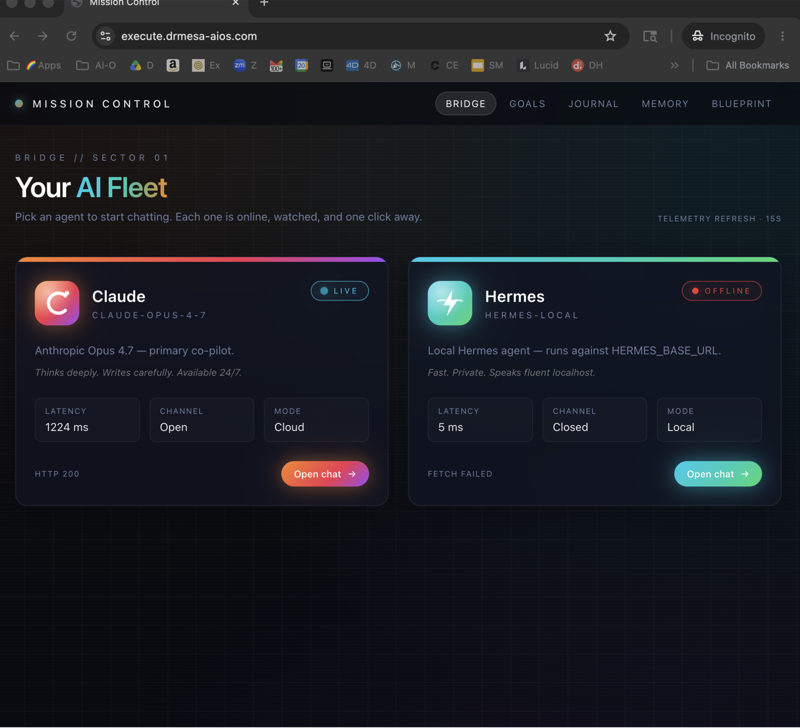
You manage all of this from the Mission Control dashboard, which means you can see every squad and every agent at a glance instead of juggling separate chats.
Why OpenClaw Mission Control Agent Squads Matter
Single-agent OpenClaw is fine for simple jobs but it falls apart the moment your workflow has more than two or three steps. Squads fix that by giving you four things you can't get any other way.
You get specialisation per agent, which means each one can have a sharp prompt and a model picked for its specific job. You get cost optimisation, because cheap models handle the easy tasks and you only spend Opus tokens on the bits that genuinely need them. You get parallel work, because agents can run alongside each other instead of queueing behind a single thread. And you get a cleaner mental model — "the Researcher does X, the Writer does Y" is much easier to reason about than one agent doing everything.
For any serious OpenClaw use, squads are essential. Stop fighting the single-agent setup the moment your workflow gets non-trivial.
Suggested Models For Each Role
Mission Control suggests appropriate models for each role and the suggestions are usually spot on. Haiku is the fast, cheap option that works brilliantly for routine tasks like triage, formatting, and quick QA. Sonnet is the balanced workhorse that handles most general work without breaking the bank. Opus is your heavy reasoning model for complex synthesis, architecture decisions, and anything that genuinely requires deep thinking.
You can also reach for non-Anthropic models when the task fits. DeepSeek is excellent for agentic tasks where you need raw capability at low cost. Gemini fits naturally when you're already in the Google ecosystem. Grok is a strong alternative that some operators prefer for speed. MiniMax handles broad use cases and works well as a backup.
The rule I follow is simple: match the model to the role's actual cognitive demand and don't pay Opus prices for Haiku-tier work.
Five OpenClaw Mission Control Squad Templates To Copy
These are real squads I run inside Mission Control. Steal any of them and adapt to your own workflow.
Template 1 — Content Squad
This is the squad I lean on for SEO and content workflows. The Orchestrator runs on Sonnet and coordinates the team, deciding who does what and when. The Researcher also runs on Sonnet and pulls competitor data, keyword angles, and topic structure. The Writer runs on Opus because the actual draft is where reasoning quality shows up most. The Reviewer runs on Haiku and does fast QA before anything goes near publish.
I use this for daily blog posts, landing pages, and social drafts.
Template 2 — Customer Ops Squad
This squad lives on inbound customer messages. Triage runs on Haiku and routes incoming messages to the right downstream agent. The FAQ Bot runs on Haiku too and answers the common questions that don't need a human. Sales runs on Sonnet and handles pricing and buying conversations with the nuance they need. Escalation runs on Opus and flags anything complex or sensitive straight to me.
I use this for Telegram, WhatsApp, and email triage. It pairs naturally with my Telegram AI Agent setup.
Template 3 — Research Squad
This one earns its keep on deep research projects. The Source Hunter runs on Sonnet and finds relevant sources across the web and my own knowledge base. The Analyser runs on Opus and synthesises the findings into something coherent. The Critic runs on Sonnet and challenges the interpretations to surface weak reasoning. The Reporter runs on Sonnet and formats the final output for whoever needs to read it.
I use this for market research, competitor analysis, and white papers. It follows the same pattern as my Auto Research Claw setup.
Template 4 — Engineering Squad
This is the squad for code projects where I'm not coding the whole thing myself. The Architect runs on Opus and designs the approach before anything gets built. The Implementer runs on Sonnet and writes the actual code. The Tester runs on Haiku and runs tests against the output. The Reviewer runs on Sonnet and does the QA pass before anything gets merged.
I use this for side projects, internal tools, and bug fix sprints.
Template 5 — Daily Ops Squad
This squad runs my actual day. The Morning Briefer runs on Haiku and gives me an overnight summary the moment I sit down. The Task Coordinator runs on Sonnet and manages the day's work as it unfolds. The Specialist Caller runs on Sonnet and pulls in other squads as needed for specific jobs. The End-Of-Day Reporter runs on Haiku and gives me a clean daily summary before I sign off.
I use this as the backbone of my solo operator daily workflow.
Want my exact Agent Squad templates? Inside the AI Profit Boardroom, I share my full Agent Squad templates with system prompts, model picks, and skill configs. You also get the 6-hour OpenClaw course and weekly live coaching with 3,000+ members. → Get the templates
How To Build Your Own Squad
Building a squad from scratch is a six-step process and the first three steps matter more than the last three.
Step 1 — Identify the workflow
Pick a multi-step process you actually want automated. "Daily content creation" or "Customer support triage" are good first targets because they repeat often and the cost of getting it wrong is low.
Step 2 — Break it into roles
List the distinct steps in that workflow. Each step roughly equals one agent. If two steps share the same skill set and the same model, you can usually merge them into one role.
Step 3 — Assign models per role
Match the model to the cognitive demand. An easy or repetitive role gets Haiku, a standard role gets Sonnet, and a hard reasoning role gets Opus. This is where you save money without sacrificing quality.
Step 4 — Write system prompts
Each agent needs one clear job and a system prompt that defines it sharply. Be specific — vague prompts create vague agents that step on each other's toes.
Step 5 — Add to Mission Control
Click "Add Agent" in the Squad section, configure each agent in turn, and save. The interface is fast enough that a five-agent squad takes maybe ten minutes to set up.
Step 6 — Test on real work
Run the squad on a real task and watch what happens. Refine the prompts based on what the squad gets wrong. The first version of a squad is never the final version.
Managing Squads At Scale
Once you're running multiple squads, the management problem becomes real. A few habits keep it from turning into a mess.
Naming conventions
Use prefixes like "ContentSquad-Writer" and "OpsSquad-Triage" so you can find agents instantly when you have twenty of them. Future you will thank present you.
Active vs paused
Don't keep every squad active all the time. Pause the ones you're not currently using to save resources and keep your dashboard readable.
Token budget per squad
Set token budgets per squad inside Mission Control so a runaway agent can't burn through your monthly spend in an afternoon. This is non-negotiable once you have squads running unattended.
Weekly reviews
Once a week, review which squads are doing actual work, which need refining, and which to retire. Squads that don't earn their keep should be deleted, not left to clutter the dashboard.
Common Squad Mistakes
A few mistakes show up over and over when people start building squads.
The first is too many roles per squad. Five to seven is the sweet spot for most workflows; ten or more becomes hard to coordinate and the agents start tripping over each other. The second is using the same model for every role, which defeats the cost optimisation that's half the point of squads. The third is vague system prompts where each agent is told to "help with content" or some other mush, which guarantees role overlap.
The fourth mistake is having no reviewer or critic in the squad. Every squad needs at least one agent whose job is to challenge the output, which mirrors the dual-critic pattern from my Google Simula setup. The fifth is skipping documentation entirely — write down what each squad does and how to use it, because you will forget by next month.
Squad Vs Hermes Swarm
A quick comparison since people ask this constantly.
OpenClaw Mission Control Agent Squads use a manual squad design where you assign tasks and the team structure stays static. You're in the driver's seat for orchestration. Hermes Swarm with Aurora handles auto-routing of missions, where Aurora coordinates and the team composition shifts dynamically based on the mission at hand.
For OpenClaw, squads are the multi-agent option and they're powerful. For Hermes, see Hermes Swarm for the equivalent. Many operators run both for different jobs.
Real Daily Workflow With Squads
Here's what a real day looks like when squads are running properly.
In the morning I open Mission Control, activate the Daily Ops Squad, and review the overnight outputs. By mid-day I've activated the Content Squad for the day's blog posts and the Customer Ops Squad for inbound messages, and they run in parallel without bothering me. In the afternoon I review the squad outputs and refine anything that came back off-key. At end of day the End-Of-Day Reporter summarises everything and I plan tomorrow's squad activations before signing off.
For solo operators, squads are what make multi-task days actually manageable.
What Squads Don't Do
Being honest about the limits matters. Squads don't replace human judgment for strategic decisions — you still pick the missions and the priorities. They don't auto-improve over time without you tuning the prompts. They don't fully replace the auto-orchestration you get from something like Hermes Swarm.
For coordination and visibility on the work you're already doing, squads excel. For full autonomous orchestration, you'd layer Hermes Swarm or similar on top.
Pairing Squads With Other Mission Control Features
Squads get more powerful when you combine them with the other Mission Control features. The Task Board lets you assign squad members to specific tasks. The Memory Browser gives each squad access to the relevant slice of your knowledge base. Scheduled Jobs let you run squads on a schedule rather than triggering them by hand. Token Usage tracking lets you monitor squad costs over time.
Each Mission Control feature enhances squads. Use them together rather than in isolation.
Want my full Agent Squad playbook? The AI Profit Boardroom has my Agent Squad templates, the OpenClaw 6-hour course, daily training, and weekly live coaching. 3,000+ members are inside. → Join here
FAQ — OpenClaw Mission Control Agent Squads
How many agents should I put in a squad?
Three to five works for most use cases, and five to seven is the sweet spot for genuinely complex workflows. Past seven you start losing coordination.
Can squads share memory?
Memory sharing is configurable per squad. The default is independent memory, which is usually what you want for clean separation.
Can squads talk to each other?
Cross-squad communication is limited and mostly happens through manual handoffs via the Task Board. For automated cross-squad coordination, use Hermes Swarm instead.
What happens if a squad member fails?
Mission Control flags the failure and you can manually re-spawn the agent or fix the underlying issue. Failures don't bring down the rest of the squad.
Can I delete a squad?
Yes, anytime. There's no penalty for retiring squads that aren't earning their keep.
Will squads run while I'm away?
They will if you've configured scheduled jobs to trigger them. Otherwise they wait for you to activate them.
How do squads affect token costs?
Each agent uses tokens, so more agents means more cost. The way to keep costs sane is to mix model tiers — Haiku for the routine roles, Sonnet for the standard ones, and Opus only where you actually need it.
Related Reading
- OpenClaw Mission Control Overview — what the dashboard does.
- OpenClaw Mission Control Features — the full feature deep dive.
- Hermes Swarm — the Hermes-side multi-agent equivalent.
📺 Video notes + links to the tools 👉
🎥 Learn how I make these videos 👉
🆓 Get a FREE AI Course + Community + 1,000 AI Agents 👉
Building Agent Squads with OpenClaw Mission Control turns OpenClaw from a single agent into a real workforce — copy any of these five templates and you're operating at scale by the end of the week.