How to setup Hermes with Ollama is a question I get from beginners weekly, and most of the answers online are written for people who already know what a config file is. This post is written for someone who's never installed an AI agent before, and it walks you from zero to a working local AI in under 30 minutes without assuming any prior technical knowledge.
If you've never set up an AI agent before, the technical jargon online is brutal. GitHub repos, terminal commands, and config files are enough to put anyone off before they even start. The good news is you don't need most of that — this walkthrough takes you through the easy way to set up Hermes plus Ollama in plain language, step by step.
What You're Building — Hermes With Ollama
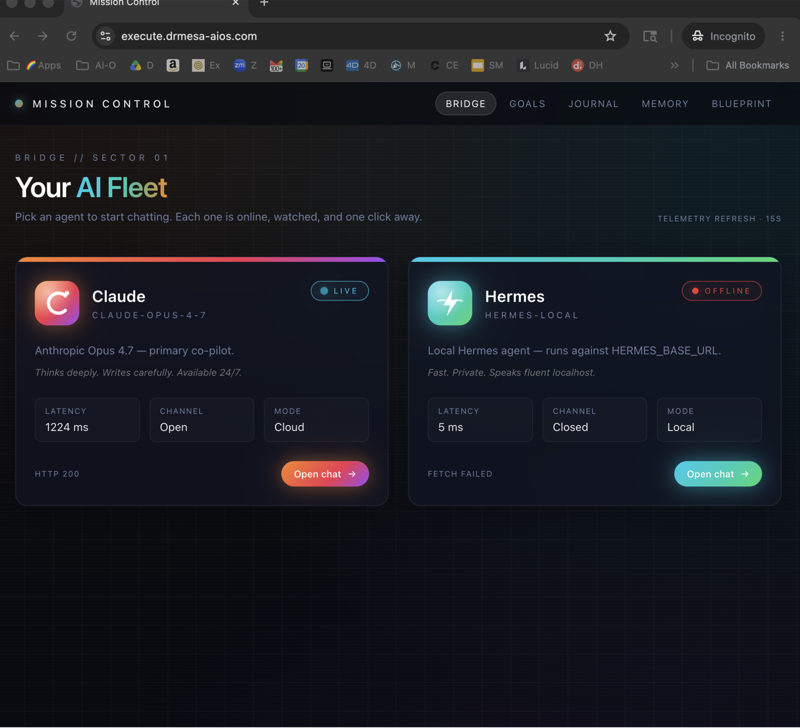
By the end of this post, you'll have Ollama running on your computer as a free local AI model engine, Hermes installed as your AI agent, and a working free local AI agent that runs offline, costs nothing, and chats with you on demand. Total time is under 30 minutes and total cost is £0, which is a fairly remarkable starting point for any kind of software setup.
What You'll Need
There are three things you need to get started.
The first is a computer — Mac, Windows, or Linux all work fine. The second is about 15GB of free disk space for Ollama and a single model. The third is an internet connection for the install (after that you can run completely offline). That's the entire prerequisite list. No GitHub knowledge, no terminal commands beyond a single line, and just two simple installs to complete.
Step 1 — Install Ollama
Head to ollama.com and click the big download button for your operating system. When the file finishes downloading, double-click it and follow the installer like you would for any other app.
Once installed, Ollama runs quietly in the background without you having to do anything. You can verify it's working by opening your browser and going to http://localhost:11434 — you should see the message "Ollama is running". If you see that, Ollama is set up correctly and you can move on.
Step 2 — Pick A Model
Models are what give Ollama its actual intelligence, and there are dozens to choose from. For beginners, I'd start with Gemma 4 because it's small at around 7GB, works on most laptops without strain, is smart enough for everyday tasks, and installs quickly.
Other beginner-friendly options worth knowing about are DeepSeek (better for agent tasks but slightly bigger) and Qwen 3.6 (general-purpose). Don't overthink the choice — pick Gemma 4 first and you can always swap to something else later once you've got the basic flow working.
Step 3 — Install The Model
This is the only "terminal" step in the entire process, so don't panic. Open Terminal on Mac or Command Prompt on Windows. You only type a single line of text.
Type ollama run gemma4 and hit Enter. The model will start downloading, which could take 5 to 15 minutes depending on your internet speed. When it's done you can close the terminal — the model is now installed and ready for use.
Step 4 — Install Hermes
Hermes is the AI agent that uses your model, and there are two ways to install it depending on your comfort level with the terminal.
The technical way
Run the install command from the Hermes GitHub README in your terminal. If terminal commands intimidate you, skip to the easier way below.
The easier way (my recommendation for beginners)
Use Claude Code or Codex to do the install for you. Download Claude Code or Codex, open it, copy the Hermes install command from GitHub, paste it into Claude Code, and type "set this up for me". Claude Code will install Hermes automatically without you needing to understand any of the underlying commands. I cover this exact trick in Free Claude Code if you want a deeper walkthrough.
Step 5 — Connect Hermes With Ollama
Once Hermes is installed, you need to tell it to use Ollama as its model provider. Open Hermes' config file and add the following lines:
provider: ollama
url: http://localhost:11434
model: gemma4
Save the file and restart Hermes. If you're using Claude Code, you can simply ask it "Configure Hermes to use my local Ollama with Gemma 4" and it'll do the config edit for you in seconds.
🔥 Brand new to AI agents? Inside the AI Profit Boardroom, I have a beginner's track for Hermes — start-from-zero tutorials, the exact configs I use, and weekly live coaching where I'll set this up with you on a screen-share. Plus a 2-hour Hermes course. 3,000+ members ready to help. → Get started here
Step 6 — Test Hermes With Ollama
Open Hermes and send the message "Hello, are you working?". You should get a reply within a few seconds. If you do, congratulations — you now have a free local AI agent running on your own computer with no ongoing costs and no data leaving your machine. If you don't get a reply, check the troubleshooting section below.
Common Beginner Issues
A handful of issues come up regularly for beginners, and each has a quick fix.
If you see "Ollama is not running", open Ollama from your applications because it needs to be running for Hermes to talk to it. If you see "Model not found", run ollama list in the terminal to see what's installed and run ollama run gemma4 again if your model isn't there. If Hermes can't connect, restart it after Ollama is open and make sure the URL in your Hermes config is http://localhost:11434. If replies are very slow, your machine might be too small for the model — try a smaller model like Gemma 4 if you started with something larger.
What To Try First
Don't go straight for complex automations on day one. Start simple by asking it to summarise an article you paste in, having it draft a tweet about a topic you care about, or getting it to explain a concept you don't understand. Once you've used it for a few simple tasks, you'll get a feel for how it thinks and what kinds of prompts work well. Then you can move up to skills like web search and browser automation.
Why Local Beats Cloud For Beginners
Two reasons local Ollama is the better starting point for beginners specifically.
The first is no bills — cloud APIs charge per token, and daily use can add up to real money fast. Local Ollama is free forever, which removes the anxiety of running up surprise costs while learning. The second is no surprises — cloud APIs sometimes go down or rate-limit you, while local runs whenever you want it to. For beginners trying to build confidence with the technology, removing those friction points matters more than people expect.
What To Do After Setup
Once you've got Hermes plus Ollama working, here are the natural next steps. Try a few different models in Ollama to see which one you like (ollama run deepseek and similar). Turn on Hermes' built-in skills, with web search being the most useful first one to enable. Set up your first scheduled task to see automation in action. Connect Hermes to a channel like WhatsApp so you can chat with it from your phone. I cover each of these in detail inside the Boardroom.
Free Models Beginners Should Try
If Gemma 4 is working well and you want to experiment, here are the next models worth trying. DeepSeek is better at agent-specific tasks. Qwen 3.6 is a strong general-purpose model. Nemotron 3 Nano Omni is Nvidia's new model and it's bigger, so it needs more RAM. I cover Gemma 4 in Hermes Gemma 4 and DeepSeek in Hermes DeepSeek if you want full deep-dives on each.
🚀 Want a guided beginner roadmap? The AI Profit Boardroom has a beginner's Hermes track — week 1 is "get it running", week 2 is "first useful task", week 3 is "first automation". Plus weekly live coaching, a 2-hour Hermes course, and 3,000+ members helping each other. The friendliest community for AI agent beginners. → Join here
FAQ — Hermes With Ollama (Beginner Version)
Is this actually free?
Yes — Ollama, Hermes, and the local models are all free with no upsell.
Will it work on my old laptop?
If your laptop runs Chrome smoothly, Gemma 4 will probably run on it without issues.
Can I do this without using the terminal at all?
Almost — only one terminal command (ollama run gemma4) is required. You can even let Claude Code or Codex run it for you if the terminal genuinely intimidates you.
How long does the whole setup take?
15 to 30 minutes for a beginner running through it for the first time.
What can I do with Hermes once it's set up?
Chat, summarise, research, write, automate tasks, and connect to apps. The capability set is broad enough to keep you busy for months.
Will my data leave my computer?
No — when you use local Ollama models, everything stays on your machine. That's one of the major selling points of the local stack.
Should I use cloud models too?
Optional. Local is genuinely enough for most beginners, and you can always add cloud later once you have a clearer sense of what kind of tasks need the bigger models.
Related Reading
- Free Claude Code — easy way to install things if terminal scares you.
- Hermes Gemma 4 — beginner-friendly local model.
- Best AI Agent Community — where to ask for help when stuck.
📺 Video notes + links to the tools 👉
🎥 Learn how I make these videos 👉
🆓 Get a FREE AI Course + Community + 1,000 AI Agents 👉
That's the full beginner-friendly walkthrough for how to setup Hermes with Ollama — a free local AI agent in under 30 minutes, no advanced tech needed.