Hermes Workspace profiles are how you actually run multiple AI agents without going crazy — and this post covers exactly how to use them. If you've been running one Hermes agent for everything, profiles are the upgrade that takes you from "one tool with many uses" to "specialised tools for specific jobs", which is what makes the multi-agent workflow actually pleasant rather than chaotic.
This post covers what Hermes Workspace profiles are, how they differ from Hermes Swarm, how to set up your first profile, and five specific profile templates to copy directly.
What Hermes Workspace Is (And Why Profiles Matter)
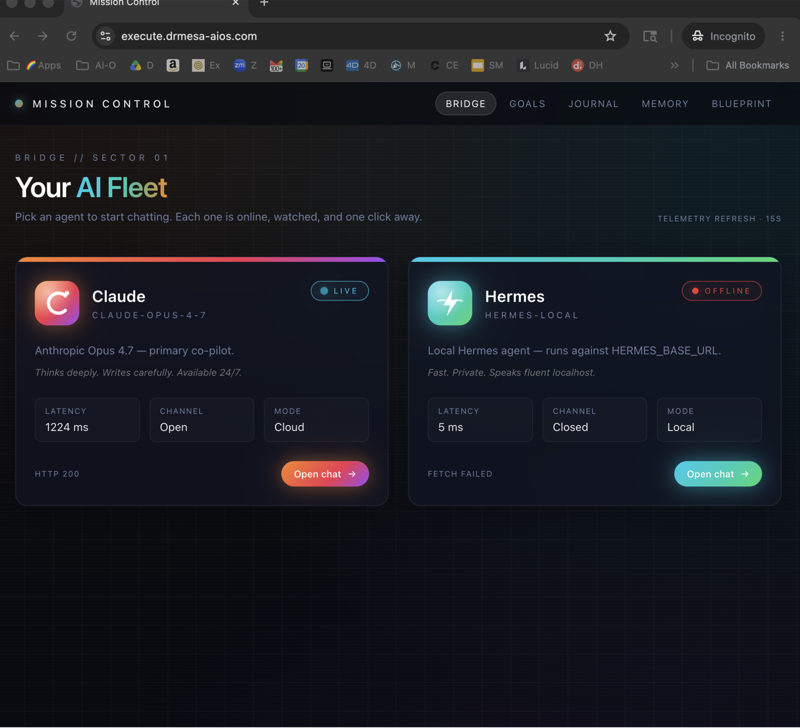
Hermes Workspace profiles let you have multiple AI agents in one setup. For each profile you can configure a different system prompt, a different model, different skills, and different memory. Switch between them with one click. Simple but powerful — and the simplicity is what makes it actually usable in daily work rather than something you set up once and abandon.
Profiles Vs Swarm
These two get confused. Profiles are multiple agents you switch between manually, with each one independent. Swarm is multiple agents where Aurora orchestrator coordinates them automatically and they work together on missions. Profiles equal manual switching. Swarm equals automatic orchestration. You can use both — profiles for general management, Swarm for coordinated missions. I cover Swarm in Hermes Swarm.
Why Hermes Workspace Profiles Matter In 2026
Three reasons profiles change how you work with Hermes.
1 — Specialisation
Different work needs different agent setups. A research agent shouldn't have the same prompt as a customer support agent — and forcing them to share configs makes both of them worse. Profiles let you specialise cleanly.
2 — Cost optimisation
Match cheap models to easy tasks and use expensive models only for hard tasks. Profiles enable per-agent model choice, which is where the per-month cost savings show up.
3 — Mental clarity
When you switch profiles you're switching modes. "Now I'm doing research" versus "now I'm doing customer ops" helps focus and reduces context-switching cost in your own head.
Setting Up Your First Hermes Workspace Profile
Setup runs across six straightforward steps in Workspace settings.
Step 1 — Click "New Profile"
Give it a name like "Researcher". The naming matters because you'll see it in the switcher.
Step 2 — Define system prompt
Decide what the agent's role is. Example for Researcher: "You are a research specialist. For any topic, find verified sources, synthesise findings, output as a structured brief." Be specific.
Step 3 — Pick a model
Match the model to the task. Researcher needs a long-context cloud model. Writer needs a creative cloud model. Customer Ops needs a fast, cheap model. Code needs a code-specialised model.
Step 4 — Configure skills
Enable only skills relevant to the role. Researcher needs web search. Writer needs less. Code needs terminal access. Less is more here.
Step 5 — Set up memory
Each profile has its own memory. Configure what context this agent should remember across sessions.
Step 6 — Save
Profile is ready to use. Test it on a representative task before relying on it.
🔥 Want my full Hermes Workspace profile templates? Inside the AI Profit Boardroom, I share my exact profile templates for Researcher, Writer, Customer Ops, Code, and more. Plus 2-hour Hermes course and weekly live coaching. 3,000+ members. → Get the templates
5 Hermes Workspace Profile Templates To Copy
Real profiles I run.
Profile 1 — Researcher
System prompt: "You are a research specialist. For any topic, find verified sources from at least 5 places. Synthesise findings into a structured brief with executive summary, key findings, and citations. Don't speculate — cite sources." Model: long-context cloud (Claude Opus or Kim K2.5). Skills: web search, Tavly, browser, file ops, memory. Use for market research, competitor analysis, deep dives.
Profile 2 — Writer
System prompt: "You are a content writer in Julian's voice. Hormozi tone, sentence-per-line, UK grammar. SEO-aware. Always include keyword in first/last line, FAQ section, internal links, multiple CTAs." Model: creative cloud (GPT or Claude). Skills: web search, file ops, memory. Use for blog posts, social media drafts, email copy. This is what I run for Claude Code SEO Agent workflows.
Profile 3 — Customer Ops
System prompt: "You handle inbound customer messages. For FAQs, give the answer with a relevant link. For pricing, refer to my pricing page. For support issues, gather context (email, what went wrong, what they tried) and escalate to me. Be friendly but concise." Model: fast cheap cloud (Gemma 4 or DeepSeek free tier). Skills: email, calendar, memory. Use for Telegram, WhatsApp, email triage. Pairs with Telegram AI Agent.
Profile 4 — Code
System prompt: "You are a code assistant. For any code task: read existing code, understand patterns, write clean implementations, add tests where needed. Don't break existing functionality. Prefer explicit over clever." Model: code-specialised (Qwen 3.6 or Claude Sonnet). Skills: terminal, file ops, code analysis. Use for bug fixes, refactors, new features.
Profile 5 — Daily Review
System prompt: "You help me review my day. Take notes I've made, summarise key wins, identify what needs follow-up, queue tomorrow's priorities." Model: mid-range cloud. Skills: memory, calendar, file ops. Use for end-of-day reflection.
Switching Between Profiles
In Workspace, the profile switcher is in the sidebar — click to switch. The active profile changes the system prompt applied, the model used, the skills available, and the memory accessed. Quick context switch with no reconfiguration needed.
Combining Profiles With Swarm
Pro tip: profiles work alongside Hermes Swarm. Swarm uses preset roles (Builder, Reviewer, etc) while profiles are your personal agent configs. Use Swarm for coordinated missions and profiles for individual workflows. I cover Swarm in Hermes Swarm.
Common Profile Mistakes
Four mistakes that hurt outcomes.
The first is vague system prompts — "help me with stuff" produces bad output, so be specific about role and behaviour. The second is using the same model for every profile, which defeats the cost optimisation benefit, so match model to role. The third is enabling too many skills, which bloats context and slows the agent, so enable only what each profile needs. The fourth is no clear use case per profile — if you don't know when to use a profile, you won't use it, so define the use case before creating it.
Profile Memory Patterns
Each profile has its own memory, which lets you store context that's specific to the role.
The Researcher profile memory typically holds topic preferences, source preferences, and output formats you like. The Writer profile memory holds voice and tone notes, brand guidelines, and common CTA patterns. The Customer Ops profile memory holds common customer questions, pricing details, and escalation rules. Memory makes profiles smarter over time as you correct outputs and the agent learns your preferences.
Profile Best Practices
Three things that consistently work.
The first is documenting your profiles — keep a note of what each profile does and when to use it. The second is iterating weekly — review which profiles you actually used and refine prompts based on results. The third is not over-creating — start with two or three profiles and add more only when you have specific use cases. Five to seven profiles is the sweet spot for most users.
How Many Profiles Is Too Many?
Past 10 profiles, management overhead rises sharply. For most users, three to five profiles suit focused work, five to seven suit varied work, and 10-plus is only worth it for complex multi-domain operations.
Daily Reality Inside Hermes Workspace
What it looks like once profiles are part of your routine. At 8am you switch to Researcher profile and deep-dive on a topic. At 9am you switch to Writer profile and draft content. At 11am you switch to Customer Ops and handle inbound messages. At 2pm you switch to Code profile and work on a side project. At 6pm you switch to Daily Review and wrap up the day. Five distinct contexts in one Hermes Workspace.
🚀 Want my full profile + Swarm playbook? The AI Profit Boardroom has my Hermes Workspace profile templates, 2-hour Hermes course, OpenClaw 6-hour course, daily training, weekly live coaching. 3,000+ members. → Join here
FAQ — Hermes Workspace Profiles
How many profiles can I have?
Practically unlimited. Five to seven is the sweet spot.
Can profiles share memory?
By default, no. You can configure cross-profile memory if needed.
Can two profiles use the same model?
Yes — model choice is per profile, but they can be the same model.
Are profiles the same as Swarm sub-agents?
No — profiles are individual configs you switch manually. Swarm sub-agents are coordinated automatically.
Can I delete a profile?
Yes — anytime.
Will my chat history per profile be saved?
Yes — each profile has its own chat history.
Can I export/import profiles?
Limited — share configs as text for now.
Related Reading
- Hermes Workspace Overview — what Workspace is.
- Hermes Workspace Features — feature deep dive.
- Hermes Swarm Roles — preset role system.
📺 Video notes + links to the tools 👉
🎥 Learn how I make these videos 👉
🆓 Get a FREE AI Course + Community + 1,000 AI Agents 👉
Hermes Workspace profiles are the simplest way to run multiple AI agents — copy these 5 templates and you've got a real AI workforce in one setup.