If you want to actually make money with an AI agent in 2026, the answer to why use OpenClaw instead of Manus AI agent comes down to margins — one of them lets you keep the profit, and the other one taxes every penny of revenue you generate. After running real money-making workflows on both, the OpenClaw margins aren't just better, they're a different business model entirely.
This post is the revenue lens on the comparison. I'll walk you through the actual money-making paths each tool unlocks, the margins on each, and which one builds you a real business versus a fancy hobby.
🔥 Want my full OpenClaw playbook? AI Profit Boardroom has the full OpenClaw setup, course, and weekly coaching. → Get inside
Why Use OpenClaw Instead Of Manus — Margin Beats Features
Most people pick AI tools on features. That's the wrong lens if you want to make money.
If you want to make money with an AI agent, the right lens is margin. What does it cost you to deliver a unit of output, and what can you charge for it. The difference between those two numbers is your business — everything else is detail.
OpenClaw and Manus might look similar on features. They look completely different on margin. Let me show you the math.
The Manus Money Problem
Let's start with what's hard about making money on Manus.
Manus charges a SaaS subscription that scales with usage. The more you use it, the more you pay. If you're delivering AI-powered services to clients, every job you run eats into your margin. Light usage is fine but heavy usage is brutal — once you scale, your platform bill scales with you, and the marginal cost per delivered unit stays high.
The second problem is that Manus runs in their cloud. Your client data flows through someone else's servers under someone else's terms. For agencies, freelancers, or anyone with privacy-sensitive clients, that's a sales objection you have to handle every single deal. Some prospects will walk because of it.
The third problem is that Manus only ships the integrations and capabilities they've built. If your business needs something custom, you wait. That kills your ability to differentiate, which kills your ability to charge premium prices.
For a money-making business, those three problems compound.
The OpenClaw Money Advantage
OpenClaw flips every one of those problems.
The platform is free and open source. Your only ongoing cost is inference, and that drops to near-zero with local Ollama. Marginal cost per delivered unit is fractions of a penny. That means margin compresses upward as you scale — exactly the opposite of the SaaS treadmill.
The agent runs locally on your hardware. Client data stays on your machine. Privacy-sensitive clients become a reachable market instead of a no-go zone. That alone unlocks revenue paths that aren't available on Manus.
The platform is fully customisable via skills, plugins, and ACP agents. You can build proprietary workflows that your competitors can't replicate. Differentiation gives you pricing power, which gives you margin.
For a money-making business, OpenClaw is structurally better.
Revenue Path One — AI-Powered Service Agency
This is the biggest money-maker for most people running AI agents.
You sell AI-leveraged services to small businesses — content production, SEO, sales follow-up, customer support, social media, ads management — and use the agent to deliver more output per hour than a traditional agency. The margin comes from the gap between what you charge per deliverable and what it costs you to deliver.
On Manus, your platform bill eats into every deliverable. On OpenClaw with local Ollama, the marginal cost is essentially zero. The difference at scale is enormous — a £5,000-a-month retainer could net you £4,500 on OpenClaw and maybe £3,500 on Manus once you factor in the platform bill.
Multiply that across ten clients and you're looking at five-figure annual margin differences from the same revenue.
Revenue Path Two — Productised Agent Workflows
The second-biggest money-maker is selling productised agent workflows.
You build a useful workflow once — competitor research, cold outreach, podcast production, blog publishing — and sell it as a productised service or subscription. Customers pay you a monthly fee, you run the workflow, they get the output.
OpenClaw lets you build proprietary workflows your competitors can't copy because they live in your skills, plugins, and ACP agents. Manus only lets you assemble what they ship, which means anything you build can be built by anyone else with a Manus account. That commoditises your offer.
For productised services, differentiation is the entire game. OpenClaw gives you it. Manus doesn't.
Watch The OpenClaw Walkthrough
The latest update added ACP agents and native Telegram integration, which means you can build customer-facing agent products that customers trigger from their own phones — a real revenue path that wasn't viable a few months ago.
Revenue Path Three — Training, Coaching, And Content
The third money path is teaching others how to use AI agents.
There's a real market for training, coaching, and content around AI agent setup, especially for the operator and founder audience. Both OpenClaw and Manus are valid topics here, but OpenClaw has the bigger long-term audience because the open-source community is bigger, the depth is greater, and the monetisation paths for learners are richer.
I run a paid community around OpenClaw because the demand is real. Teaching Manus is fine for casual users but the lifetime value of a Manus learner is lower because the platform's surface area is smaller.
For content creators and educators, OpenClaw is the higher-leverage topic.
Revenue Path Four — Selling Custom Skills And Plugins
This is an emerging revenue path that's only available on OpenClaw.
Because OpenClaw supports skills, plugins, and ACP agents, you can build and sell proprietary capabilities that other OpenClaw users plug into their stacks. It's the early version of an agent app store, and the operators getting in early are building real recurring revenue from it.
Manus doesn't have this market. The platform is closed, so there's nothing to sell into.
For developer-leaning operators, this is genuine free money waiting to be made.
Revenue Path Five — Internal Cost Savings As Profit
This one's underrated. Saved cost is profit.
If you're running an existing business and you replace expensive contractors, software subscriptions, or manual hours with OpenClaw automation, the savings drop straight to your bottom line. Replace a £2,000-a-month VA with an OpenClaw automation and you've made yourself £24,000 a year of profit you didn't have before.
Manus does the same thing in principle, but its higher marginal cost reduces the savings. And because you can't customise as deeply, the range of work you can replace is narrower.
For internal use, OpenClaw saves you more money. Saved money is profit.
Margin Math On A Real Workflow
Let me run real numbers on one workflow to show you what this looks like.
Take blog content production. A four-agent OpenClaw swarm — researcher, writer, editor, publisher — produces a 2,000-word post in around six minutes. Inference cost on local Ollama is essentially zero. API inference cost on cheap models is maybe 5-15p per post.
The same workflow on Manus is bundled into your subscription. If you're paying £100-200 a month for a heavy-use plan and producing 50 posts per month, your effective cost per post is £2-4 once you allocate the subscription. That's 20-40x more expensive per unit.
If you sell those posts at £100 each, your gross margin on OpenClaw is 99.99% and your gross margin on Manus is 96-98%. That feels close until you scale to 1,000 posts a month, at which point you're paying £2,000-£4,000 to Manus while OpenClaw stays nearly free.
Margin compounds at scale. Pick the platform that lets you keep it.
OpenClaw Vs Manus For Money-Makers
| Revenue Lens | OpenClaw | Manus |
|---|---|---|
| Marginal cost per output | Near-zero | Eats into margin |
| Margin at scale | Improves | Degrades |
| Privacy for premium clients | Yes — local | No — cloud |
| Custom proprietary workflows | Yes via skills/plugins/ACP | No — closed platform |
| Plugin/skill marketplace | Yes (emerging) | No |
| Cost savings for internal use | Higher | Lower |
| Long-term moat | Real | None |
| Best revenue path | Service agency, productised workflows | Casual user tools |
For anyone trying to make money, every row that matters goes to OpenClaw.
🚀 Want hands-on coaching? AI Profit Boardroom has weekly live coaching for OpenClaw operators. → Join here
When Manus Genuinely Pays Better
I'll be honest about the cases where Manus is the better revenue play.
If your customer base is non-technical and they specifically want a Manus-branded experience, Manus is the right pick because it matches their world. If you're selling to people who only want a phone-based agent and would refuse anything else, Manus fits.
For everyone else trying to build a real business, OpenClaw wins on margin, control, and differentiation.
How I Layer Both For Maximum Revenue
Here's the practical setup for an operator squeezing the most revenue out of agents.
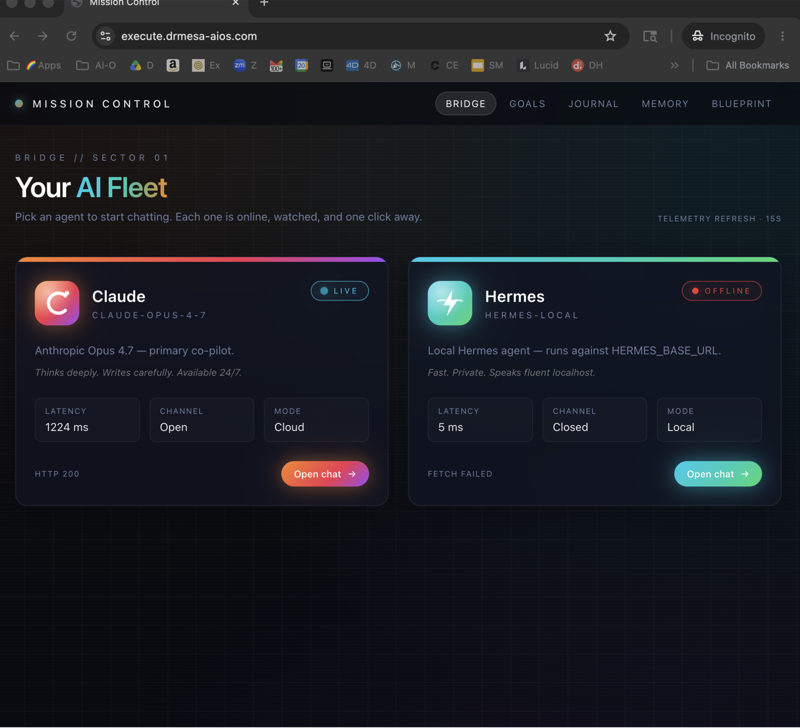
Run OpenClaw as your delivery engine. All client work, all internal automation, all proprietary workflows go through OpenClaw with local or cheap-API inference. That's where your margin lives. Combine it with Hermes swarms for serious depth and computer use for jobs that need to drive a browser.
Use Manus selectively for jobs that genuinely benefit from cloud architecture or for clients who specifically request it. That's the auxiliary tool, not the foundation.
This stack maximises revenue per hour while protecting margin and privacy. It's how I run my own agency-style work today.
Pricing Power Comes From Differentiation
The biggest hidden advantage of OpenClaw for revenue is pricing power.
If you're using the same SaaS agent everyone else is using, your offer is commoditised. Customers can compare you to anyone else with the same tool, and price becomes the deciding factor. That's a race to the bottom.
If you're using OpenClaw with custom skills, plugins, and proprietary workflows that your competitors can't replicate, your offer is differentiated. You can charge premium prices because you're not interchangeable.
OpenClaw makes premium positioning possible. Manus pushes you toward commodity.
The Privacy-Premium Pricing Tier
Privacy-sensitive clients pay more. That's a real market dynamic.
Lawyers, accountants, healthcare practices, financial advisors, premium agencies, and any business handling regulated data will pay a premium for an AI service that genuinely keeps their data private. OpenClaw running locally with Ollama for inference is the only realistic answer for that market.
Manus is automatically out of this conversation because it's cloud-first. Walking into a privacy-sensitive prospect with Manus is walking in handicapped.
For premium pricing, OpenClaw is the only viable platform.
The Subscription Trap Most Solopreneurs Fall Into
Here's the trap I see solopreneurs fall into all the time.
They sign up for a SaaS agent because the setup is fast. They build a few workflows. The workflows make them money. They scale up usage. The platform bill scales with them. By the time they realise the margin compression is real, they've got a year of workflows locked into the platform and migration feels expensive.
OpenClaw avoids this trap entirely. The platform doesn't take a cut of your usage. Scale your business and your platform cost stays roughly flat — the only thing that grows is your revenue.
That structural difference is the single biggest reason serious money-makers should pick OpenClaw.
What Top Earners Actually Run
Practical answer for the people who want to know what the top earners do.
The top AI-leveraged operators I know run OpenClaw as their delivery engine, layered with custom skills and plugins for their specific niche. They have local Ollama for cheap inference and Claude/GPT API for reasoning-heavy tasks. Hermes runs swarms for complex jobs. Telegram integration handles phone-driven triggers when they're away from a desk.
A few keep Manus or similar SaaS agents around for specific cloud-only jobs or for testing, but none of them run their primary money-making operation on a SaaS agent. They all picked ownership over convenience because the math is unambiguous at scale.
FAQ — Make Money With OpenClaw Vs Manus
Which agent makes more money for an agency?
OpenClaw, because the margin per deliverable is dramatically higher and you can build proprietary workflows that justify premium pricing.
Can I make money teaching Manus instead of OpenClaw?
Sure, but the audience and lifetime value is smaller because the platform's depth is shallower. OpenClaw is the higher-leverage topic.
What about selling AI services to non-technical clients?
OpenClaw runs the delivery on the back end. Your clients don't need to know what platform you use — they just see the output and the price. You keep the margin.
Is the local-inference approach really cheaper at scale?
Yes — by orders of magnitude. Local Ollama is free per run, while SaaS agent subscriptions scale with usage. For high-volume work, the difference is enormous.
Can I build a real product on OpenClaw?
Yes — skills, plugins, and ACP agents let you build products and proprietary workflows you can sell to others. There's a real emerging marketplace.
What's the best revenue path for someone starting today?
Service agency or productised workflows are the fastest paths. Pick a vertical, build one OpenClaw workflow that does something useful, sell it for a few hundred pounds a month, then stack clients.
Should I upgrade to AI Profit Boardroom for help?
If you're serious about making money with AI agents, yes — the masterclass and weekly coaching are designed exactly for this. The 7-day refund and 30-day ROI guarantee make it risk-free.
Latest Updates
- OpenClaw Computer Use — the feature that opens up RPA-style revenue paths.
- Hermes AI Agent Framework 2026 — the swarm layer that powers premium service work.
- Telegram AI Agent — the integration that opens phone-driven customer products.
Also On Our Network
- 🌐 Read on bestaiagentcommunity.com
- 🌐 Read on aiprofitboardroom.com
- 🌐 Read on juliangoldieaiautomation.com
- 🌐 Read on aisuccesslabjuliangoldie.com
Related Reading
- Atomic Chat Vs Ollama — the local inference layer that drops your delivery cost to near zero.
- Manus Cloud Computer — the cloud agent revenue case, when it actually works.
- Hermes AI Agent Framework 2026 — the swarm layer for premium-priced service work.
📺 Video notes + links to the tools 👉
🎥 Learn how I make these videos 👉
🆓 Get a FREE AI Course + Community + 1,000 AI Agents 👉
For anyone trying to actually make money in 2026, the answer to why use OpenClaw instead of Manus AI agent is margin — owning your stack lets you keep the profit, and that's the difference between a real business and a fancy SaaS hobby.