Yes — OpenHands is released under the MIT License, the code is public on GitHub, and you can install and run it on your own machine without paying a licence fee. So is openhands free and open source in the way that actually matters for your wallet? On the licence, completely; on the running costs, mostly — because OpenHands is a bring-your-own-model tool, the real bill is whatever you pay the LLM provider behind it, and that is a cost you control. This page goes through what the project README states as of version 1.20.0, released 17 September 2026: what costs nothing, what costs something, and how to run the free end of the spectrum without crippling the results.
🔥 Get the Agent OS as a free bonus: AI Profit Boardroom members get the full Agent OS zip, prompt libraries, daily tutorials and weekly live coaching calls. → Get inside · Want AI SEO help 1-on-1? Book a free SEO strategy session →
The Free-or-Paid Picture at a Glance
| Question | Answer, per the OpenHands repository |
|---|---|
| Licence | MIT License — permissive, commercial use allowed |
| Self-hosting cost | Free by npm, Docker or from source |
| Model / inference | Bring your own — you pay your chosen LLM provider, or run a local model |
| OpenHands Cloud | Optional hosted infrastructure; pricing not published on the repository page |
| Current version | 1.20.0, released 17 September 2026 |
Is OpenHands Free and Open Source? What the MIT Licence Means
The MIT License is about as permissive as open source gets, and it is the licence shown on the OpenHands repository. In practice it means you can download, run, modify and even resell work produced with OpenHands without owing the project anything — no seat fees, no usage tiers on the self-hosted software, no obligation to publish your changes. The project is not a small experiment either: the README shows 88.5 thousand GitHub stars and states plainly that you can install OpenHands to run agents on any machine. For the freelancer or agency owner deciding whether to build on it, the licence question is settled — nothing in the MIT terms stops commercial use of what your agent builds. Compare that with the agent tools whose free tier is really a trial: usage caps, watermarked output, or a licence that quietly excludes commercial work. OpenHands has none of those asterisks on the self-hosted side, which is why the question worth your time is not whether it is free but what you will run on it.
The Three Free Ways to Run It
The README documents three self-hosted installation routes, and all three cost nothing beyond your own hardware:
- The npm route: install the agent-canvas package globally with npm and launch it with a single command. Quickest start, runs without a sandbox.
- The Docker route: run the published image, ghcr.io/openhands/agent-canvas at tag 1.20.0, exposing port 8000 and mounting two folders into the container — the projects directory your agent is allowed to work in, and a local .openhands folder that holds its configuration. This is the sandboxed option, and the tagged image means you always know which version you are on.
- From source: clone the repository, install dependencies and run the development server. Most work, most control.
Which route fits depends on how you plan to use it: the Docker route is the sensible default if the agent will touch real project folders, because the container is the boundary between an autonomous agent and the rest of your machine. If you have set up agent frameworks before — the Hermes money-making guide covers a comparable install-then-earn path — the OpenHands setup will feel familiar.
If you want the free-tools-to-first-income path done for you — 1,000+ workflows, daily tutorials and weekly live coaching calls inside — check out the AI Profit Boardroom → get the full Agent OS bonus here. Want eyes on your specific situation? Book a free SEO strategy session and get a 1-on-1 plan first.
The Costs That Are Real: Models and Cloud
Two costs sit behind the free licence, and being straight about them is the difference between a budget and a surprise. The first is inference. OpenHands is built around bring-your-own-model — the README's words are that you can use it with any LLM — so every task your agent runs consumes tokens from whichever provider you connect. That can be a paid frontier model, a cheap API model, or a local model that costs you electricity rather than API fees; the point is that the software being free does not make the thinking free. The second is OpenHands Cloud, the project's optional hosted infrastructure. The repository page mentions the cloud option but does not publish its pricing there, so treat any specific number you see quoted elsewhere with caution and check the official site before budgeting for it. Self-hosting remains the fully free path.
The same free-software, paid-brain structure applies across the tools this site covers — the free Claude Code routes and the guide to using Codex for free walk the equivalent maths for two rivals — so if you have budgeted for one agent stack, you already know how to budget for OpenHands.
Making the Free Tier Actually Produce Income
A free agent only matters if it produces something you can sell, and the honest sequencing is: pick the free stack, give it a paying use case, and only upgrade the model once the use case works. In practice that looks like one week of setup and one deliverable — a bug fixed in a client repository, a small internal tool shipped, a site audit turned into pull requests — priced from day one, so the tool proves itself against revenue instead of against your curiosity. OpenHands' niche is software-engineering tasks — repository work, fixes, small builds — which pairs naturally with productised services. The wider menu of options is in the best free AI tools for beginners round-up, and if you are weighing OpenHands against the general-purpose agents, the best Hermes alternatives list shows where a coding specialist does and does not fit. Model choice is where free setups usually leak quality: the Goldie Bench write-up covers how the main agent brains compare in hands-on tests, which is the fastest way to pick a cheap model that does not embarrass you in client work. And once any agent is earning, the Agent OS guide covers the operating structure for turning one working agent into a system that runs several income streams at once.
How OpenHands' Free Offer Compares to Rivals
Among the big autonomous coding agents, OpenHands' position is unusually clean: fully open code, fully free self-hosting, and the meter only runs on the model you choose. Closed rivals typically invert that — polished hosted product, subscription pricing, limited self-host story. The trade you are making with OpenHands is operational: you run it, you secure it, you pick and pay for the brain. That trade favours anyone who already keeps a machine running for other agent work, because adding one more container costs nothing, and it punishes nobody — if self-hosting ever stops being worth your time, the hosted option exists and your profiles and workflows carry over. Version 1.20.0's changes — secrets scoped per agent profile and automations running under saved profiles, per the official release notes of 17 September 2026 — push the self-hosted option further towards something you can responsibly run for clients, which is exactly where a free tool starts paying for the time it costs. For the parallel decision on general agents, the ways operators monetise Hermes shows what the earning side of a free stack looks like in practice.
The Bottom Line for Your Budget
Is OpenHands free and open source? Yes on both: MIT-licensed code you can self-host by npm, Docker or source, with no licence cost, per the project README at version 1.20.0. The genuine line items are inference — whichever model you connect — and the optional hosted cloud, whose pricing is not published on the repository page. Budget for tokens, start with the Docker route, and put the agent on a task someone will pay for within the first week; a free tool with a paying job beats a paid tool waiting for one. And if the maths ever changes — the project switches licence, the cloud publishes pricing that undercuts self-hosting — the MIT terms mean the version you run today stays yours either way, which is the quiet insurance policy open source gives your business.
If you want the exact free-stack playbooks members use to land their first AI income — plus the full Agent OS zip as a joining bonus — check out the AI Profit Boardroom → join 3,000+ operators here. Prefer to start with a conversation? Book a free SEO strategy session and get your plan 1-on-1.
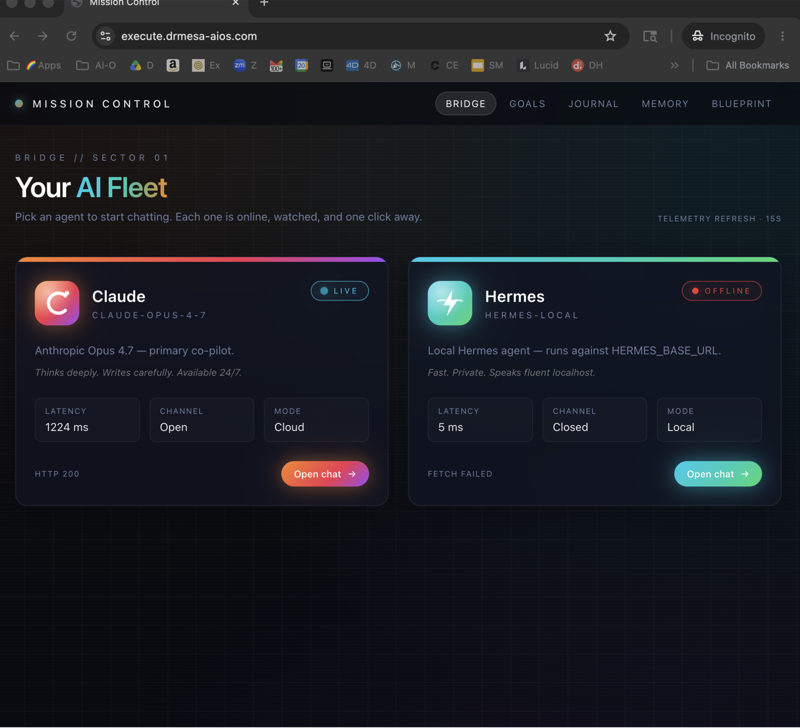
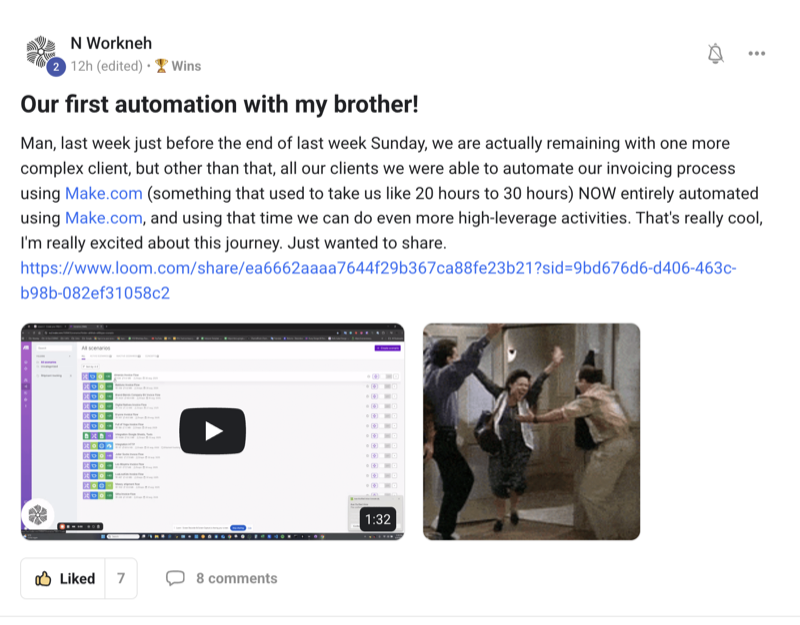
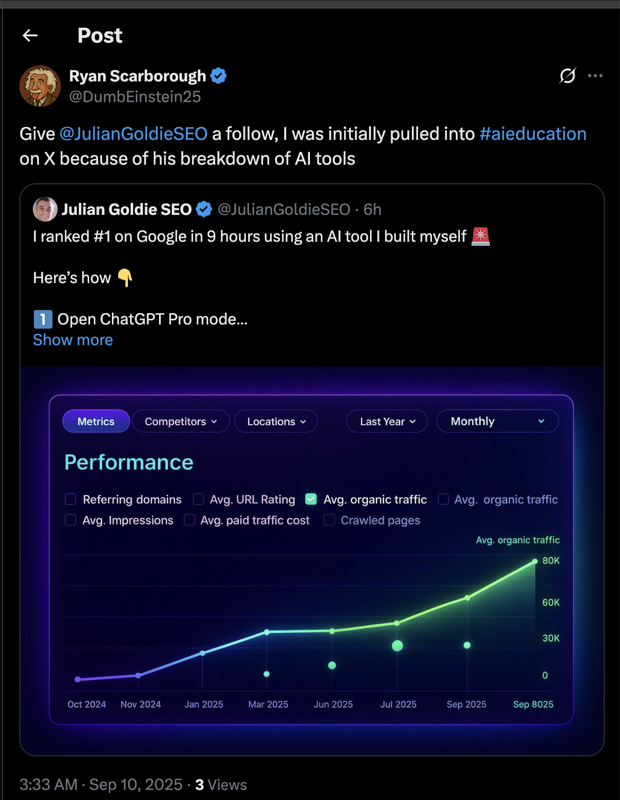
Real wins from inside the AI Profit Boardroom
See all 3,000+ members →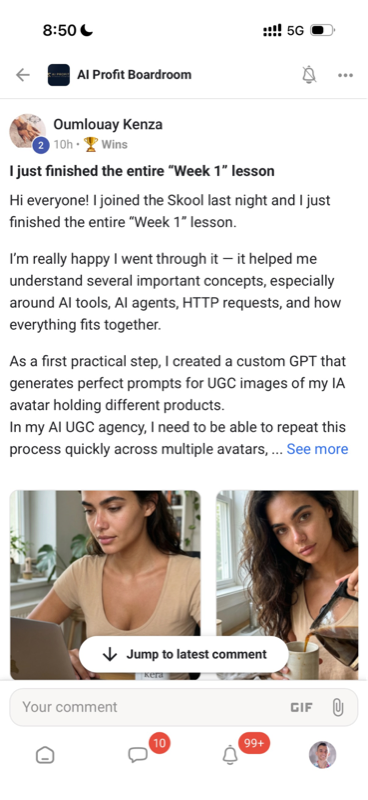
Ready To Join The #1 AI Community?
Join 3,600+ entrepreneurs inside the AI Profit Boardroom. Get 1,000+ plug-and-play AI agent workflows, daily coaching, and a community that holds you accountable.
Join The AI Community →7-Day No-Questions Refund • Cancel Anytime
Wait — before you leave
Get the entire AI Profit Stack for $69/mo locked
- 🎯 1,000+ done-for-you AI agent workflows
- 📅 5 live coaching calls per week with me
- 👥 3,000+ AI operators inside
- 🛡️ 7-day refund + 30-day ROI guarantee