This is how to build an agentic OS — your own dashboard where every AI agent and custom workflow lives in one place, one click away. You can build it from scratch or from a template, run it locally, and power it with free models. Here's the full build, step by step.
📺 Watch: how to build an Agent OS (full free course)
Want the ready-made Agent OS to install in minutes? Get it inside the AI Profit Boardroom. → Join AIPB
What Is An Agentic OS?
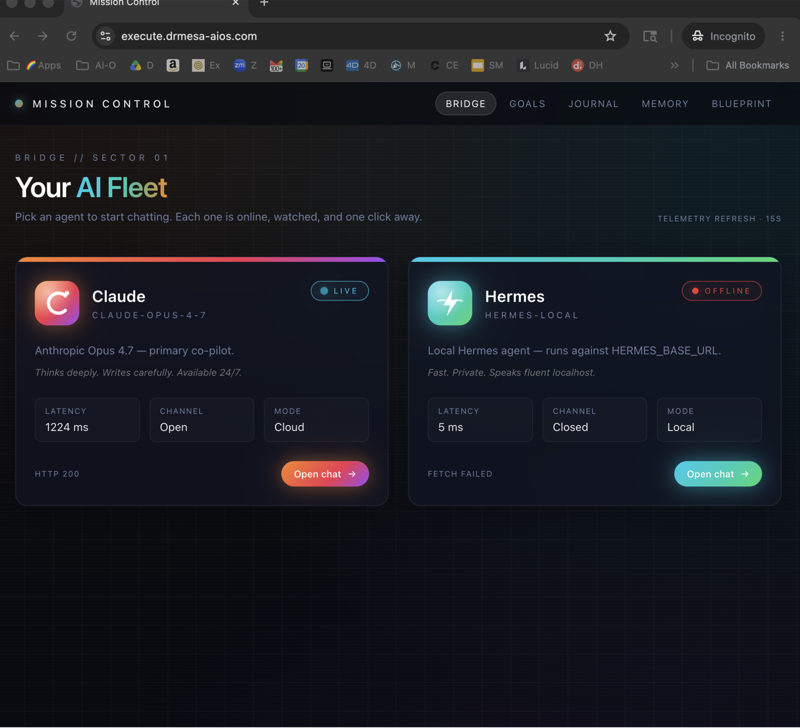
An agentic operating system is a single dashboard that puts all your AI agents (Claude, Hermes, Codex and more) and custom workflows — video, SEO content, lead generation, memory — in one place, ready to automate. Instead of hopping between apps, everything is one click away and shares the same context.
Two Ways To Build An Agentic OS
Two paths: build from scratch by prompting an agent like ChatGPT Codex (GPT-5.6) or Claude to code a mission-control dashboard, or install a ready-made template and configure it. The template is far faster (minutes vs hours); from scratch gives full control. Both are covered below.
Step 1: Build The Dashboard
Tell your agent: "create a mission control dashboard where I can operate Claude, Codex and Hermes — make it clean, beautiful and actually working." Attach a screenshot of a style you like for inspiration, and let it run locally so you can preview and edit as you go.
📺 Watch: LIVE: Building Agentic Operating Systems with Claude
Step 2: Add Custom Workflows
The real power is custom workflows. Audit where you spend time, then build those in: an SEO content pipeline, a video agent, a lead-generation and email tool, a trending-news workflow. Just ask your agent to add each one — and build several in parallel with forked chats.
Step 3: Add A Memory System (Obsidian)
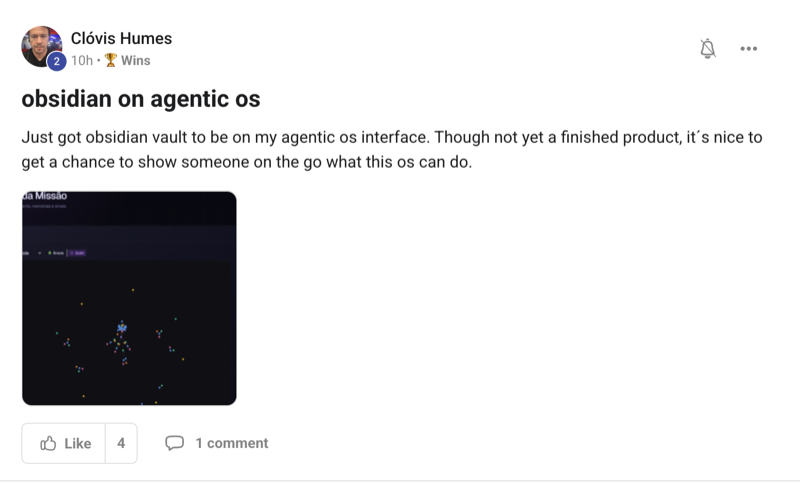
Wire in a memory system so every agent shares context. Obsidian (free, open-source) stores your notes as markdown in a knowledge graph; connect it and Claude, Codex and Hermes all learn from the same vault. See Obsidian agentic OS.
📺 Watch: How to Build a Self Improving Agentic OS in Claude
Step 4: Run It Locally And Test
Run the Agent OS on a local port (not a public VPS) for security — an agent that can edit files shouldn't be exposed to the world. Then test everything: if something's blank or broken, screenshot it and ask the agent to fix it. Templates tend to work first time; from-scratch builds need more testing.
How To Build An Agentic OS For Free
You can build it for nothing: use existing subscriptions (Claude, ChatGPT) so you don't burn API tokens, plug free tools like OmniRoute and local models (Gemma 4 via Ollama) in as brains, and lean on free open-source projects. Watch token usage — dial down effort and speed, or use a template to save time.
The Shortcut: A Ready-Made Agentic OS
Building from scratch takes hours a day to perfect. The fastest route is a ready-made Agent OS template you install in minutes and customise — that, with a video tutorial and install zip, is inside the AI Profit Boardroom. → Join AIPB.
Frequently Asked Questions
How do you build an agentic OS?
Prompt an agent (ChatGPT Codex/GPT-5.6 or Claude) to build a mission-control dashboard, add custom workflows one by one, wire in an Obsidian memory system, and run it locally. Or install a ready-made template and configure it in minutes.
Can I build an agentic OS for free?
Yes — build it with an existing subscription (no extra API cost) and power it with free tools and local models like Gemma 4. Hermes plus a free model makes the whole thing free to run.
Should I build from scratch or use a template?
A template is much faster and works first time; from scratch gives full control but takes hours and more testing. Most people should start from a template and customise.
The Bottom Line
To build an agentic OS: create a dashboard, add custom workflows, wire in Obsidian memory, run it locally, and power it with free models. Do it from scratch for control, or start from a ready-made template inside the AI Profit Boardroom to save hours.