GPT-Live 1 costs $0.05 per minute, billed per second, with your backend model and tool usage charged separately — so GPT-Live 1 pricing per minute works out flat and predictable on the voice layer: $3.00 per hour of live conversation, before whatever your backend agent spends in tokens. Those numbers come from OpenAI's official API changelog entry of 10 September 2026, the day GPT-Live 1 reached general availability on the v1/live/sessions endpoint, and from the official model page.
📺 Watch: New Hermes AI voice Agent Is ABSURD!
🔥 Get the Agent OS as a free bonus: AI Profit Boardroom members get the full Agent OS zip, prompt libraries, daily tutorials and weekly live coaching calls. → Get inside · Want AI SEO help 1-on-1? Book a free SEO strategy session →
If you build — or sell — voice agents, this is the pricing announcement worth reading properly, because the "billed separately" clause is where real project budgets are won or lost. The front-end voice model is the cheap, predictable part; the backend reasoning it delegates to is the variable part. This breakdown covers exactly what OpenAI has published: the per-minute rate, what sits outside it, the session limits by tier, and how to think about the economics before you quote a client. Every figure is attributed to OpenAI's own changelog, announcement or model documentation, published 10 September 2026.
First, the headline numbers in one place.
GPT-Live 1 Pricing Per Minute: The Full Breakdown
Per the official OpenAI API changelog (10 September 2026) and the GPT-Live 1 model page:
| Item | What OpenAI has published |
|---|---|
| Voice session rate | $0.05 per minute, billed per second |
| Backend model usage | Charged separately, at that model's own rates |
| Tool usage | Charged separately |
| Endpoint | v1/live/sessions (the only supported endpoint for this model) |
| Free tier | No access to this model |
| Concurrent sessions | From 25 (Tier 1) up to 500 (Tier 5) |
Per-second billing is a genuinely buyer-friendly detail: a 90-second call costs 90 seconds, not two rounded-up minutes. Straight arithmetic on the published rate gives you the fixed layer of any budget: a 10-minute conversation is $0.50 of voice, a full hour is $3.00, and a thousand 5-minute calls is $250 — again, voice layer only.
What GPT-Live 1 actually is, per the announcement: a full-duplex voice model — it "can listen and speak at the same time" — with smooth interruption handling, stronger instruction following, custom voices and telephony support, and a broader selection of voices across accents, dialects and languages. It supports streaming and function calling, takes audio and text in and out, and does not support structured outputs, fine-tuning or predicted outputs, per the model page.
If you want to build voice agents that actually earn — priced properly, with the workflows to deliver them — the AI Profit Boardroom is where we do it together: daily tutorials, prompt libraries and weekly live coaching calls: see what members are building. Rather talk it through first? Book a free SEO strategy session — free, 1-on-1, no catch.
The Backend Bill Is The One To Watch
The design of GPT-Live 1 is delegation: the changelog describes full-duplex conversations that continue "while backend models/agents handle reasoning", with two delegation modes — responses delegation using OpenAI models, or client delegation for custom backends. In other words, the $0.05 per minute buys you the mouth and ears; the brain is a separate model with a separate meter.
That split has three practical consequences for anyone costing a voice product:
- Your total cost per call is voice time plus backend tokens. A simple FAQ-style call might barely touch the backend; a call where the agent researches, checks systems and calls tools will rack up backend token spend that can exceed the voice charge. Budget the two lines separately.
- Client delegation gives you cost control. Because custom backends are supported, you can route reasoning to whatever model fits your economics — the same discipline covered in Hermes agent API cost tracking applies: measure cost per completed call, not per API line item.
- Caching strategy on the backend still matters. Voice sessions are long-lived and context-heavy, which is exactly where prompt caching pays for itself — the mechanics in the Claude prompt caching pricing guide explain why cached context is the difference between healthy and horrible margins on long sessions, whichever backend you delegate to.
Session Limits And Tiers: Can You Actually Scale?
Rates only matter if you can run the volume, and the model page publishes concurrency limits by usage tier: 25 concurrent sessions at Tier 1, scaling to 500 at Tier 5, with no access on the free tier. For a phone-agent business, concurrency is capacity: 25 simultaneous calls is a serious small operation (that is 25 lines answered at once), whilst 500 concurrent sessions is call-centre territory. If your plan involves selling voice agents to multiple clients from one OpenAI organisation, the tier limit is a shared resource across all of them — worth knowing before you promise availability in a contract.
The tier limits also shape how you write client agreements. If you promise a client that their line is always answered, your real ceiling is your organisation's concurrent-session tier shared across every deployment you run — so a growing agency should track peak simultaneous calls across all clients and plan tier upgrades before capacity becomes a support ticket. Per-second billing helps here too: quoting a monthly retainer against measured voice-minutes is straightforward when the meter is this granular, and it leaves no awkward rounding to explain.
The knowledge cutoff is also published: 31 July 2025. For most voice use cases that is irrelevant — the backend agent supplies fresh knowledge through delegation and tools — but it is another reason the delegation architecture, not the voice model alone, is what you are really selling.
📺 Watch: Hermes Voice Agent + GPT-6 Astra Is Next Level
What $0.05 A Minute Means For Voice Agent Economics
Run the arithmetic from the published rate against what businesses currently pay for phone answering, and the margin picture becomes obvious. An agent that handles 200 calls a month averaging 4 minutes each consumes 800 voice-minutes — $40.00 of GPT-Live 1 time — plus backend tokens. Even after adding telephony and backend costs, the raw input costs of a capable voice agent are now small relative to what call handling is worth to a business that misses customer calls today. The gap between those two numbers is the opportunity — and it is exactly the kind of gap the GPT-6 Astra API pricing breakdown shows on the text side, where token rates set the floor and delivered outcomes set the price.
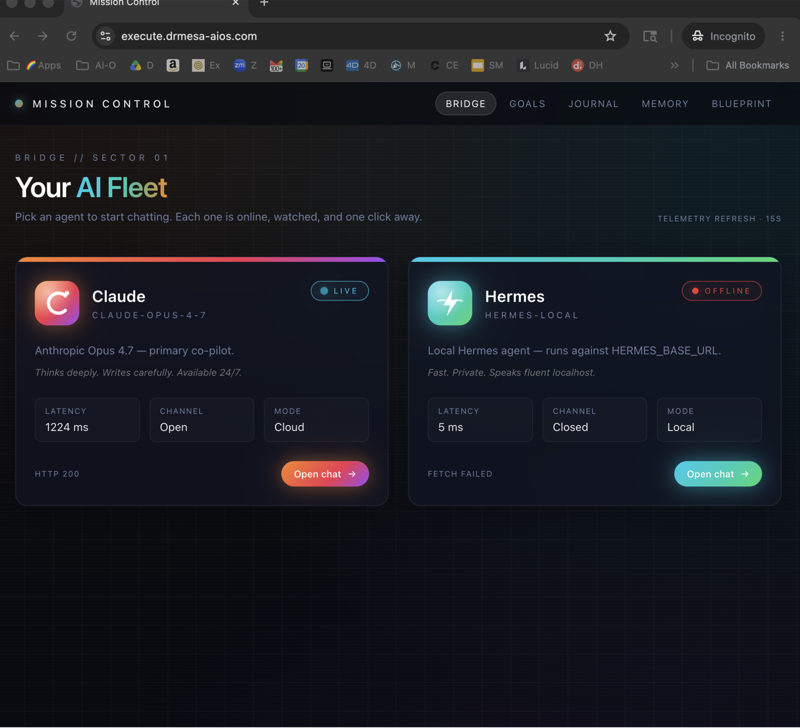
Voice is also no longer an OpenAI-only game on the agent side. Hermes agents have had spoken interaction for a while — the Hermes agent voice mode guide covers the setup, and the Hermes voice agent build shows what a self-hosted voice assistant looks like in practice. The strategic read: OpenAI publishing a flat per-minute rate with telephony support signals that voice agents are moving from demo to product category, and every builder in this space now has a public price floor to design against.
Two honest cautions before you build a business case on these numbers. First, prices published at launch are prices at launch — verify the current rate on OpenAI's pricing page before quoting anything long-term. Second, the $0.05 figure covers the session, not the outcome: an agent that needs three tool calls and heavy reasoning per answer has a real cost several times its voice-minute cost, and only measurement will tell you your true number. The systematic way to run that measurement — and everything else about turning agent capability into deliverable client work — is what Agent OS exists for, and if you are choosing which backend brain to delegate reasoning to, the Goldie Bench write-up covers how the current models compare in hands-on tests.
The Bottom Line On GPT-Live 1 Costs
GPT-Live 1's pricing is refreshingly legible: $0.05 per minute, billed per second, backend and tools metered separately, concurrency from 25 to 500 sessions depending on tier, no free-tier access. The voice layer of a customer-facing agent now has a fixed, quotable cost — roughly $3.00 per conversation-hour — and the variable risk lives entirely in how much thinking your backend does. Price your builds accordingly, meter both lines from day one, and re-check OpenAI's published rates before every proposal.
If you want the shortcut — voice agent workflows, pricing templates and the full Agent OS zip, plus daily tutorials and weekly live coaching calls — get inside the AI Profit Boardroom. Want AI SEO help 1-on-1 as well? Book a free SEO strategy session and we will map your fastest route to revenue.