Most people hunting for a claude skill seo geo setup have already worked out the uncomfortable part: ranking on Google is no longer the whole game. AI Overviews, ChatGPT and Perplexity now write the answer themselves and cite a handful of sources while they do it. Julian Goldie’s response is not to run two separate systems — it is one Claude skill that plays for both scoreboards at once: classic rankings and AI citations. This guide breaks down exactly how the GEO layer works.
📺 Watch: This Claude AI SEO Skill Ranks #1 FAST!
🔥 Get the Agent OS as a free bonus: AI Profit Boardroom members get the full Agent OS zip, prompt libraries, daily tutorials and weekly live coaching calls. → Get inside
Quick orientation first. If you have not read the Claude AI SEO skill guide, that page covers the core pipeline — keyword in, publish-ready article out. This page covers the extension: teaching that same skill to win citations in AI answers, using the frameworks Julian Goldie teaches inside the AI Profit Boardroom.
The Shift: AI Search Writes One Answer and Cites a Few Sources
Classic search hands the user ten blue links and lets them choose. AI search does something fundamentally different: it writes one answer and cites a small number of sources inside it. If your page is one of those sources, you collect the visibility, the trust and the branded searches that follow. If it is not, you are invisible — even if you technically rank on page one.
That is why Julian reframes the acronym itself. SEO is no longer just Search Engine Optimization — it is Search Everywhere Optimization. Google, AI Overviews, ChatGPT, Perplexity, YouTube, Reddit: the question stops being "where do I rank?" and becomes "where do I appear when someone asks?"
The practical consequence is simple to state and easy to miss: the game is now winning the citation, not just the click. And citations follow slightly different rules.
Claude Skill SEO GEO: One System, Two Scoreboards
Here is the good news. SEO and GEO share the same foundations — helpful content, clean structure, real schema, genuine authority. Search engines and answer engines are trained on the same web and reward the same substance. What changes is the scoreboard you are measured on.
| Question | Classic SEO | GEO |
|---|---|---|
| Where you appear | Google rankings and snippets | AI Overviews, ChatGPT and Perplexity answers |
| What you win | The click | The citation and the brand mention |
| What the machine rewards | Relevance, links, helpful content | Liftable direct answers from credible, consistent entities |
| How you keep score | Rankings, clicks, impressions | Your brand inside AI answers, branded search growth |
| Maturity | Decades of established practice | Early days — test, observe, adjust |
| What the skill bakes in | On-page SEO, internal links, indexing | Question H2s, FAQ schema, E-E-A-T blocks, entity consistency |
One skill file can serve both scoreboards, provided the GEO layer is baked in rather than bolted on afterwards. That is exactly how Julian’s pipeline is built, and the next section shows what the GEO layer actually contains.
What a Claude Skill Adds for GEO Specifically
These are the concrete instructions the skill carries beyond classic on-page SEO. Each one exists because of something observed in real AI answers, not because it sounded clever in a strategy deck.
Question-Shaped H2s With Direct Answers
AI engines lift concise answers. So the skill phrases headings the way people actually ask, and the first sentence under each heading answers the question directly — before any context, story or caveats. If an answer engine wants something liftable, hand it one on a plate.
FAQ Sections With FAQ Schema
Every article ends with a genuine FAQ block, marked up with FAQ JSON-LD schema. That gives engines machine-readable question-and-answer pairs — which is, structurally, the exact shape an AI answer is made of.
Article Schema and Author E-E-A-T Blocks
Engines prefer identifiable, credible authors over anonymous content. The skill outputs Article schema plus a consistent author-bio block on every page, so each article states clearly who wrote it, what they actually do and why they are worth citing.
Grounded Specifics, Not Fluff
AI answers cite specifics. Because the skill writes from transcripts and real source material rather than generic model knowledge, the articles carry concrete claims, named tools and real workflows — the kind of detail an engine can quote with confidence. Generic filler gives an engine nothing to lift.
Entity Consistency Across Everything
The same brand names — Agent OS, Goldie Bench, AI Profit Boardroom — are used identically on every page, video description and post. Answer engines build entity graphs, and consistent naming teaches them who you are, what you own and what belongs together. Scattered, inconsistent naming teaches them nothing.
The Five-Site Network and Fast Indexing
The skill deploys each answer, genuinely rewritten, across Julian’s five-site network. The same answer discoverable on five domains multiplies the odds that one of them gets picked as a source. And every URL is pushed for indexing immediately, because the gate is brutally simple: you cannot be cited if you are not indexed.
📺 Watch: Claude Code AI SEO: How to Rank #1 with Claude Code
The Omnipresence Engine: Julian’s 4-A Framework
The skill handles the page. The Omnipresence Engine — Julian’s 4-A framework — handles everything around the page. It is his working system for Search Everywhere Optimization, and it runs in four steps.
1. Anchor
One keyword, one pillar piece. Everything starts from a single definitive article on the topic — the piece the Claude skill produces, with the GEO layer already inside it.
2. Atomize
The pillar gets broken into fragments: video, images, short posts and supporting pages. One piece of thinking becomes many pieces of content, each one pointing back to the anchor.
3. Amplify
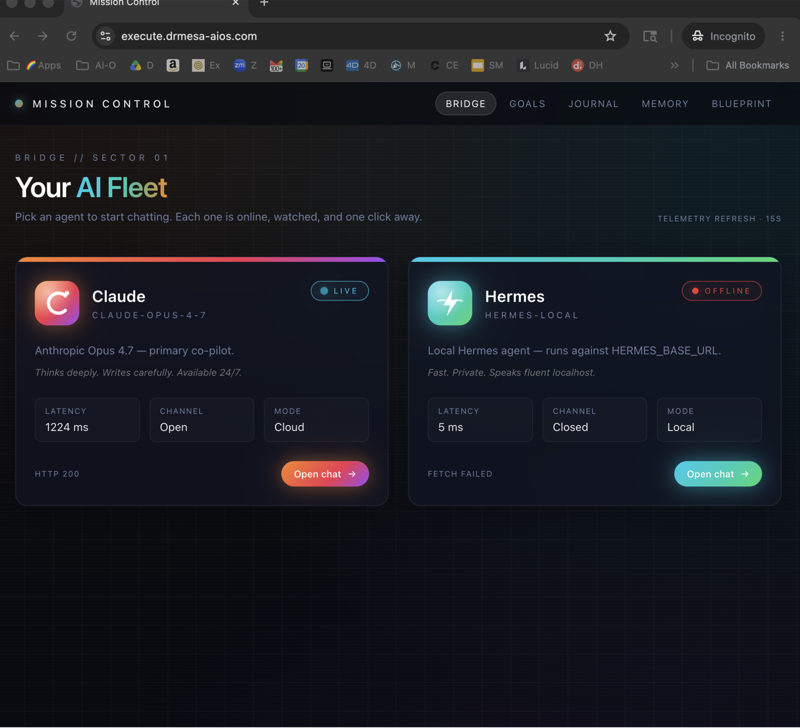
Those fragments get published across the five-site network, YouTube and social — by agents, not by hand. Hermes and Agent OS run the Amplify step on autopilot, which is the only way omnipresence stays affordable for a small team instead of becoming a full-time job.
4. Appear
Here is the GEO payoff: AI engines cite the name they see everywhere. Omnipresence becomes authority, and authority becomes citations. When an engine has watched the same entity give the same consistent answer across five sites, YouTube and Reddit, citing that name is the safe choice.
If you want to be cited by AI search and ranked by Google, check out the AI Profit Boardroom — the full GEO + SEO systems live inside, including the skill files, the Omnipresence Engine training and the agent setups that run Amplify for you. → Get the system that gets you cited
📺 Watch: Claude AI SEO System Ranks Me #1 on Google
How to Measure GEO Without Fooling Yourself
An honest note before the FAQ: GEO is early. Nobody has a settled playbook yet, and anyone selling certainty is guessing. What Julian shares comes from hands-on, Goldie Bench-style testing — publish, ask the engines, observe what actually gets cited, adjust — not from settled science. Treat it as field notes from someone running the experiment at scale.
Two measurements matter right now:
- Check the answers directly. Ask ChatGPT, Perplexity and Google the exact questions your pages target. Is your brand named? Are your pages cited? Log the results monthly and watch the trend, not any single answer.
- Watch branded search grow. People who meet you inside an AI answer often search your name afterwards. Growing branded impressions in Search Console is the lagging proof that citations are turning into demand.
Frequently Asked Questions
Is GEO really different from SEO?
Same foundations, different scoreboard. Both reward helpful content, schema and authority. SEO measures rankings and clicks; GEO measures citations and mentions inside AI answers. Optimising properly for one largely serves the other — provided your system includes the GEO layer described above.
Do I need a separate Claude skill for GEO?
No. One skill can serve both scoreboards if it bakes in question-shaped headings, FAQ and Article schema, author E-E-A-T blocks, grounded specifics and entity consistency. That is precisely how Julian’s skill is written — the GEO layer is part of the standard output, not a separate mode.
How long before AI engines cite my content?
There is no honest fixed answer, because GEO is too new for reliable timelines. Indexing is the gate — engines can only cite pages they have seen — so fast indexing comes first. After that, consistency and omnipresence do the compounding. Measure monthly rather than daily, and expect the branded-search signal to lag the citations.
Where do I get the skill and the full system?
The skill files, the Omnipresence Engine training and the complete pipeline live inside the AI Profit Boardroom, and members run the Amplify step through Hermes and Agent OS rather than doing the distribution by hand.
The Bottom Line
Search is splitting in two: ranked lists and written answers. You do not need two content systems to cover both — you need one system that respects both scoreboards. A Claude skill gives you the page-level layer: direct answers under question-shaped headings, FAQ and Article schema, E-E-A-T blocks, grounded specifics, consistent entities, five-domain reach and fast indexing. The Omnipresence Engine gives you the everything-else layer: Anchor, Atomize, Amplify, Appear.
Run both consistently and the two scoreboards start feeding each other. Rankings create the visibility answer engines learn from, and citations create the branded searches Google rewards. That is Search Everywhere Optimization in practice — and it is exactly the lane Julian Goldie has built his system for.