Everyone wants a single winner, but the honest answer to claude opus 5 vs fable 5 is "it depends on the job." Both are Anthropic Claude models, and both are genuinely excellent — they are simply tuned for different kinds of work. So instead of quoting numbers off a spec sheet, I put them through my own hands-on Goldie Bench: the same real tasks I run in a normal working week, judged the way a paying client would judge them. What follows is my opinion from that testing, not an official benchmark.
📺 Watch: Claude Opus 5 vs Fable 5
🔥 Get the Agent OS as a free bonus: AI Profit Boardroom members get the full Agent OS zip, prompt libraries, daily tutorials and weekly live coaching calls. → Get inside
Below is what each model is, the dimensions I test them on, where each one tends to win in my experience, and — the part most comparisons skip — why the harness you run them in can matter as much as the model itself. I run both inside Agent OS, so I will show you how that fits at the end.
What Claude Opus 5 and Fable 5 actually are
These two are siblings, not rivals from different families. Think of them as specialists trained in the same school who chose different final years.
Claude Opus 5
Opus 5 is the top-tier flagship — the one I reach for when a task needs deep reasoning, careful multi-step logic, heavier coding, or an agent that has to plan and keep going without hand-holding. It is the serious operator of the pair. When a job is complex and a wrong answer is costly, Opus 5 is usually my default.
Claude Fable 5
Fable 5 is the craft model. In my testing it leans into atmosphere, polish, tone and design sense — the feel of a piece, not only whether it is correct. When I want copy that reads beautifully, a landing page with a mood, or writing with real texture, Fable 5 tends to produce work that looks and sounds more finished on the very first pass.
The dimensions I test on in Goldie Bench
A fair fight needs consistent rounds. I do not use synthetic puzzles — I use the work I actually get paid for. Every model faces the same five dimensions:
- Reasoning & coding — can it plan, debug, and hold a complex problem together?
- Craft, atmosphere & design — does the writing or layout feel finished, or merely correct?
- Speed — how quick does it feel to work with on an ordinary task?
- Cost & efficiency — how much do I burn to get a result I would actually ship?
- Agentic use — can it run a long, multi-step job without losing the plot?
Notice how often I say "feel" and "tend to." That is deliberate. These are impressions from real use, not lab measurements, and your own tasks could push the result the other way.
Claude Opus 5 vs Fable 5: my round-by-round Goldie Bench lean
Here is how the two generally split for me across those dimensions. Treat the final column as my opinion on the day, not a verdict carved in stone.
| Round | Claude Opus 5 | Claude Fable 5 | My Goldie Bench lean |
|---|---|---|---|
| Reasoning & coding | Deep, methodical, holds complex logic | Capable, but not its main event | Opus 5 |
| Craft, atmosphere & design | Clean and correct | More polished, more mood on the first pass | Fable 5 |
| Speed (how it feels) | Takes its time on hard problems | Often feels snappier on creative work | Depends on task |
| Cost & efficiency | Earns its keep when the task is genuinely hard | Efficient for polish-heavy jobs | Depends on task |
| Agentic, long tasks | Stays on plan over many steps | Strong, but I lean flagship here | Opus 5 |
Reasoning and coding
This is Opus 5's home turf. In my Goldie Bench runs it handled tangled, multi-file coding and long chains of logic with fewer wobbles, and it recovered more gracefully when something broke. Fable 5 is no slouch here, but once the problem got genuinely hard, Opus 5 felt more dependable to me.
Craft, atmosphere and design
Flip the task to a piece of writing that has to move someone, or a page that needs a mood, and Fable 5 tends to pull ahead. Its first drafts often needed less reworking to feel done. Opus 5 writes cleanly and correctly; Fable 5 more often wrote something I actually wanted to keep.
Speed and cost
Neither wins outright — it tracks the job. Opus 5 takes its time when a problem is hard, and that patience is the point. Fable 5 frequently feels quicker on creative work. On cost I stay general on purpose: prices and limits change, so rather than quote figures I judge value by whether the output was ship-ready. For hard reasoning, Opus 5 earned its keep; for polish, Fable 5 got me there with far less editing.
📺 Watch: LIVE: Sakana VS Claude Fable 5 VS Fusion!
Why the harness matters as much as the model
Here is the thing most "X vs Y" posts miss: the same model can feel brilliant or clumsy depending on what you run it inside. The harness — the tools it can reach, the memory it keeps, how work gets saved, whether it can act in steps and check itself — shapes the result as much as the raw model does.
Give either model no context and one shot, and you will underrate both. Give it your brief, your past work, and the room to review its own output and try again, and the very same model looks a level smarter. In plenty of my tests a starved setup on Opus 5 lost to a well-fed Fable 5, and the reverse happened too. So when you read any comparison — including this one — remember the real score is model-plus-harness, never the model on its own.
📺 Watch: AI News: Claude BAN, Fable 5, GLM 5.2, KIMI K2.7 + Fusion
Which one to pick for which job
My simple rule of thumb from the bench:
- Pick Opus 5 for hard reasoning, serious coding, research, and long agentic jobs where being right matters more than being pretty.
- Pick Fable 5 for copy, story, brand voice, and design-led work where tone and polish are the actual product.
- Use both on bigger projects — Opus 5 to think and build, Fable 5 to make the output shine. That hand-off is where I get my best results.
If you want to run Claude Opus 5 and Fable 5 in one money-making Agent OS, check out the AI Profit Boardroom — the Agent OS, the model-routing playbooks, and the same Goldie Bench workflow I use are all inside, with a community shipping real offers. → See how the Agent OS runs your models
How I run both inside Hermes and Agent OS
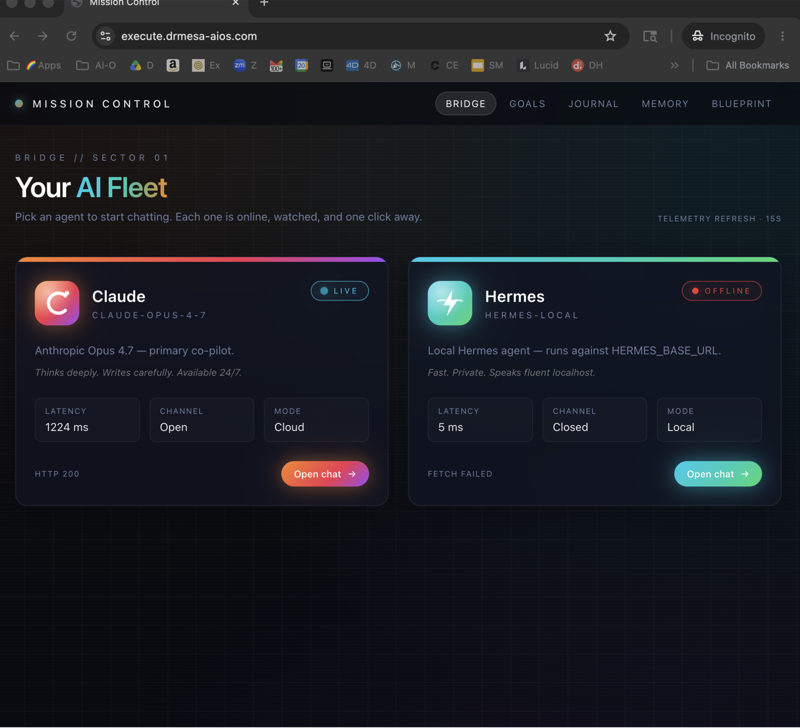
In practice I rarely pick one model and marry it. Inside Agent OS, my Hermes agent routes each task to whichever model suits it. A build-heavy job goes to Opus 5; a polish pass goes to Fable 5 — and I can swap between them without rebuilding my whole setup.
That is the payoff of a good harness. Agent OS gives Hermes shared memory, a workspace where outputs are saved as real files, and the ability to run multi-step jobs in the background. So a single project can have Opus 5 reason out the structure and Fable 5 dress the final draft, all inside one system. The models are the talent; Agent OS is the studio they work in.
Frequently asked questions
Is Claude Opus 5 better than Fable 5?
In my Goldie Bench testing, Opus 5 is stronger for reasoning, coding and long agentic work, while Fable 5 is stronger for craft, tone and design. Which is "better" depends entirely on the job — there is no single winner.
Are these official benchmark results?
No. This is my own hands-on opinion from running both on real tasks, not an official benchmark. I deliberately avoid quoting scores or prices, because those change and are easy to misread.
Can I use both models together?
Yes, and I usually do. On larger projects I let Opus 5 handle the thinking and building, then hand the draft to Fable 5 for polish. Running them inside one Agent OS makes that hand-off simple.
Does the setup really change the result?
More than most people expect. The tools, memory and steps a model can use — the harness — shift the outcome as much as the choice of model. A well-fed setup routinely beats a smarter model that has been given nothing to work with.
Who is behind this comparison?
Julian Goldie, an SEO and AI educator with hundreds of thousands of YouTube subscribers, a community of tens of thousands of members, more than a decade in the field, and a best-selling book. Goldie Bench is my own testing, run on the work I actually do.
The Bottom Line
On claude opus 5 vs fable 5, my Goldie Bench take is simple: Opus 5 is the flagship for reasoning, coding and long agentic jobs, and Fable 5 is the craftsman for tone, atmosphere and design. Neither is the best in every case, and the harness you run them in shapes the result as much as the badge on the model. Pick Opus 5 when being right matters most, pick Fable 5 when polish is the product, and use both together when you can. Run them inside Agent OS with Hermes routing the work, and you stop choosing a side — you just point the right model at the right task.