The best free autonomous AI agents let you hand over a goal and have software plan, act and finish the work with little hand-holding — without paying for an enterprise platform. In 2026 there are more genuinely capable free options than ever, from open-source frameworks you run yourself to agents that live inside an operating system. This guide covers the ones worth your time, what each is good at, and how to run them for free.
📺 Watch: New FREE Hermes Computer Use Agents!
🔥 Get the Agent OS as a free bonus: AI Profit Boardroom members get the full Agent OS zip, prompt libraries, daily tutorials and weekly live coaching calls. → Get inside
What Makes an AI Agent "Autonomous" and "Free"
An autonomous agent does not just answer a question — it takes a goal, breaks it into steps, uses tools, and works through the steps on its own, checking its progress as it goes. "Free" usually means one of two things: the software is open source and you run it yourself, or there is a free tier or free local model you can point it at. The trade-off with free is that you often supply the compute or the model, and you do a bit more setup.
The Best Free Autonomous AI Agents in 2026
These are established, real tools. Descriptions below reflect what each is generally known for, so you can pick by fit rather than hype.
1. Hermes (inside the Agent OS)
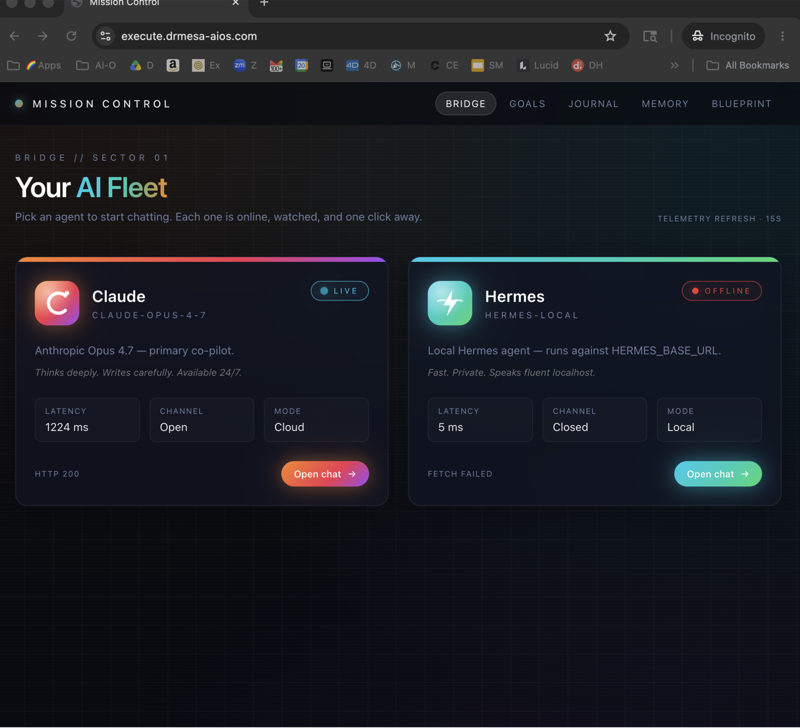
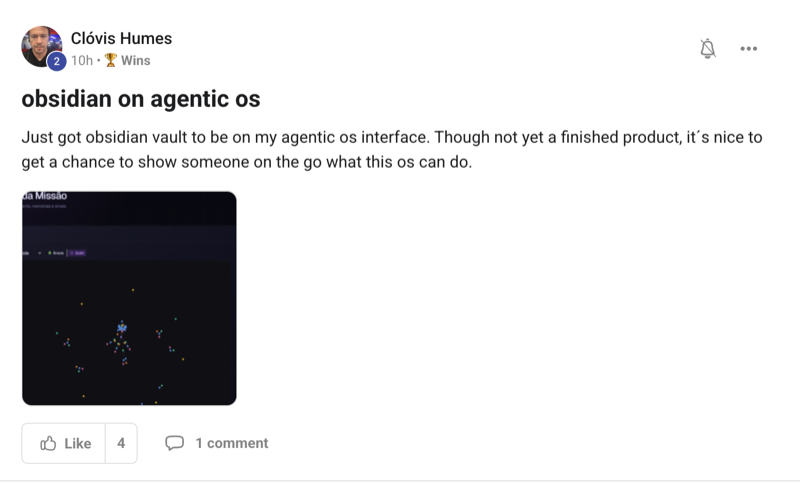
Hermes is the agent inside Julian Goldie's Agent OS. It is designed to run real business workflows — content, research, outreach, publishing — and it can run on free local models, so you are not locked into paid API calls. Its edge is the operating system around it: a control center, shared memory and ready-made skills, rather than a bare framework you assemble yourself.
2. Auto-GPT
One of the original open-source autonomous agents. It is known for taking a goal and looping through plan-act-review steps largely on its own. You run it yourself and connect your own model, which keeps it free to use beyond model costs.
3. AgentGPT
A browser-based autonomous agent that positions itself as an easy way to deploy a goal-driven agent without local setup. Good for quickly seeing the autonomous loop in action.
4. BabyAGI
A lightweight, much-copied task-management agent. It is known for a simple loop that creates tasks, prioritises them and works through them, and it is popular as a starting point people fork and extend.
5. CrewAI
An open-source framework for orchestrating multiple role-based agents that work together as a "crew." Known for making multi-agent collaboration approachable, with each agent given a role and goal.
6. Microsoft AutoGen
An open-source framework from Microsoft for building multi-agent conversations and workflows. Known for flexible agent-to-agent messaging and being research-friendly.
7. SuperAGI
An open-source agent framework that positions itself as a dev-first platform for building, running and managing autonomous agents, with a dashboard and tooling around the core loop.
8. Open Interpreter
An open-source tool that lets a language model run code on your own machine to complete tasks. Known for turning natural-language requests into real actions locally, which makes it feel genuinely autonomous for hands-on jobs.
9. Aider
An open-source AI pair programmer that works in your terminal and edits your codebase directly. Known for autonomous, multi-file coding changes with git-aware commits.
10. gpt-engineer
An open-source project that generates and iterates on codebases from a prompt. Known for taking a spec and scaffolding a whole project with minimal input.
If you want to make money with autonomous AI agents, check out the AI Profit Boardroom — the ready-made Agent OS, 1,000+ plug-and-play agent workflows and a community that runs them are all inside. → Get the autonomous agent stack here
How To Choose the Right One
- Want business results, not plumbing? Pick an agent with an operating system around it, so the memory, dashboard and skills come built in.
- Want to learn the internals? Fork a lightweight framework like BabyAGI or build on CrewAI or AutoGen.
- Mostly coding? Aider, gpt-engineer and Open Interpreter are built for that.
- Want zero setup to start? A browser-based option like AgentGPT gets you moving fastest.
📺 Watch: Hermes Agent OS: Building Local + Free AI Agents
How To Run Them For Free
The cost of an autonomous agent is usually the model it calls, not the agent software. To keep it genuinely free, point the agent at a free local model running through something like Ollama, so the reasoning happens on your own machine. Most of the tools above let you swap in a local model, which removes the per-call API cost entirely. Start small with one clear task, confirm the loop works, then scale up.
📺 Watch: These 3 NEW Chinese Autonomous AI Agents are INSANE!
Free Autonomous AI Agents At a Glance
| Agent | Type | Best for | Runs free on |
|---|---|---|---|
| Hermes (Agent OS) | Agent + operating system | Real business workflows | Local models |
| Auto-GPT | Open-source agent | Goal-driven loops | Your own model |
| AgentGPT | Browser agent | Zero-setup start | Free tier |
| BabyAGI | Lightweight framework | Learning the internals | Your own model |
| CrewAI | Multi-agent framework | Role-based teams | Your own model |
| AutoGen | Multi-agent framework | Agent-to-agent workflows | Your own model |
| Open Interpreter | Local code agent | Hands-on tasks on your machine | Local models |
| Aider | Terminal code agent | Multi-file coding | Your own model |
Read the table by fit, not by hype. The "best" one is the one that matches the job in front of you and the model you are willing to run.
Free vs Paid: When To Upgrade
Free autonomous agents are genuinely capable, but there are honest moments to consider paying. Upgrade when: you need a bigger, smarter model than your machine can run locally; you want the memory, dashboard and skills handled for you instead of wiring them yourself; or you are running enough volume that reliability and support save you more than the fee costs. Until then, a free agent on a local model will take you a long way — do not pay for polish you do not need yet.
Frequently Asked Questions
Are free autonomous agents good enough for real work?
Yes, for a lot of tasks — research, drafting, code changes, repetitive workflows. The limit is usually the model you run and how clearly you define the goal, not the agent software.
What is the catch with "free"?
You typically provide the compute or the model, and you do more setup than a paid platform. A local model keeps ongoing cost near zero once it is running.
Which is best for a beginner?
An agent with an operating system around it is the gentlest start, because the hard parts — memory, dashboard, skills — are already handled and you just run missions.
The Bottom Line
The best free autonomous AI agents in 2026 range from bare open-source frameworks to full operating systems. If you want to learn the mechanics, fork a framework. If you want results, pick an agent with a control center, memory and ready-made skills, run it on a free local model, and put it to work on one real task today.