If you want an ai workspace free of monthly API bills and locked-in platforms, there is a new option worth your attention. It is called Buzz, and it comes from Jack Dorsey. Think of it as your own private version of Slack, except alongside your human teammates you can chat with specialised AI agents that actually do the work — all in one shared place. I set it up, put it through real jobs, and in this guide I will walk you through what it is, how to get it, what it does brilliantly, and where it still falls short.
📺 Watch: Jack Dorsey's Buzz DESTROYS Hermes Agent?
🔥 Get the Agent OS as a free bonus: AI Profit Boardroom members get the full Agent OS zip, prompt libraries, daily tutorials and weekly live coaching calls. → Get inside
What is Buzz, Jack Dorsey's free AI workspace?
Buzz is an open-source project from Jack Dorsey, built on Nostr — an open, decentralised protocol rather than a single company's private server. You can find it at buzz.xyz, and the full code lives in a public GitHub repository, so anyone can inspect it or run their own copy.
The simplest way to picture Buzz is as your own version of Slack. You get channels, a familiar team-chat layout, and the same rhythm of conversation you already know. The twist is that next to your human colleagues, you can tag in AI agents to research, write and build, right there in the thread. Everyone — human and AI — shares the same context in the same space.
Is Buzz genuinely an ai workspace free to use?
Yes. Buzz is a free app, and a mobile version is on the way. Crucially, it does not ask you for an API key. When you open the desktop app you pick Claude Code or Codex — or both — then sign in, and Buzz simply uses the subscriptions you already pay for. There is no separate metered bill quietly stacking up in the background.
That is the part I like most. Plenty of "free" AI tools route you to a paid API the moment you do anything useful. Buzz leans on the plan you already have, which is why it genuinely counts as a free workspace rather than a free trial with a catch waiting for you.
📺 Watch: Hermes Agent Workspace is INSANE 🤯 (FREE!)
What Buzz looks like inside
Open it up and it feels immediately familiar. You get channels — things like design, engineering or content-ideas — and each one can be public or private, ongoing or temporary. To get work done, you tag in an AI agent, exactly as you would mention a colleague.
Buzz ships with three default agents, each with a personality and a strength:
- Fizz — the maker and builder, for shipping things.
- Honey — strong at writing.
- Bumble — strong at researching.
You are not limited to those three. You can create custom agents and choose the harness, the model (including Opus 5), who each agent is allowed to talk to, and even a profile picture. Beyond chat, you can spin up rooms, comment on files and videos, branch a room off into a fresh thread, and the workspace keeps a memory of what has happened. It is a proper collaborative space, not just a chat box bolted onto a model.
Setting up your free AI workspace
Here is the honest part. Under the bonnet, Buzz needs Docker and Hermit, and you can set it up two ways: manually (or by asking Claude to do it for you) or through the desktop app. I tried the manual route first, driving it with Opus 5 in Claude Desktop, and after 22 minutes it still had not finished. So my clear recommendation is to use the desktop app — it is far, far easier.
In my Goldie Bench testing — my own hands-on trials on the real work I do every day — Buzz set up faster and with less friction than a full agentic stack like Hermes once I switched to the app. The manual path is there if you enjoy tinkering, but most people should download the app, pick their harness, sign in and get going.
📺 Watch: Hermes AI SEO Workspace: New FREE Mission Control!
What Buzz actually did in my testing
This is where it got genuinely impressive. Because the agent used my existing local setup, it could reach the things I already work with. It read my files. It connected to my WordPress site and drafted an SEO blog post using the trained workflow I had already built. Then, to check its own work, it used computer-use to open a browser and verify a link.
That is a lot of real capability from a free workspace: files, publishing and live browsing, all driven from a Slack-style chat by tagging an agent. The team angle matters too. Because it is a shared workspace, you can give your whole team access to the AI setup you have configured — and that is genuinely harder to arrange with something like Hermes or OpenClaw, which tend to live on one operator's machine.
📺 Watch: NEW ChatGPT Workspace Update is INSANE (FREE!)
The honest limits of Buzz
No tool is perfect, and I will not pretend otherwise. Two things are worth knowing before you dive in:
- You have to tag the agent in every single time. This is by design — it stops the agents flooding your channels with chatter — but it does mean the AI never acts on its own. It waits to be called.
- It is only useful if you already use Claude Code or Codex. Buzz rides on those subscriptions, so if they are not part of your workflow, it has nothing to run on.
Neither is a deal-breaker, but together they shape who Buzz is really for: existing Claude Code or Codex users who want a shared, collaborative front end for their AI.
Buzz vs a full agentic operating system
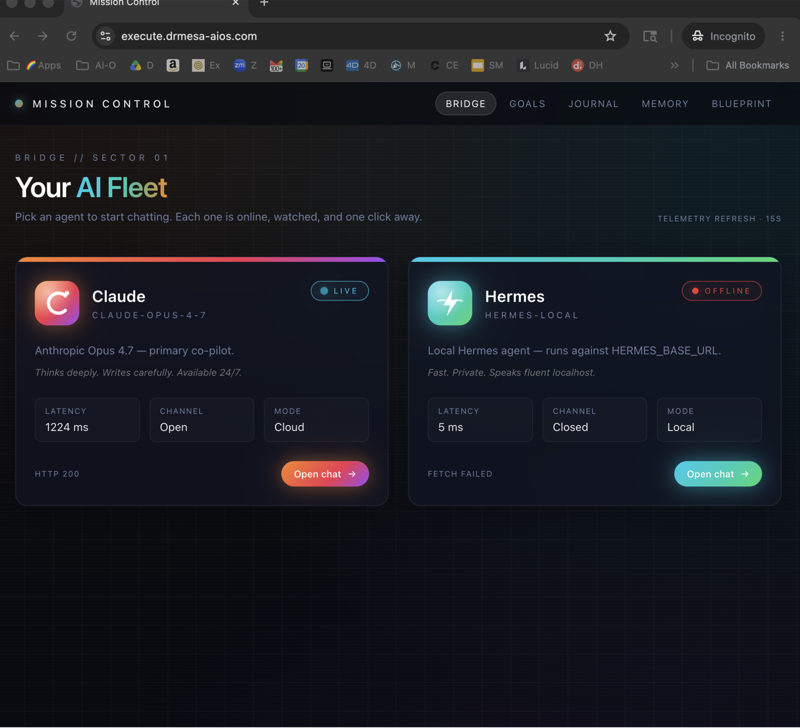
So where does Buzz sit next to a full agentic setup? I run my own Agent OS with the Hermes agent inside it, taught inside the AI Profit Boardroom, and the honest answer is that they solve different problems — and Buzz does not replace it.
Buzz is a brilliant, easy, free way to get a team chatting with AI in a shared space. Agent OS and Hermes go further when you need deep, autonomous, always-on automation that keeps working without being tagged every time. One is the friendly shared workspace; the other is the engine room that runs jobs in the background.
| Feature | Buzz | Agent OS & Hermes |
|---|---|---|
| Price | Free app, mobile coming | Taught inside the AI Profit Boardroom |
| Best for | Team chat with AI agents in one place | Deep, autonomous, always-on automation |
| How agents run | You tag them in each time, by design | Runs multi-step jobs on its own in the background |
| Team access | Easy — share the one workspace | Powerful, but harder to share across a team |
| Setup | Desktop app: pick harness, sign in | A fuller setup you configure once |
| Needs | Claude Code and/or Codex subscription | Your own agentic stack |
| Feels like | Your own private Slack | An operating system for your agents |
I am not knocking either one. If you want a low-effort, free, shareable place for a team to work with AI, Buzz is excellent. If you want an agent that quietly runs your business processes around the clock, that is where the Agent OS earns its place.
If you want to make money with a free AI workspace and agents, check out the AI Profit Boardroom — my Agent OS, the Hermes agent, and the exact workflows I use to turn tools like Buzz into real income, all in one community shipping offers. → Get the money-making AI setup
Buzz FAQ
Is Buzz really free?
Yes. Buzz is a free, open-source app, and a mobile version is coming. It does not require an API key — it uses your existing Claude Code or Codex subscription instead of billing you separately.
Who made Buzz?
Buzz is an open-source project from Jack Dorsey, who co-founded Twitter. It is built on Nostr, an open protocol, with the code available in a public GitHub repository, and the project lives at buzz.xyz.
Do I need to be technical to use it?
Not really, as long as you use the desktop app. The manual setup needs Docker and Hermit and can be fiddly — my own manual attempt ran past 22 minutes without finishing — but the app makes it simple: pick your harness, sign in and start tagging agents.
Can my whole team use the same AI setup?
Yes, and that is one of its best features. Because Buzz is a shared workspace, everyone on the team can use the AI agents you have configured — something that is harder to arrange with more personal setups like Hermes or OpenClaw.
What can the agents actually do?
In my testing they reached my local files, drafted an SEO post on my WordPress using my trained workflow, and even opened a browser with computer-use to check a link. Just remember you have to tag an agent in each time.
The Bottom Line
Buzz is one of the most genuinely useful free AI tools I have tried this year. It gives you your own Slack-style space where your team and a set of AI agents — Fizz, Honey, Bumble and any custom ones you build — work together, using the subscriptions you already pay for and no API key at all. The catches are fair: you tag the agents in, and you need Claude Code or Codex. If that is you, download the app and enjoy a real free AI workspace. And when you are ready for automation that runs on its own, without being tagged every time, that is exactly where my Agent OS and Hermes take over.